Hair as a natural winter covering
Stories of unclothed ascetics enduring severe cold often imagine thick body hair as a kind of built-in garment. The idea has a physical basis: hair can hold a thin layer of still air next to the skin, and still air slows the loss of body heat. Fur works especially well because it is dense; ordinary human body hair is much sparser, so its insulating effect is limited.
That distinction matters in the wilderness. Cold survival also depends on keeping the body’s core warm, avoiding wind and wetness, and finding shelter. Hair might offer some protection, but it is not equivalent to an animal’s winter coat.
What the legend makes visible
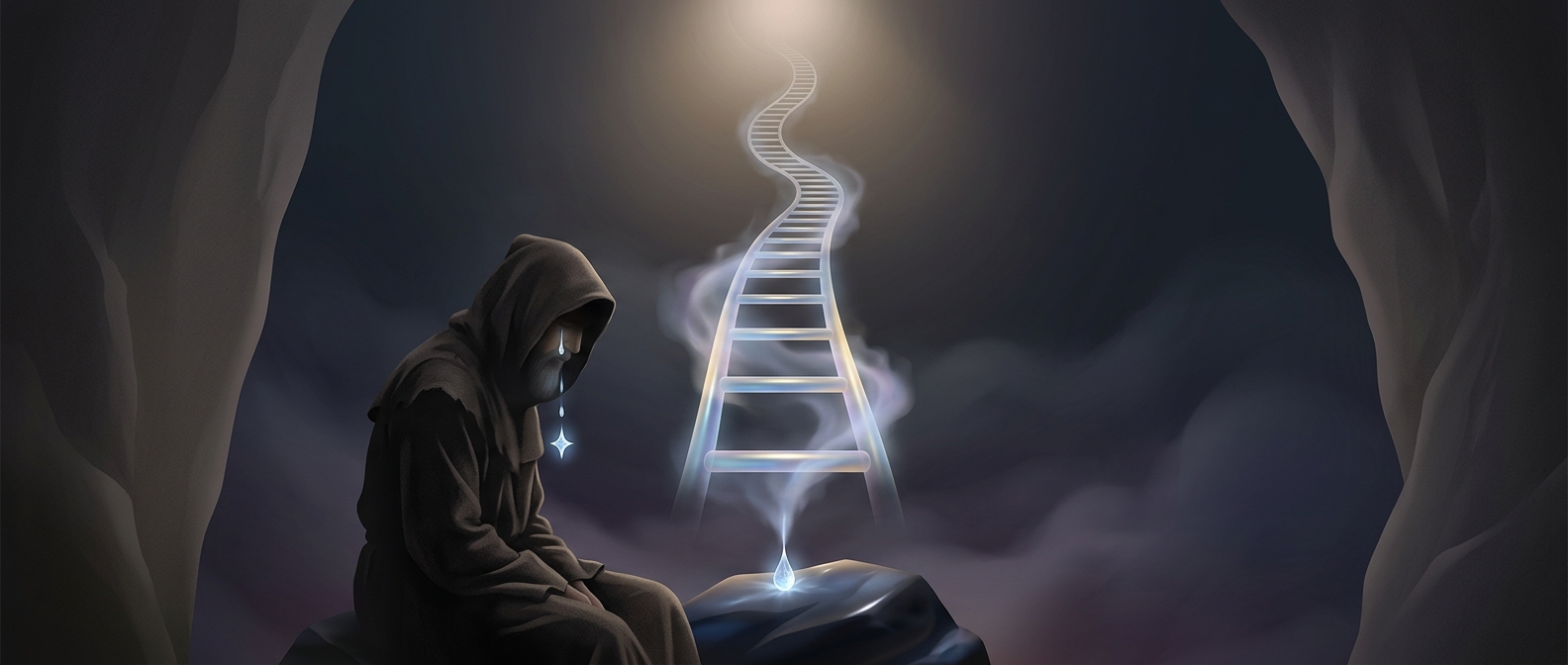
In accounts of ascetic life, unusual hair can stand for a body shaped by long discipline and distance from ordinary comforts. The image joins two ideas: hardship endured by choice and a body that seems to have adapted to the wild. Such stories need not be read as a precise biological report to show how striking—and difficult to imagine—unclothed winter practice was.
The memorable contrast is between a human body’s sparse hair and the dense coat of a fur-bearing animal. The legend gives the ascetic a natural covering, but the cold still makes the wilderness itself the greater test.