Why Crowley made disgust part of the ritual
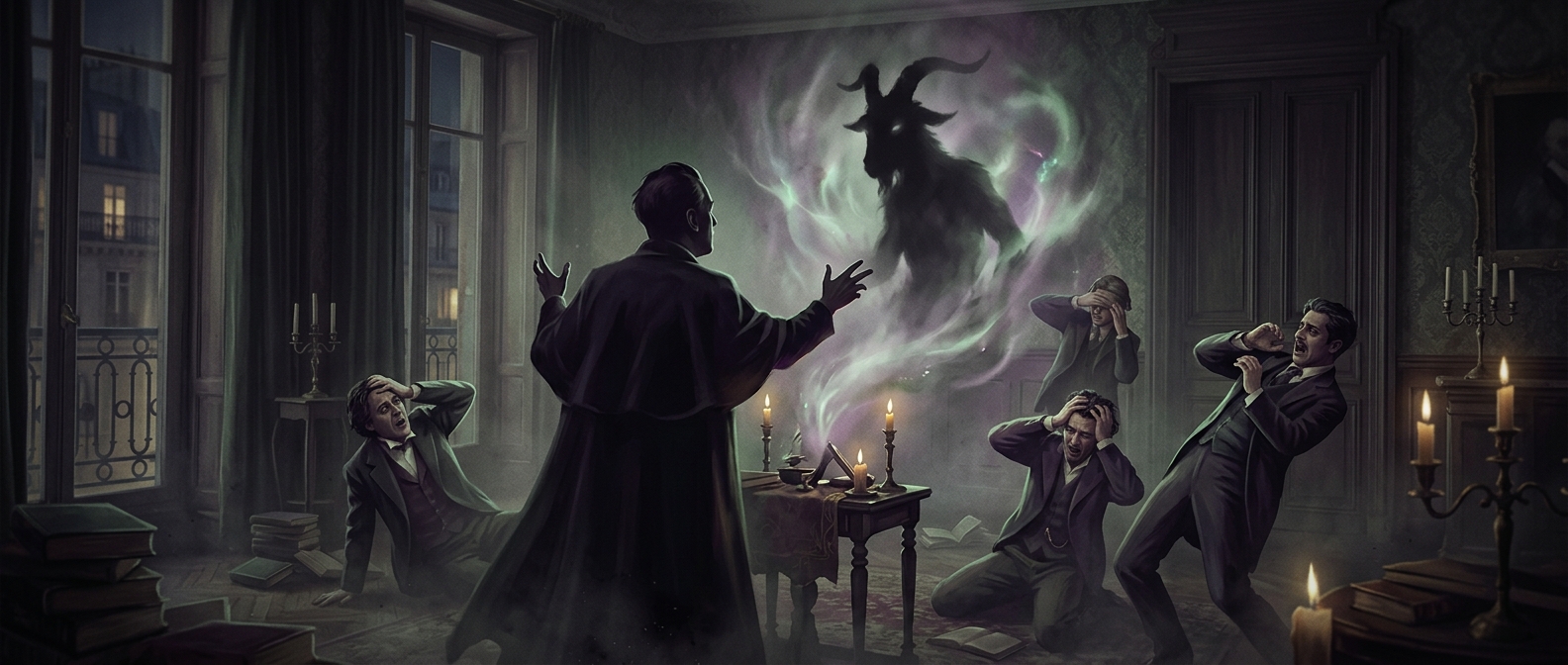
For Aleister Crowley, an act like eating human excrement was not simply a test of appetite. It was a deliberate collision with a powerful social taboo. Disgust is partly bodily—the response helps keep people away from potential sources of disease—but it is also shaped by rules about what is clean, respectable, and forbidden. Crossing such a boundary could serve as a practical ordeal: the participant had to face revulsion rather than retreat behind ordinary manners.
What “conquering the ego” meant
In this setting, the ego meant more than vanity. It was the familiar self built from habits, status, and assumptions about what a person would never do. Crowley’s ritual logic treated those assumptions as limits that could be challenged through extreme acts. The point was not that excrement became harmless or that disgust vanished; it was to confront the force of the reaction and claim greater control over it.
That distinction matters. A ritual could dramatize a spiritual ambition without proving that the ambition had been achieved. The act made an abstract idea—freedom from conventional identity—physical and difficult to ignore. It also carried obvious costs: disgust is a protective response, and violating a taboo can expose a person to real health risks as well as social consequences.
Crowley’s example shows how transgressive ritual works at its sharpest: it turns a private belief about liberation into a bodily ordeal, where the boundary being challenged is impossible to mistake.