A surface can hold a history
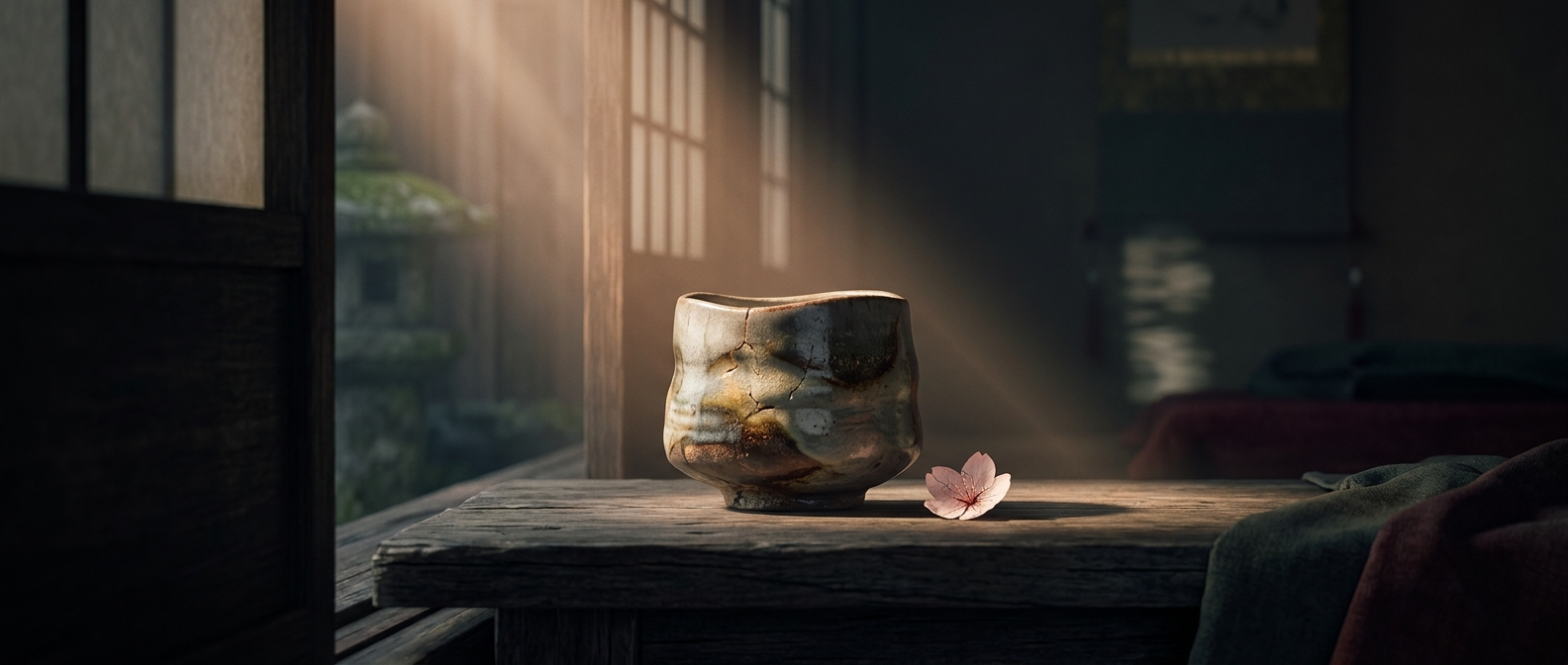
Wabi-sabi is a Japanese aesthetic that finds value in the changing, imperfect, and incomplete. Its appeal is not simply that an old object looks rough. A worn rim, softened color, or uneven glaze can show that an object has lived in the world: it has been handled, exposed to weather, or used over time.
That history changes how a person sees the object. Instead of reading its surface as a blank finish to be kept flawless, the viewer can notice the small differences that make it particular. A crack or patch of tarnish becomes part of the object’s visible story, not just a defect to erase.
The mark matters in context
Wabi-sabi does not mean that every broken or neglected thing is automatically beautiful. The effect depends on the object and on how its signs of age are understood. Wear on a cherished cup may suggest repeated use; the same damage on something unsafe or unusable may simply call for repair or replacement.
This sensibility is often associated with tea settings, where handmade bowls and utensils can have irregular shapes and surfaces. Their unevenness makes each piece feel distinct, and using them can draw attention to the present moment rather than to polished perfection.
The visible repair of broken pottery with lacquer and gold, known as kintsugi, is related in spirit but is a separate craft. It makes a break legible instead of disguising it. The practical consequence is a different standard of care: an object need not look untouched to be valued. Its repaired seam or worn edge can remain in view, carrying evidence of what it has been through.