Why a bear becomes a puzzle instead of a threat
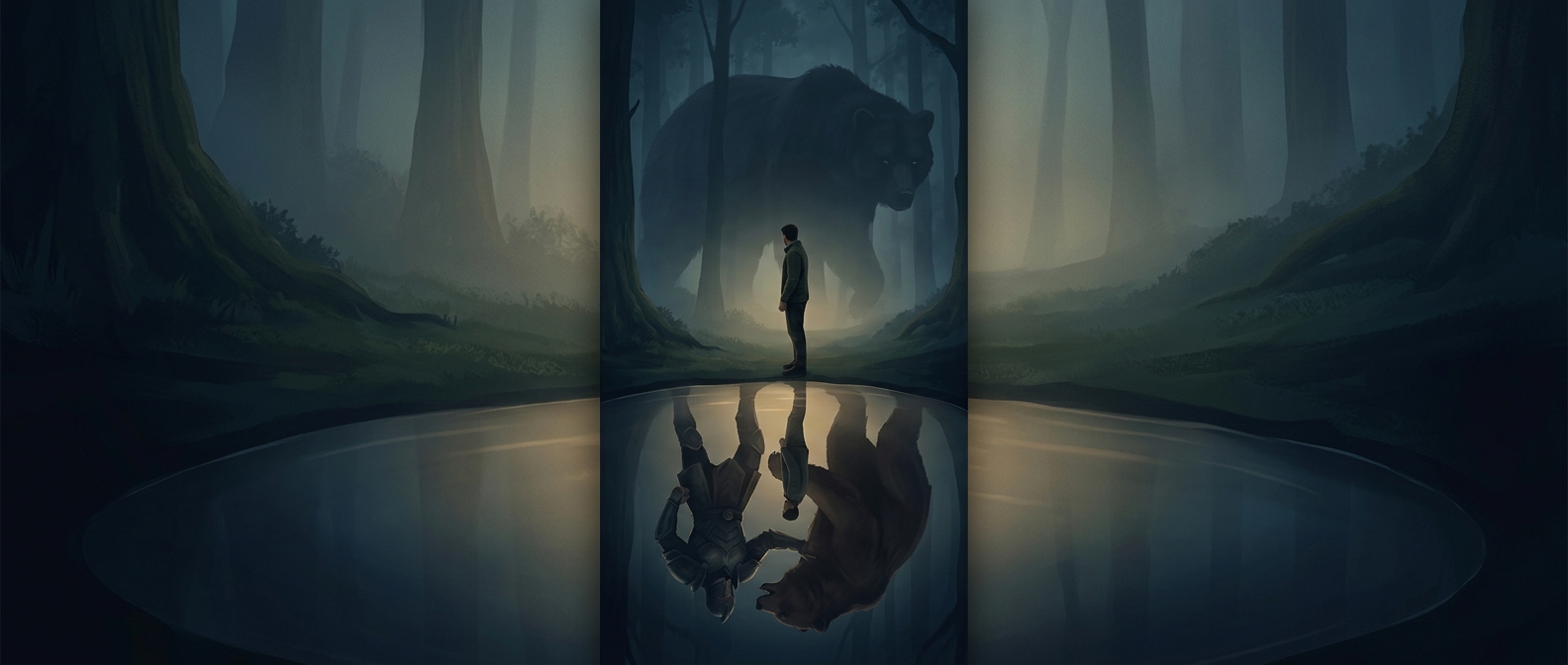
When people imagine facing a bear, they often picture a contest of decisions: keep your distance, find a tool, get help, make a plan. Those possibilities are easy to rehearse because they resemble familiar human problems. The bear’s most important advantage, by contrast, is hard to feel from a safe room: its strength and speed could make the encounter overwhelming before a plan mattered.
Imagination gives the human side more control
A mental scenario is not a neutral simulation. People can pause it, revise it, and add useful resources—while unconsciously making the animal less capable or less unpredictable. Psychologists call this controllability bias: we tend to overestimate how much influence we would have over events, especially when imagining ourselves acting skillfully.
The imbalance grows because humans are good at generating strategies. We can picture using a tool, coordinating with others, or choosing the right moment. But imagining a strategy is not the same as having the time, equipment, coordination, or calm to carry it out under sudden danger. The mind supplies the plan more vividly than it supplies the physical limits.
Familiar skills can crowd out unfamiliar risk
Planning and cooperation are genuine human strengths, but they do not erase the difference between a thought experiment and an encounter with a powerful wild animal. In imagination, the person often gets the benefit of preparation while the bear is reduced to a single, manageable obstacle.
That is why confidence in a hypothetical matchup can say more about how people picture control than about what they could actually do. The revealing detail is not the clever plan—it is how easily the mind grants itself time to use it.