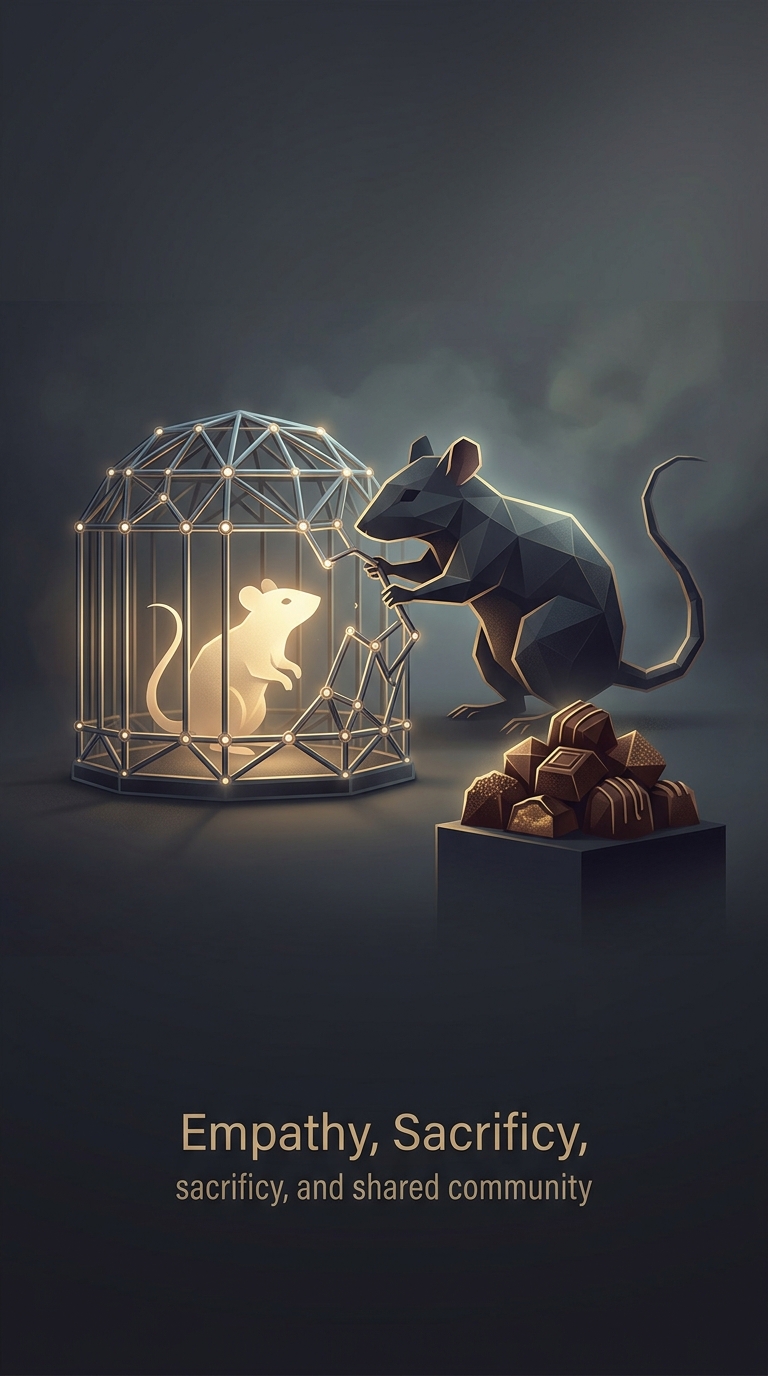
The choice was between a companion and chocolate
In a laboratory test, a rat could open a restrainer holding another rat or reach a container holding chocolate chips. The trapped animal was not a stranger: the rats were familiar with one another. Many subjects opened the companion’s restrainer even though doing so meant putting off access to the especially appealing food.
That delay matters. If helping and getting chocolate were equally immediate, choosing the companion would be less revealing about the trade-off. Here, the rat had to give up the faster route to a treat in order to free its cage-mate. In follow-up trials, rats that released companions often shared the chocolate with them, too.
What the behavior can—and cannot—show
The pattern is consistent with empathy-driven helping: another rat’s distress may motivate behavior that costs the helper something. Researchers can observe the choice, the delay, and the release; they cannot directly observe what the rat feels. The behavior alone therefore does not establish that a rat’s inner experience is identical to human empathy.
Other factors, such as social contact or a learned response to a distressed animal, may contribute. Still, the experiment offers a concrete clue about the roots of helping: a rat did not merely approach a companion after the danger had passed. It took an action that freed the animal, even when the action postponed chocolate.