How pigeons learned to sort paintings
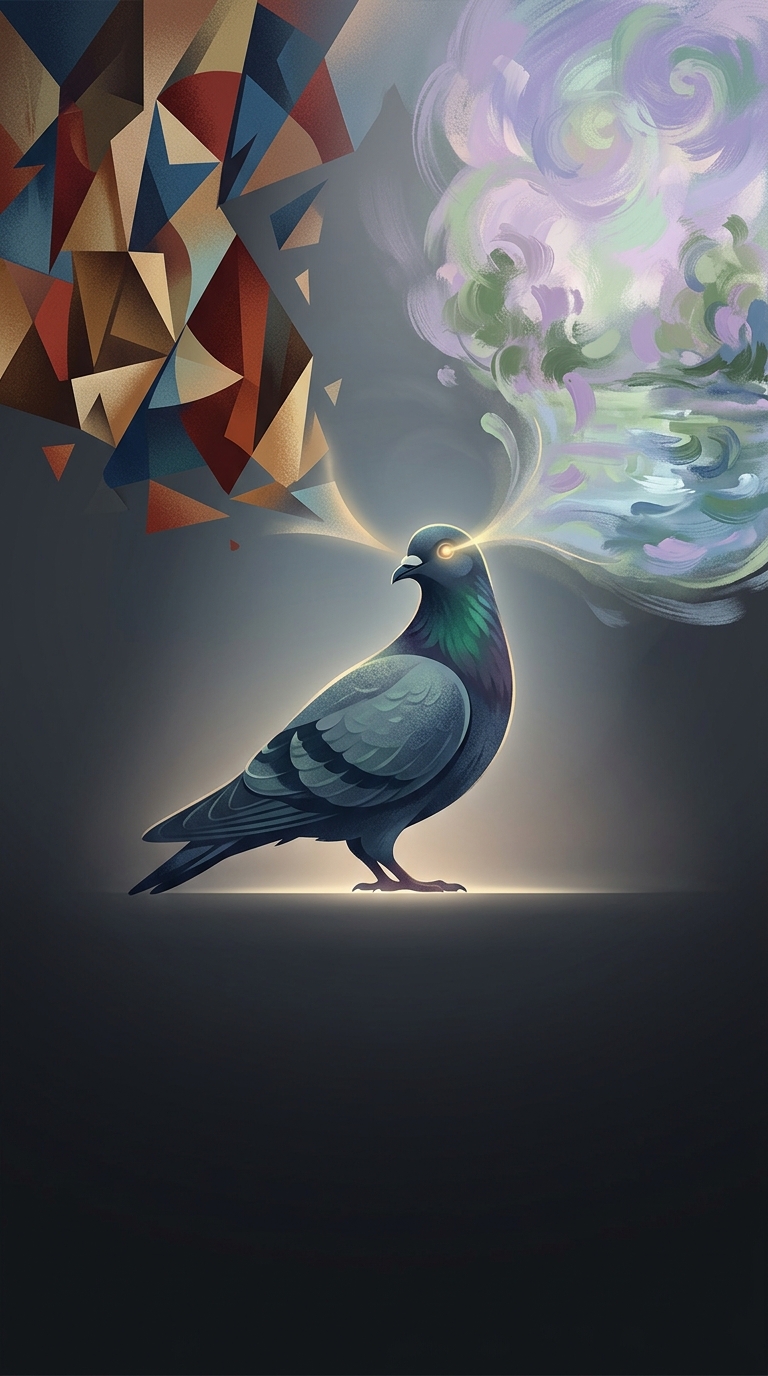
In behavioral experiments, pigeons were shown paintings by Pablo Picasso and Claude Monet and trained to respond differently to the two groups. A correct response brought a food reward; an incorrect one did not. This is behavioral conditioning: an animal learns that a particular action pays off in a particular situation.
The task did not require the birds to know who Picasso and Monet were. They had to detect visual differences that reliably separated the examples they saw. Those differences might include patterns of color, edges, shapes, or brushlike marks—features a pigeon can perceive without understanding a painting’s subject or artistic style as a human does.
The test was whether the rule could travel
If the birds had only memorized individual canvases, unfamiliar paintings would have been new puzzles. Instead, they could sort paintings they had not been trained on, including works by other artists. That ability is called generalization: applying a learned distinction to new examples.
Generalization does not mean the pigeons formed a humanlike theory of art. It shows that their visual system could pick up a combination of image features that worked well enough to classify fresh pictures. The experiment’s key result was therefore not simply that pigeons can remember images, but that learning can extract a usable pattern from them.
A bird trained on a small set of paintings could carry that visual rule beyond the canvases it had encountered—a modest but striking example of how perception turns repeated images into categories.