How a honeymoon became a coordinated trip
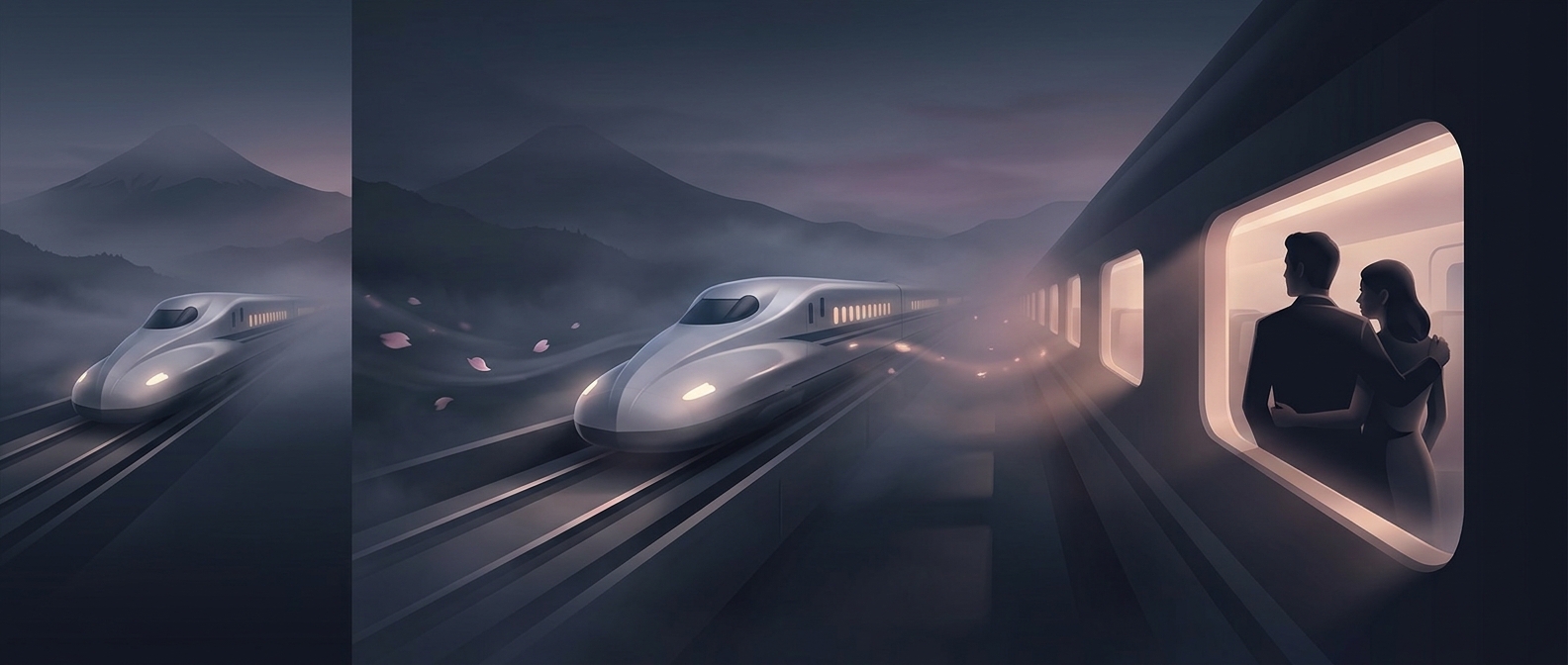
A couple heading to a Kyushu resort did not have to assemble every part of the journey themselves. Package travel linked the rail ride with resort stays and a planned itinerary, while coordinated train schedules helped move groups of newlyweds along the same route. The romance was personal; the logistics were standardized.
That arrangement mattered because a honeymoon involved more than choosing a destination. Couples had to match train times with lodging and travel plans. A package reduced those decisions to a ready-made sequence, making a distant resort trip easier to organize and more predictable.
The timetable behind the romance
Rail travel gave the package its backbone: many passengers could travel together, and resorts could plan around arrivals. With departures and stays coordinated, the journey worked less like an improvised private expedition and more like a repeatable service. That is the sense in which the trips were “factory-produced”—not that every couple’s experience was identical, but that the complicated parts could be arranged in advance.
The model also made a shared social experience out of a private milestone. Couples set out for the same kind of getaway, on linked schedules, and arrived at resorts prepared to receive them. The train did more than carry honeymooners to Kyushu; it helped turn the trip itself into a package that could be reliably offered to thousands.