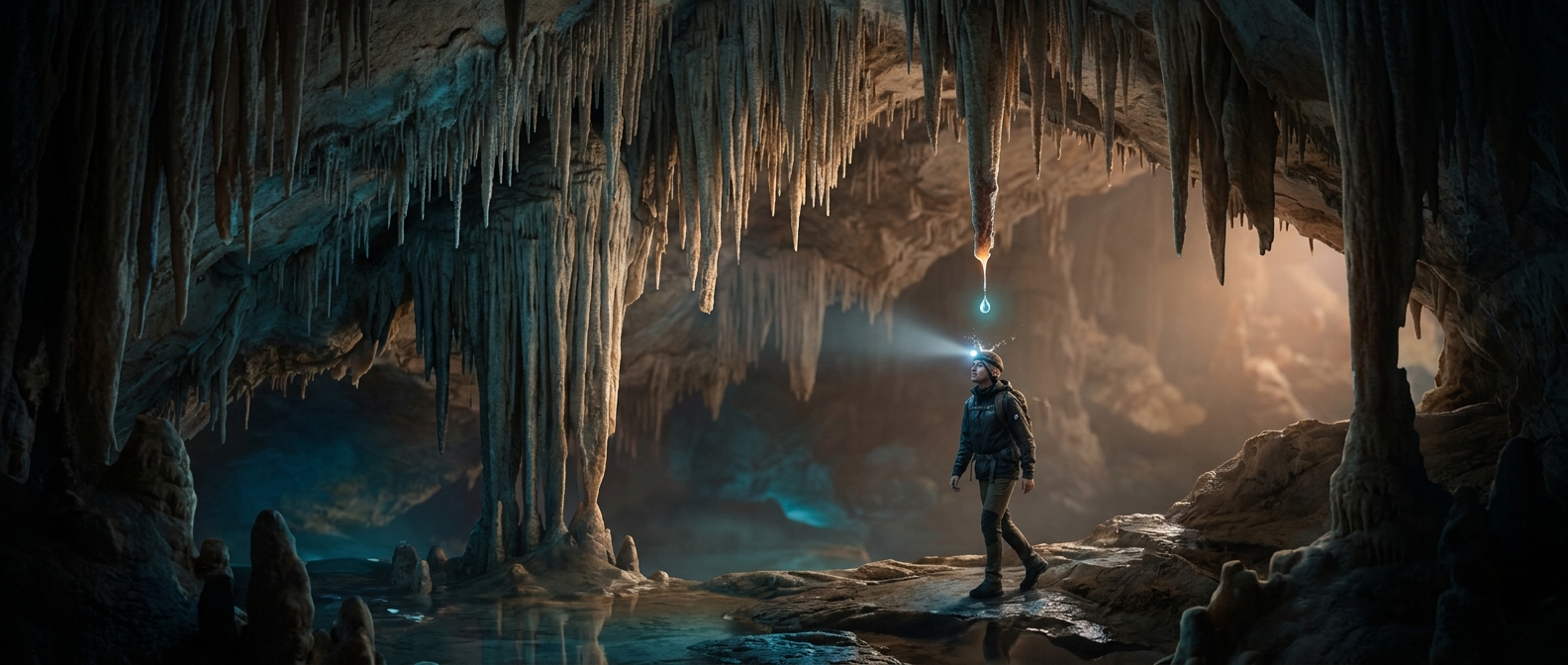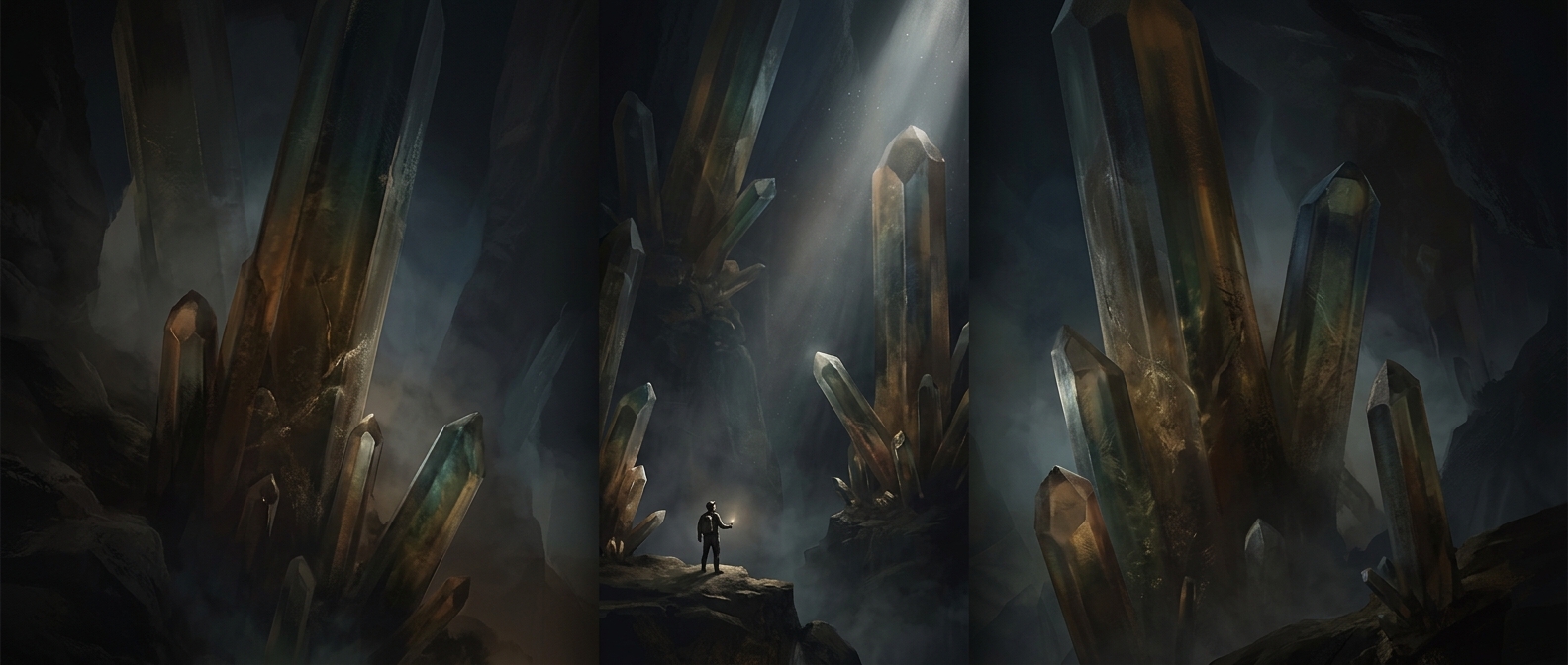
How cave water builds a crystal one layer at a time
A cave crystal grows when water carries more dissolved mineral than it can keep in solution. That state is called supersaturation: a small change in temperature, acidity, or water chemistry can make some of the mineral come out of the water and attach to a solid surface.
An existing crystal gives those mineral particles an orderly place to settle. Rather than starting a new crystal from scratch, they join the structure already there, extending its faces in a repeating pattern. Each addition may be too thin to see, but the accumulation can gradually enlarge the crystal.
Stability is part of the recipe
Growth depends on more than a steady supply of mineral. If water conditions swing sharply, a crystal may stop growing or begin to dissolve. In a protected cave, relatively stable temperatures and chemistry can let deposition continue with fewer interruptions. Slow-moving water can also keep feeding dissolved material to the growing surface without the disturbance of strong currents.
The result is not necessarily a constant, uninterrupted growth spurt. Changes in the water can alter the pace or pause the process; later, favorable conditions may allow it to resume. The crystal’s size is therefore the accumulated outcome of many small episodes, not a single dramatic event.
A record made at a microscopic scale
The crystal’s ordered structure is built from repeated mineral additions, while its larger shape reflects the conditions at the surface where those additions occurred. A cave can thus preserve growth that is almost imperceptible from one moment to the next but substantial over immense spans of time. What looks like a finished object may still be gaining material—one nearly invisible layer at a time.