A drip begins in the rock above you
Rainwater absorbs carbon dioxide from soil and air, becoming mildly acidic. As it seeps through cracks in limestone, it dissolves a small amount of the rock and carries that material downward in the water. When the seep reaches a cave ceiling, the water may collect at a tiny crack or low point before forming a drop.
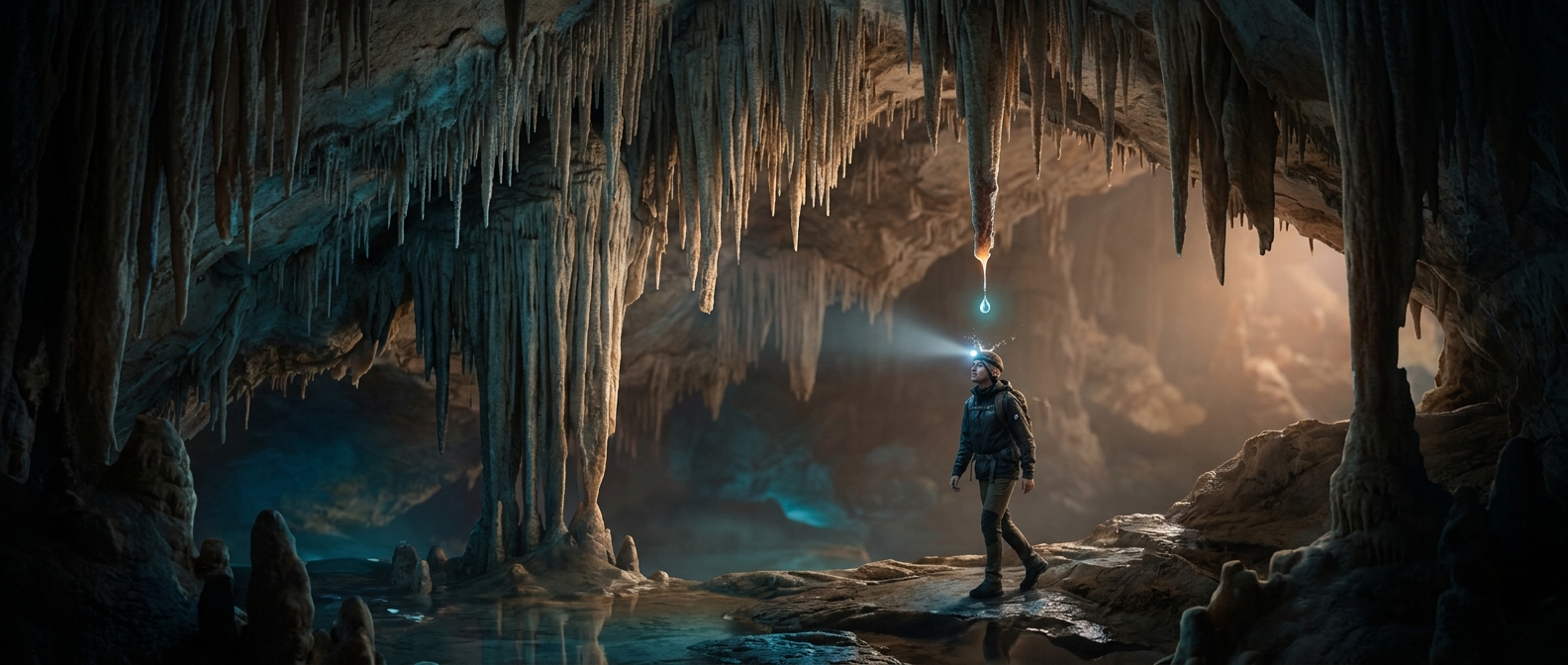
A drop can fall when its weight overcomes the forces holding it to the ceiling. Because the water follows narrow, irregular pathways, it may emerge from one spot while the rock nearby stays dry. A visitor can end up beneath that one active route simply by standing in the wrong place.
The same drip can build a stone spike
Inside the cave, some dissolved carbon dioxide escapes from the water into the air. That change allows calcite—the mineral in limestone—to come out of the water and remain as a thin deposit on the ceiling. Repeated drops add more mineral at the same point, gradually extending a stalactite downward.
The growth is so slow that a single visit reveals almost nothing of it. But the next drop is part of the same process: water travels through the rock, arrives at a particular opening, and leaves behind a trace of limestone before falling. The spot that taps a visitor’s neck may be adding, drop by drop, to a formation that records a much longer history of water moving through the cave.