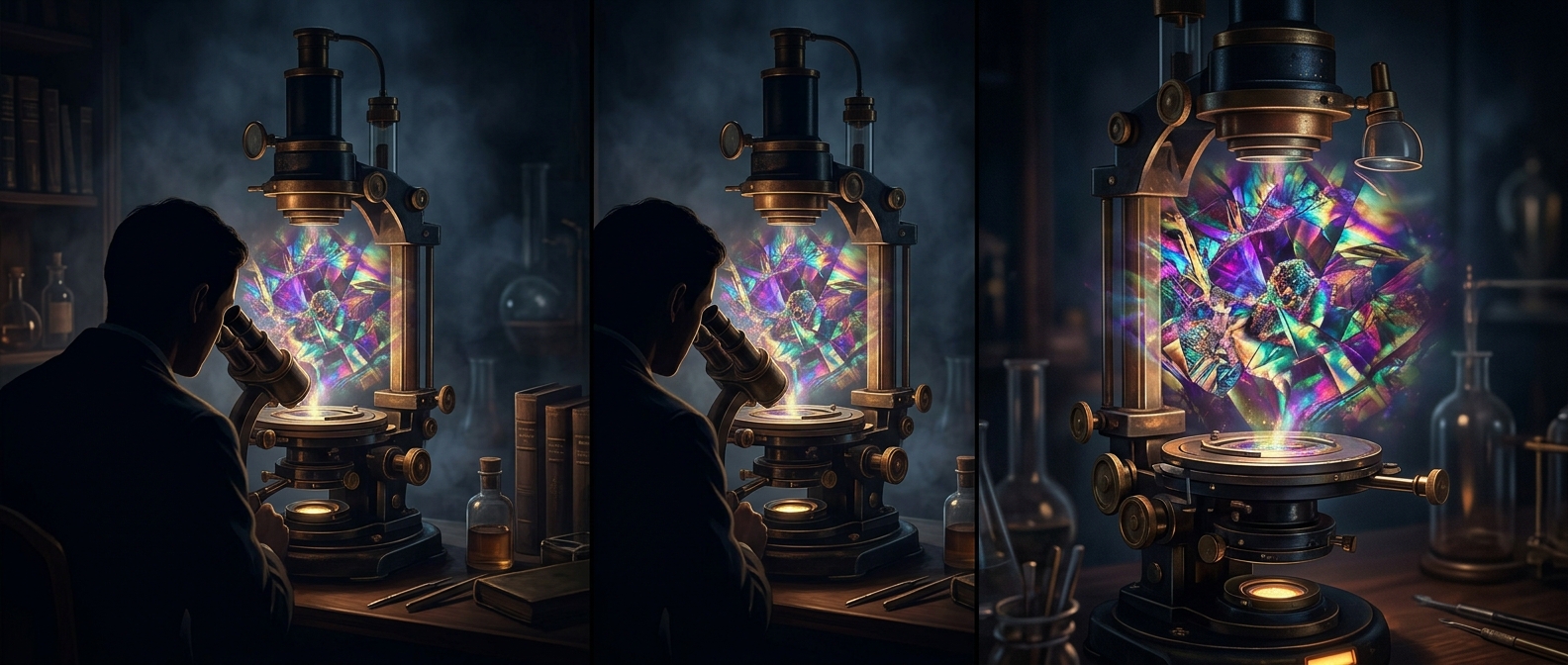
A crystal splits light into competing paths
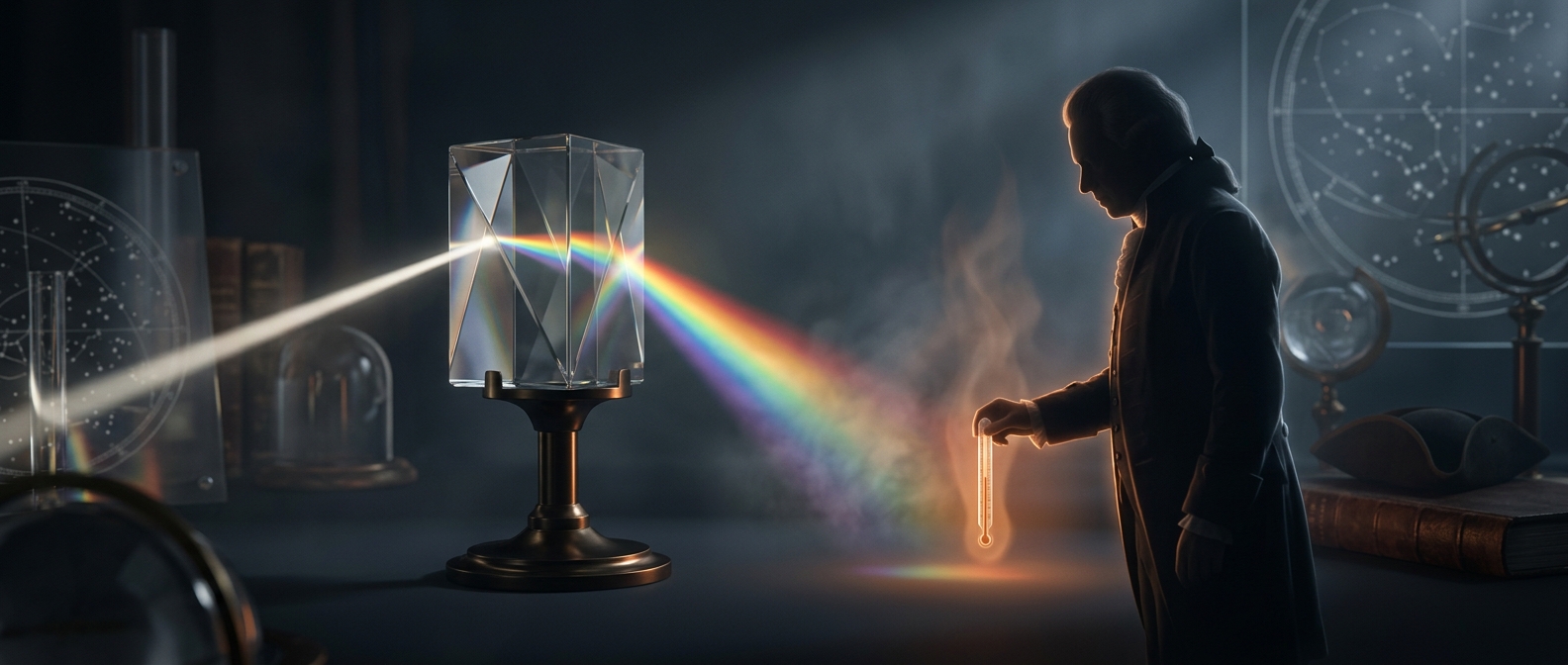
A rare mineral can look unexpectedly vivid under a polarized-light microscope because many crystals affect light differently depending on its direction of travel and vibration. As light enters such a crystal, it often separates into two waves that move through the material at different speeds. This property is called birefringence.
The speed difference creates a delay between the waves. When they leave the crystal, that delay means their crests and troughs no longer line up as they did before. The amount of delay depends on the mineral’s optical properties, the light’s wavelength, the crystal’s orientation, and how far the light travels through it.
The second filter turns delay into color
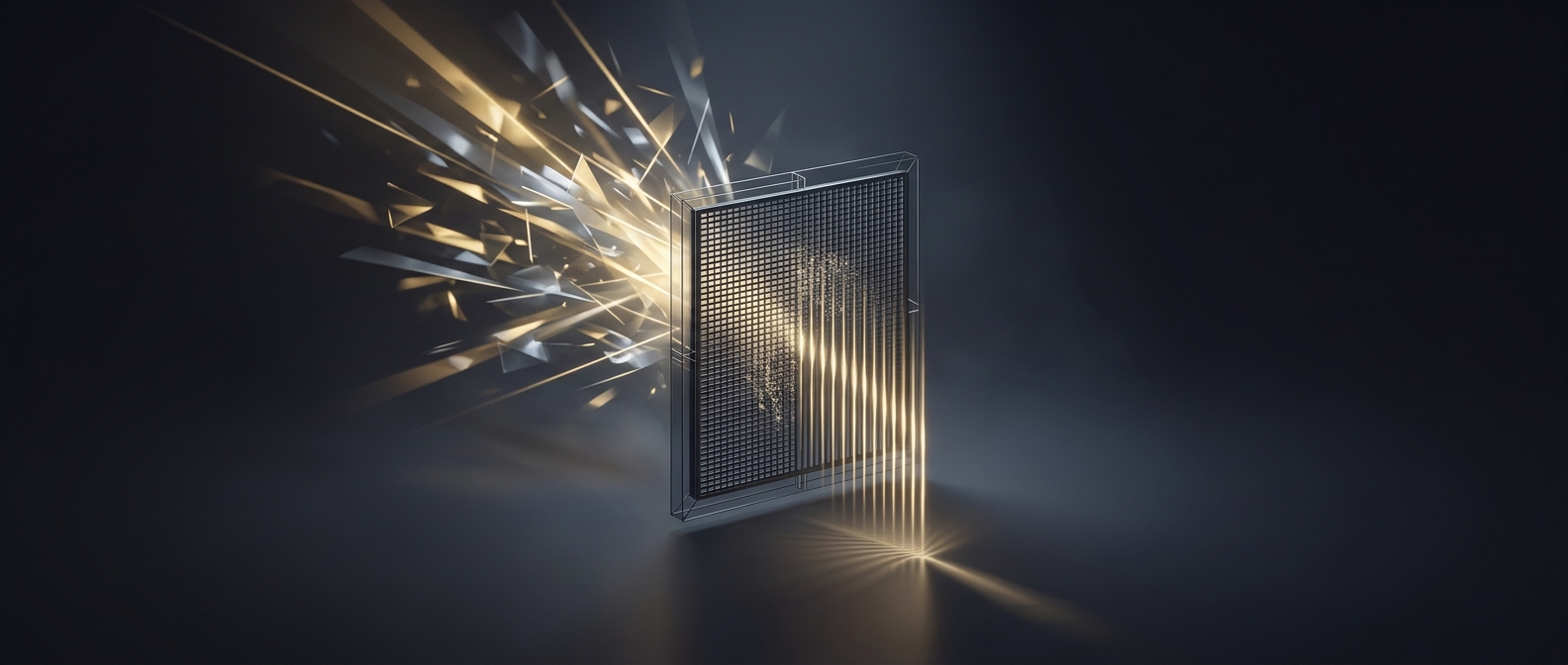
The microscope’s first filter, or polarizer, restricts the light to a particular direction of vibration. A second filter, called the analyzer, is placed across the light’s path after the crystal. It blocks some orientations and transmits others, so the two delayed waves can combine differently depending on their relationship.
When their vibrations reinforce, more light reaches the eye; when they partly cancel, less does. Because the delay affects different wavelengths by different amounts, some colors may be strengthened while others are suppressed. The result is a shifting palette rather than a simple bright-or-dark image. These colors are interference colors: they arise from how light waves combine, not from the mineral’s ordinary surface color.
A pattern that reveals structure
Rotate the crystal, and the waves’ paths through it change relative to the filters, shifting the pattern. Change the crystal’s thickness, and the waves accumulate a different delay, often changing the colors again. A thin section of one mineral can therefore look unlike a thicker piece, even under the same microscope settings.
That sensitivity makes polarized light useful for identifying and studying minerals. The colors and their changes offer clues about how a crystal bends light and how it is oriented. The microscope is not merely illuminating a strange appearance: it is making otherwise invisible differences in light’s travel visible as a map of the crystal.