Why the reflections seem to go on forever
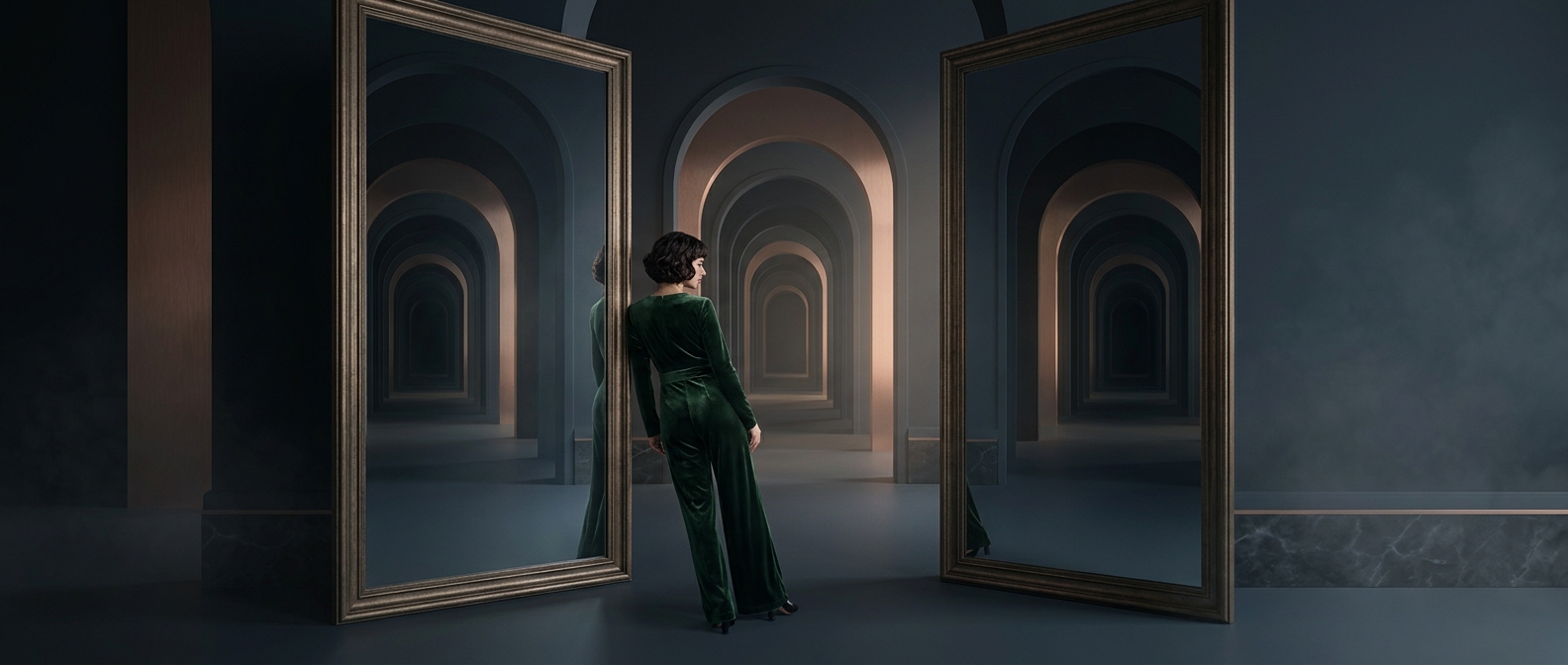
Place two mirrors facing each other and each one reflects not just the room, but the image in the mirror opposite. That image contains another image of the first mirror, which contains another image, and so on. The arrangement creates a chain of apparent reflections: every visible image stands for light that has made another round trip between the mirrors.
Each trip weakens the light
A mirror reflects most of the light that reaches it, but no real mirror reflects all of it. Some light is absorbed by the mirror’s coating or glass and converted into a tiny amount of heat; some may pass through or scatter away. On each journey from one mirror to the other and back, the remaining light is reflected again, so less reaches your eyes from each successive image.
The fading compounds. If a mirror returns, for example, nine-tenths of the light that strikes it, two reflections preserve only about four-fifths of the original light, and ten preserve about a third—before accounting for losses from the glass, the surroundings, or imperfect alignment. The exact fade depends on the mirrors and setup, but the direction is unavoidable: deeper images are dimmer.
An endless pattern with a visible limit
The mirrors do not contain a literal corridor, and the reflections do not abruptly stop at a last image. Instead, each deeper image falls below the brightness and contrast your eyes can distinguish from the surrounding gloom. Small flaws and slight misalignment can make it disappear sooner, too.
So the tunnel is endless in the pattern of reflections, but finite in what you can see. Its apparent endpoint is where the surviving light becomes too faint for your eyes to separate one more image.