Why some cargo is kept out of the Mont Blanc Tunnel
A hazardous load can turn a vehicle breakdown into a tunnel-wide emergency. In open air, smoke and toxic gases can disperse; inside a long enclosed passage, they can travel along the roadway and quickly make escape difficult. Heat and smoke also complicate rescue crews’ efforts to reach the source.
The danger is not limited to a spectacular fire. A leak from a tanker or a damaged package could expose people far from the vehicle, while a burning load may release fumes that are especially harmful or hard to control. In a confined tunnel, the problem is how little room there is to get away from the hazard.
Routing is part of the safety system
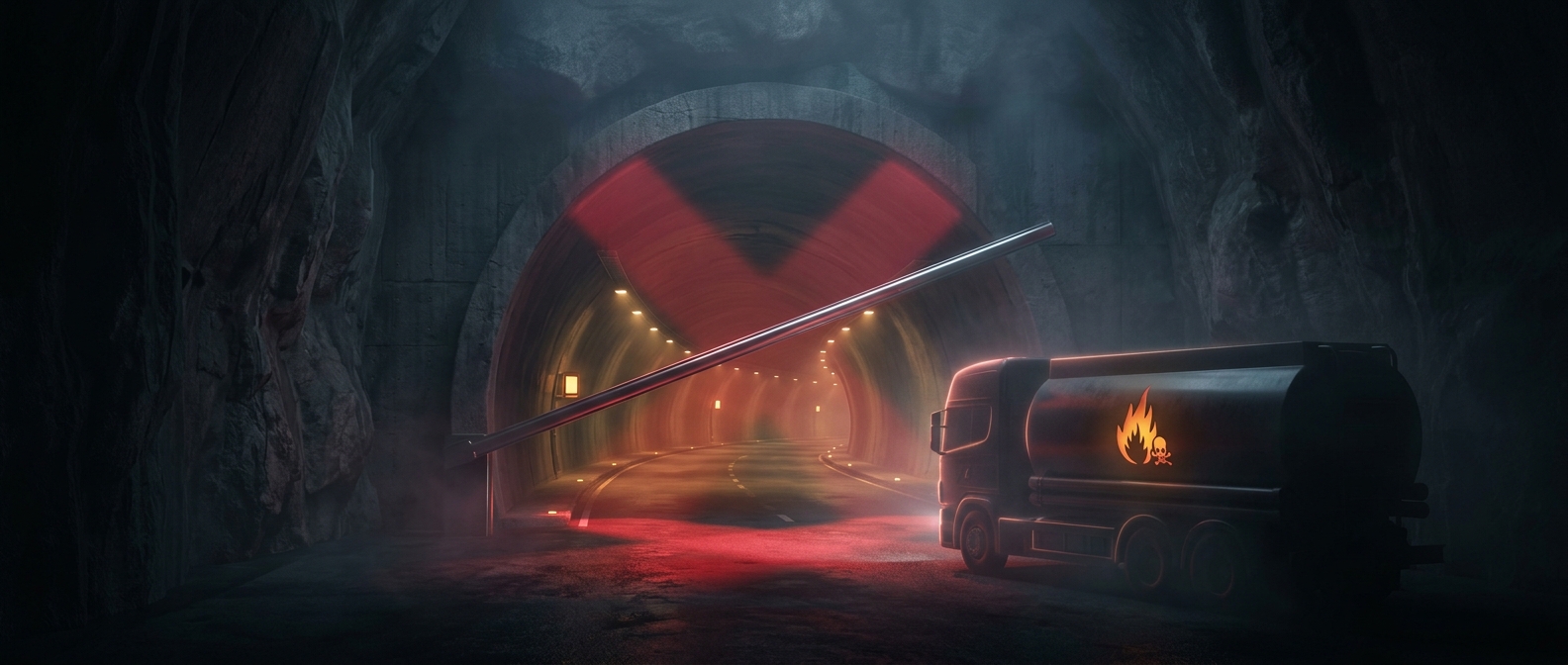
Restrictions apply to particular categories of dangerous goods, rather than making every regulated or unusual load automatically equivalent. When a cargo is barred, the carrier must plan another route instead of treating the tunnel as a convenient shortcut. That can mean extra distance and time, but it keeps certain high-consequence loads out of a place where an incident would be unusually hard to manage.
The tunnel’s emergency equipment and operating procedures are important safeguards, but they cannot make every possible cargo incident easy to contain. A rule that prevents a dangerous load from entering removes one source of risk before drivers, tunnel staff, or rescue teams have to respond. In a long Alpine passage, the safest emergency is sometimes the one that never arrives at the entrance.