A tape built for the moving car
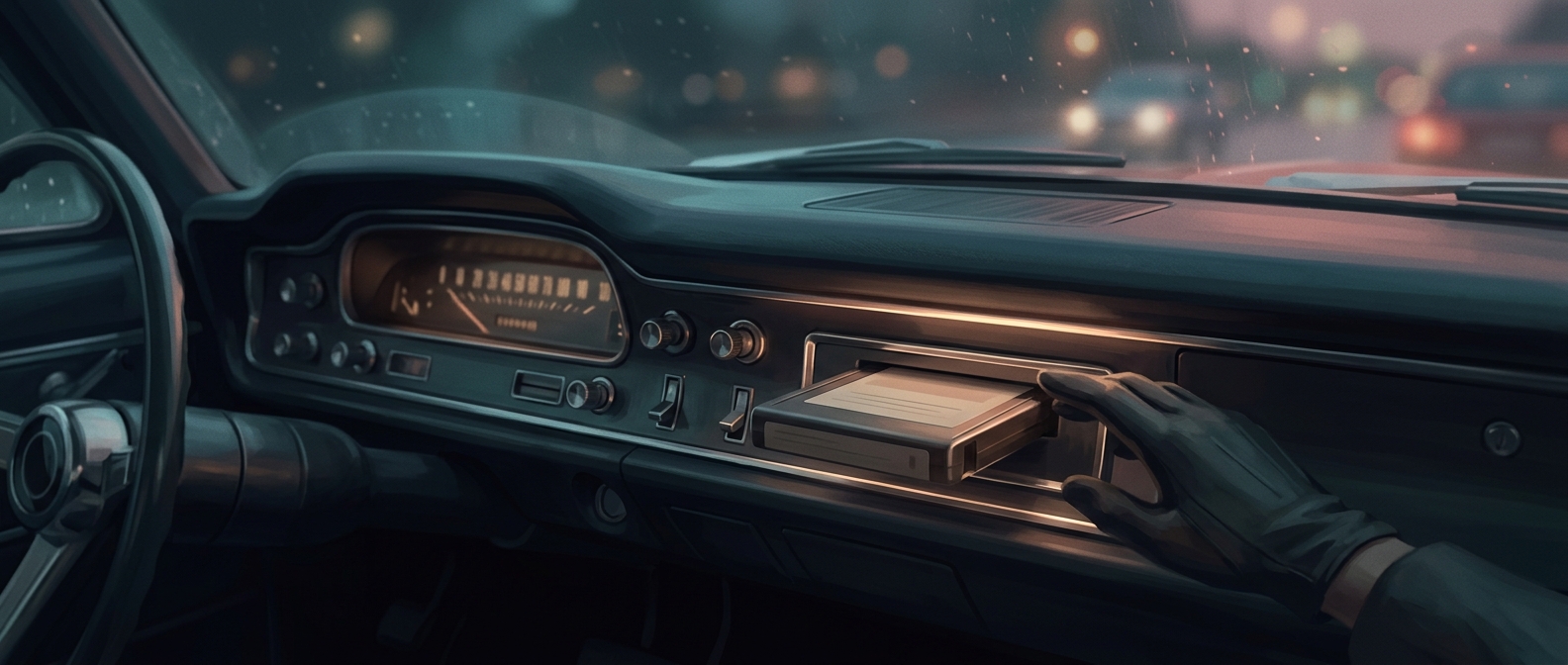
An eight-track cartridge solved a practical problem: how to play recorded music in a car without handling a record or threading a loose reel of tape. The tape ran in a continuous loop inside a self-contained cartridge, so a driver could insert it and press play. The format’s name referred to its eight parallel channels, arranged as four stereo programs.
The click between programs
Because the tape loop had to keep moving in one direction, the player could not simply rewind to the start of a conventional album side. Instead, it divided the recording into four programs. When the tape reached the end of one, the player’s head shifted to another pair of channels—a track change often marked by a noticeable click. A driver could also press a button to switch programs manually, though a song could be interrupted if it crossed a program boundary.
That tradeoff suited the format’s main setting: a car, where easy operation mattered more than seamless album sequencing. The cartridge was sturdy and simple to load, but the automatic switches made the listening experience less precise than playing a record at home.
Ford put the format within reach
Ford helped turn eight-track from a specialized gadget into a familiar car-audio option by offering dashboard players in its vehicles in the 1960s. Putting the player in the car itself gave drivers a ready-made way to listen to prerecorded music on the road; they did not need to install a separate aftermarket system. As more motorists encountered the format behind the dashboard, demand for eight-track releases and players grew.
The format’s lasting association with driving came from that combination: a cartridge you could load quickly, controls you could use from the seat, and a player built into the car. Its signature mid-song click was the audible price of making a continuous tape loop work.