How a yak turns a mountain route into a supply line
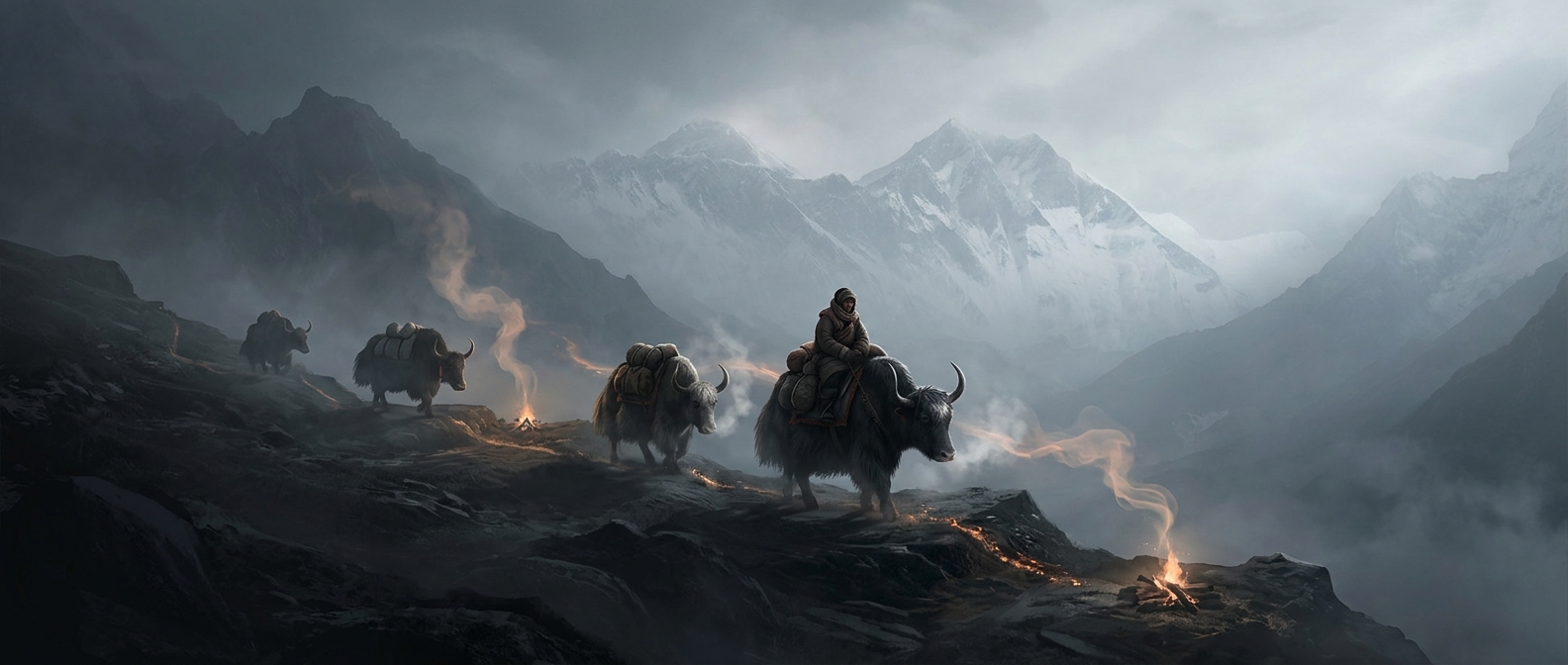
At high elevations, a trail can be too steep, narrow, or uneven for wheeled vehicles, while people and goods still need to move between settlements. A yak can carry loads along these paths on its own feet. Its broad, steady footing helps it negotiate rough ground, and its thick coat suits the cold conditions. That makes the animal a practical link between places that roads cannot easily connect.
The fuel follows the load
In regions where trees are scarce, firewood may be difficult to obtain. Yak dung offers another fuel once it has been collected and dried. Drying matters: fresh dung contains moisture, so it does not burn as readily. Once dry, it can be used in a stove for cooking or warmth.
This creates a useful chain of work. The yak brings supplies to a household or mountain stop; its dung can then help fuel the stove that serves the people there. The animal is not just transport arriving at the end of a journey—the material it leaves behind can support daily life after the load is unloaded.
A tradeoff shaped by the landscape
Using dung as fuel makes sense where vegetation is limited, but it also depends on keeping animals and collecting and drying their waste. The arrangement reflects a tight local constraint: steep terrain limits transport options, and scarce trees limit fuel options. One animal can help solve both problems, first by moving what people need and then by supplying burnable fuel.