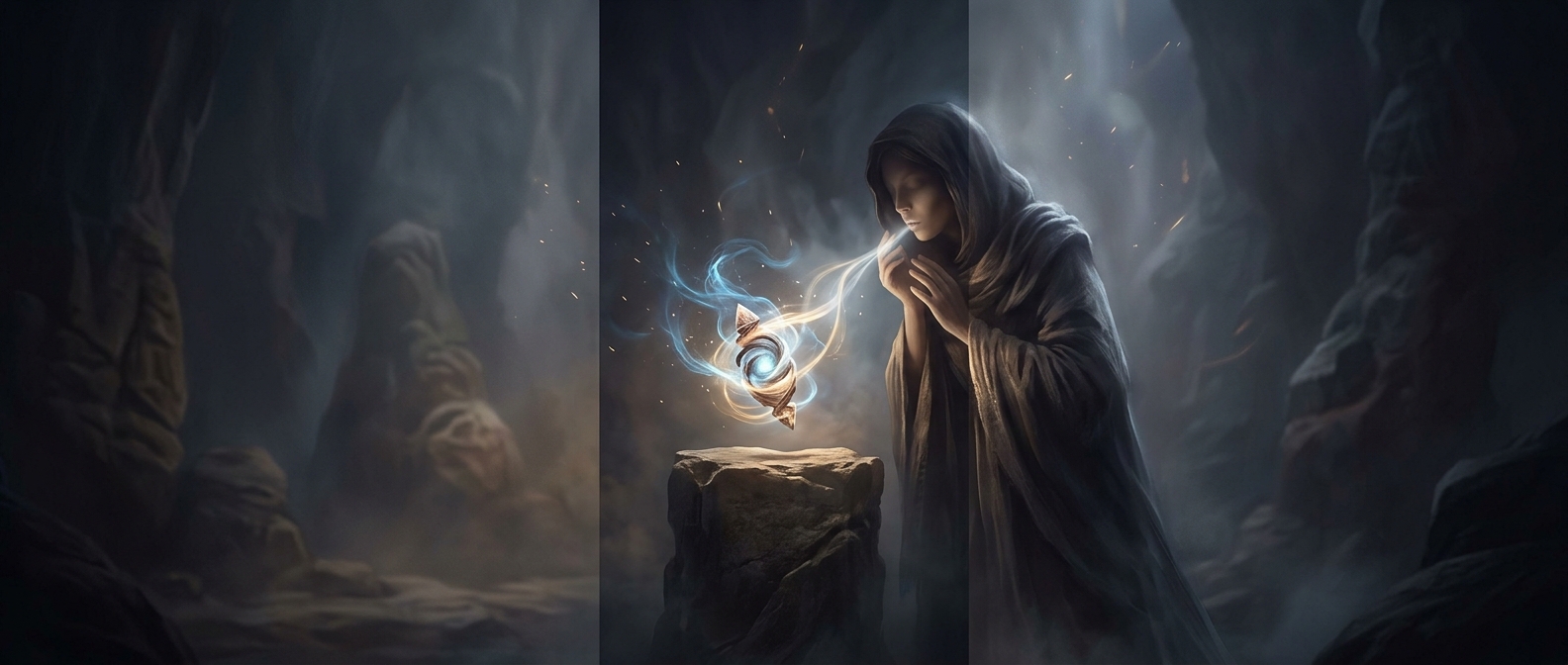
Why a Breath Can Mark a Tool’s Beginning
In rituals that use a deliberate exhale, breath can serve as a bridge between the person and the object. The tool may be physically unchanged, but the action gives its use a defined beginning: the practitioner pauses, directs attention toward it, and treats it as ready for a purpose.
Breath is especially suited to this role because it is both ordinary and intimate. It is part of the body, yet it passes outward into the space around it. Within a ritual’s own understanding, that makes an exhale a tangible way to express intention—not merely to think it, but to enact it.
The Gesture Gives Intention a Form
A sharp breath can make the moment feel decisive. Its sound and movement provide a small, repeatable cue: attention gathers, the tool is addressed, and the next action follows. In that sense, the gesture can help the practitioner shift from everyday handling to focused ritual use.
The meaning is not universal. Different practitioners and traditions may understand breath, energy, and tools in different ways, and the act does not have one fixed interpretation. Its significance comes from the ritual context and the meaning the participant assigns to it.
That is why the breath can matter even when nothing visible changes in the tool. It turns an inward intention into an outward act—and gives the practitioner a clear moment at which the work begins.