How alchemists made rising vapor mean refinement
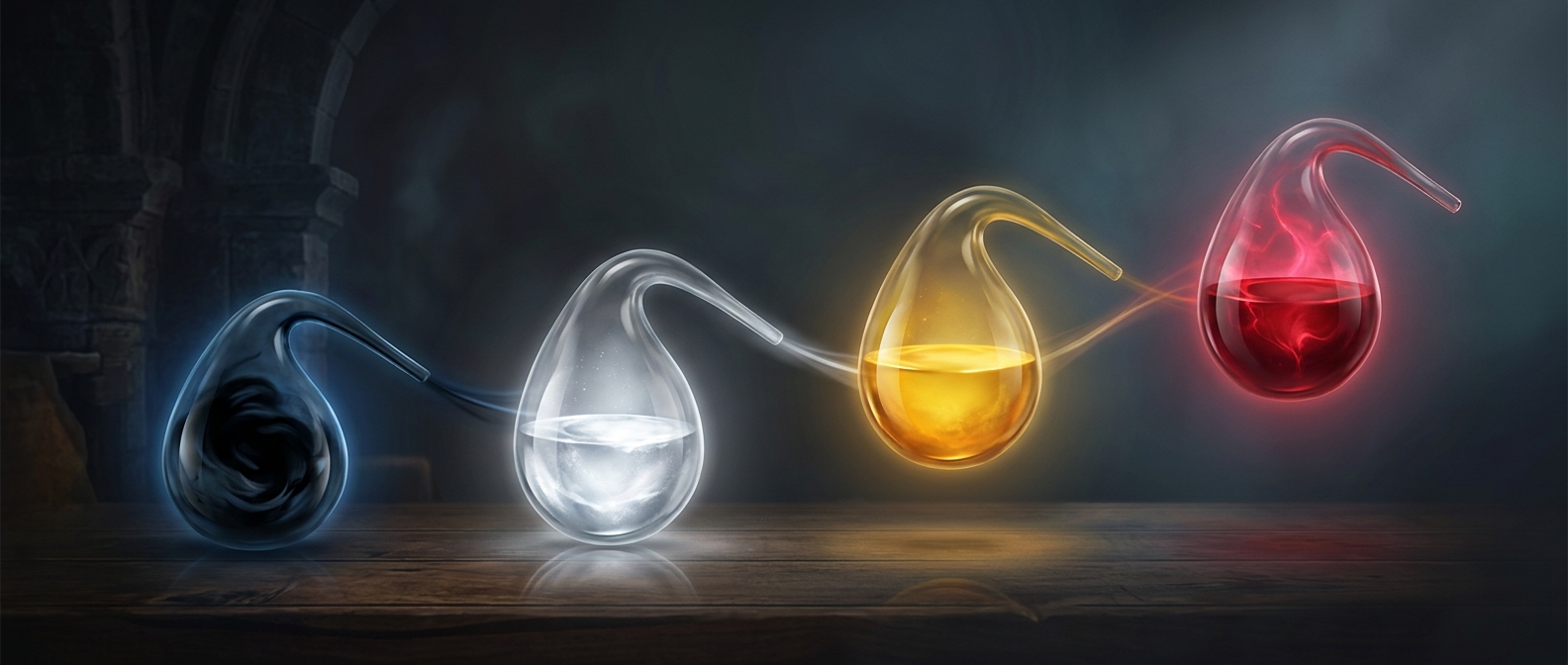
In alchemical practice, sublimation was both a laboratory operation and a way of thinking about change. A substance was heated in a vessel so that its more volatile part—material that readily became vapor—rose away from heavier residue. When the vapor cooled, it could settle again as a solid. The rising and returning made the process visible: matter seemed to leave its ordinary state and emerge separated from what remained behind.
A physical separation with a larger meaning
That separation gave alchemists a practical reason to use sublimation. Heating could help isolate or purify a substance, though results depended on the material and the apparatus. But the operation also supplied a compelling image of refinement: what rose was imagined as lighter, subtler, or more elevated than the residue below.
Alchemy often joined hands-on work with symbolic interpretation. In that framework, transforming a material could stand for transforming its quality—or, in some traditions, the practitioner’s own understanding. Calling the product more “ethereal” expressed this hierarchy of meanings; it was not a modern scientific claim that vapor had become spiritual matter.
The symbolism grew directly from the apparatus: a solid disappeared upward, while something could later collect above the leftover material. A separation that could be watched in a vessel became a picture of leaving the crude behind.