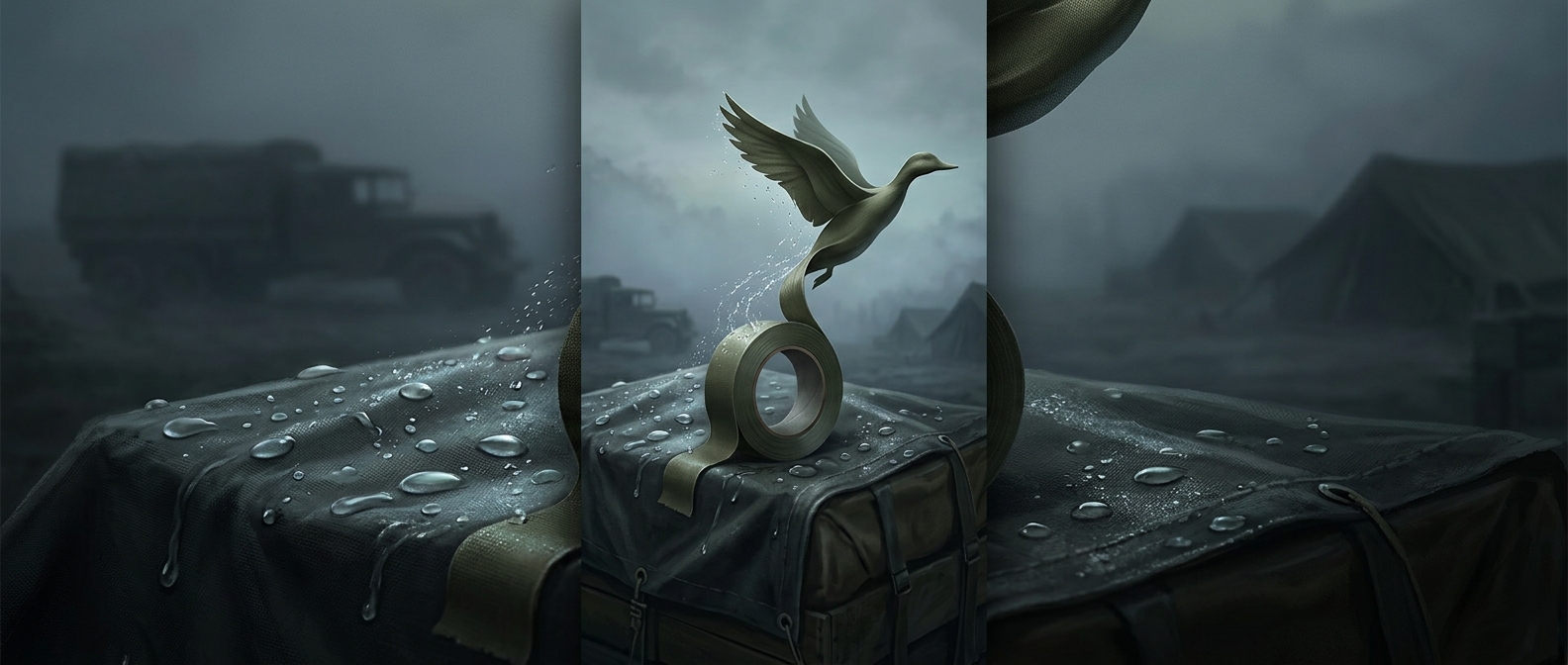
“Duck” named the fabric, not the bird
Cotton duck is a sturdy, tightly woven canvas. In the tape, it served as the backing: the flexible layer that gave the adhesive strip strength and kept it from tearing too easily when handled. The name “duck tape” therefore pointed to the material inside the product, not to an animal or a special shape.
The cloth alone did not make the tape waterproof. Its backing was treated to resist water, while the adhesive on the other side let it stick to a surface. Together, those layers turned a familiar woven fabric into a practical sealing strip.
A name tied to its first job
The tape was made for sealing ammunition cases, where a secure closure could help keep moisture away from their contents. That purpose explains why its construction mattered: it needed to combine a tough fabric backing with a water-resistant surface and an adhesive bond.
The original name preserves that material choice. Long after the tape found uses beyond ammunition cases, “duck tape” remained a reminder that its first identity came from the canvas-like cloth at its core—not simply from the jobs people later found for it.