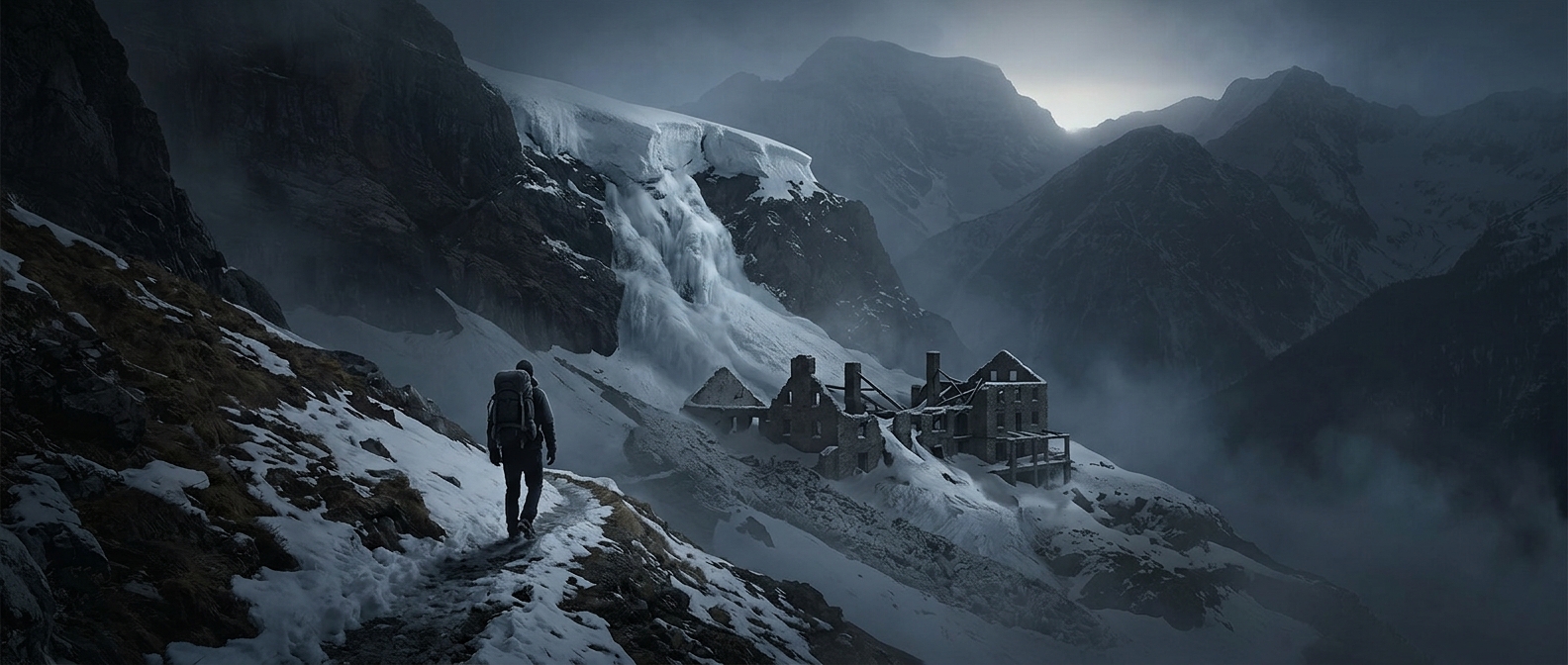
A hotel built for the railway’s mountain crossing
Glacier House was more than a place to sleep: it was part of the Canadian Pacific Railway’s effort to make travel through rugged mountain country more comfortable. For passengers crossing the region by train, a luxury hotel offered a reason to stop—and a sheltered base from which to experience the surrounding landscape.
That setting also carried a serious hazard. Avalanches happen when snow on a slope breaks loose and rushes downhill, and repeated avalanches made the hotel’s location increasingly difficult to use safely. The same mountains that gave the stop its dramatic appeal could also threaten the building and the people inside it.
What the ruins preserve
Glacier House closed permanently in 1925. Its surviving foundations and rusted boilers reveal different parts of the vanished operation: the foundations mark where the large building stood, while the boilers point to the practical systems needed to keep a hotel running in a remote mountain setting.
Moss has since spread over the stone, but the remains are not simply picturesque leftovers. They show how railway-era hospitality depended on a difficult bargain: bringing travelers close to spectacular scenery also meant building amid natural forces that could overwhelm the infrastructure. On the trail, the hotel’s ruins make that bargain tangible—an industrial-age retreat reduced to foundations and machinery by the mountain environment it was built to showcase.