What sparagmos meant in Dionysian ritual
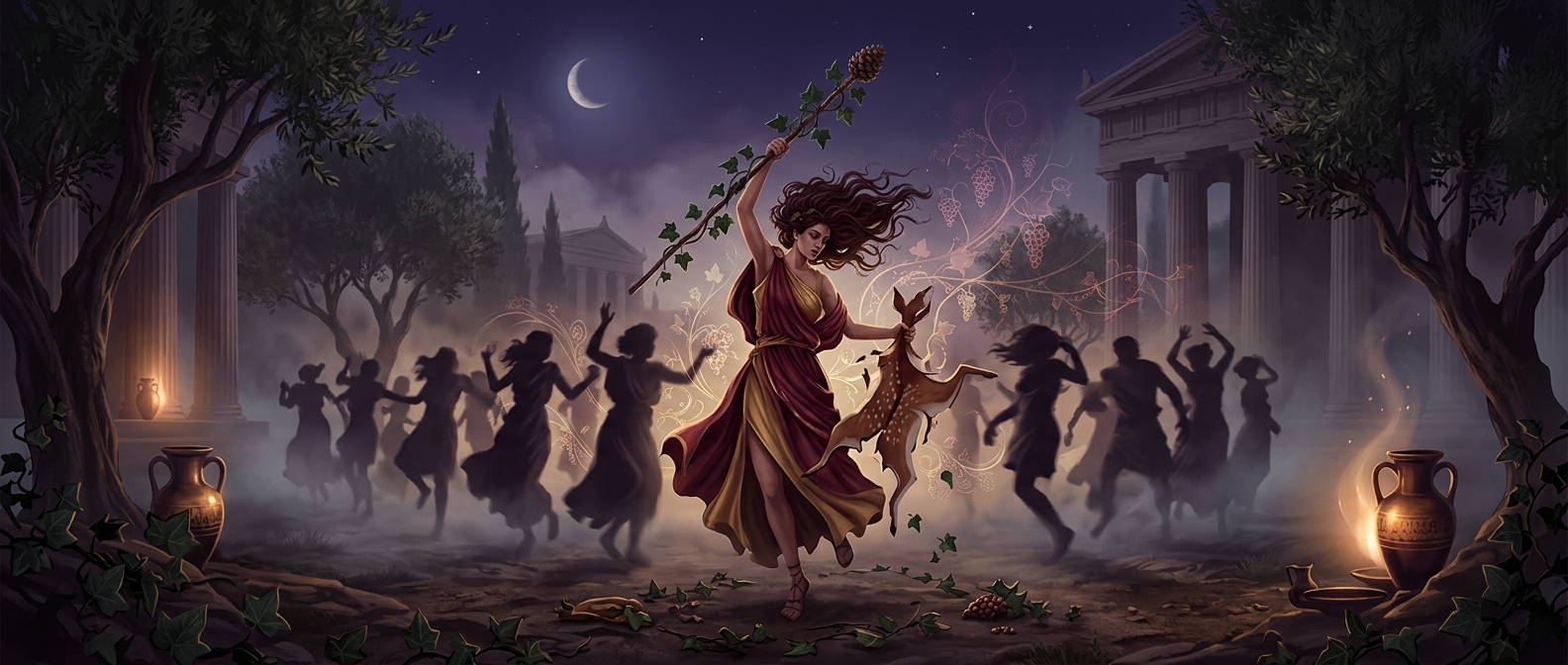
The Greek word sparagmos means tearing or rending apart. In stories and descriptions of Dionysian worship, it names a moment when ordinary restraint gives way: participants enter an ecstatic state through music, dancing, and drink, then tear at an animal with their hands. The animal is often described as a bull or goat, creatures associated with the untamed world beyond the city.
Why the violence belonged to the god
Dionysus was linked with wine, altered states, and the crossing of boundaries between civilized life and wilderness. Sparagmos made that crossing physical. Instead of approaching a victim through the orderly procedures of a conventional animal sacrifice, worshippers were depicted as joining a wild, collective frenzy. The rite’s shock was part of its meaning: it dramatized the force attributed to the god and the temporary release of everyday rules.
Ritual description and dramatic image
The surviving picture is not a reliable checklist of what every group did. Accounts of secret rites are fragmentary, and Greek literature also used Dionysian frenzy as a vivid dramatic image. So the reports should not be taken to mean that all worshippers routinely tore apart live animals. They do show how powerfully the idea of Dionysian worship was associated with ecstatic loss of control.
That association made sparagmos more than a gruesome detail. It turned religious devotion into a scene in which the boundary between human restraint and animal wildness appeared to come apart.