A stave meant to make fear visible
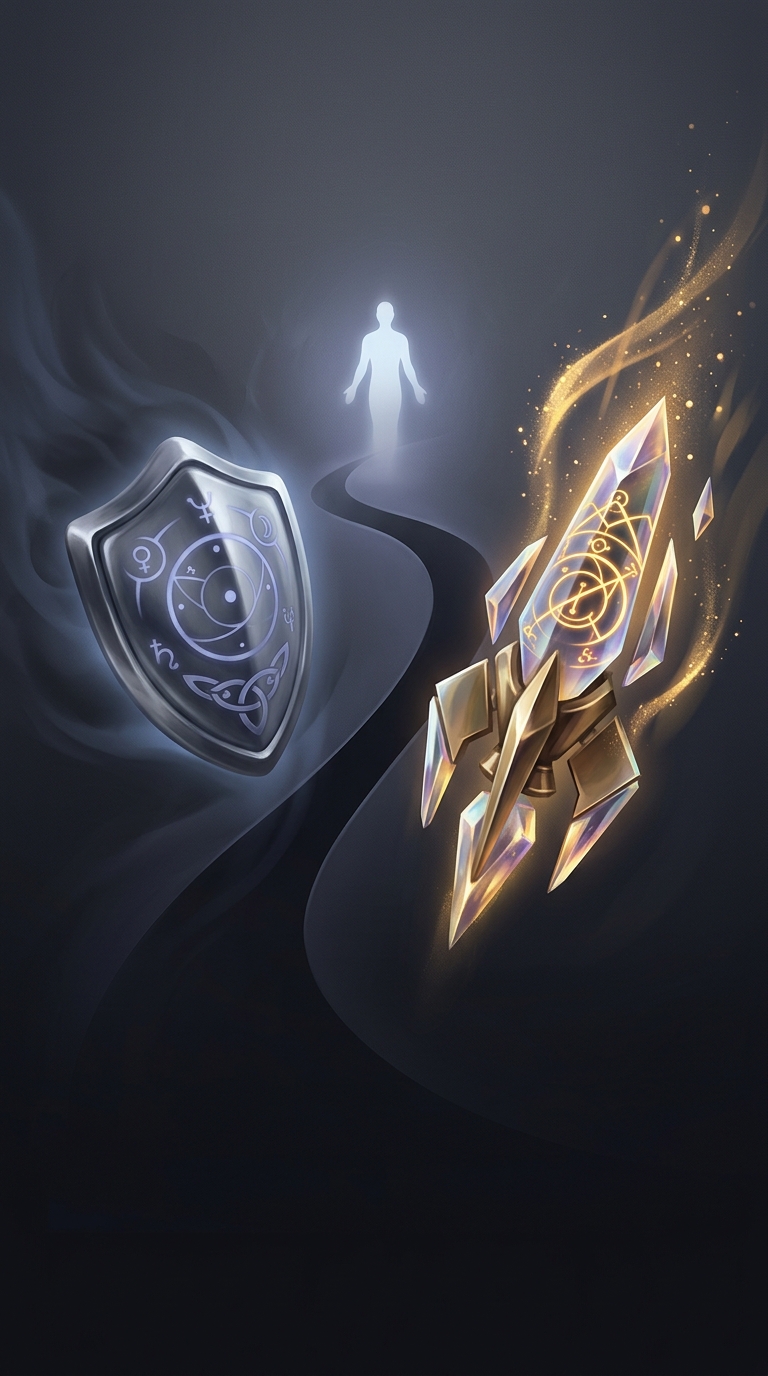
The Ægishjálmur—usually translated as “Helm of Awe”—belongs to Icelandic magical tradition. Its name suggests a protective covering or force that could overawe an opponent. Like other galdrastafir, or magical staves, it used a distinctive drawn design as part of a spell: the mark was not merely decoration but an instrument meant to help bring about a desired effect.
That logic made the stave more than a symbol to look at. In the worldview recorded by Icelandic grimoires, a carefully made mark, the words spoken with it, and the way it was used could work together as an act of magic. A spell aimed at frightening an adversary treated fear as something that could be summoned and directed—not simply as a reaction to a weapon or an attack.
What the grimoire can—and cannot—tell us
The Galdrabók is a surviving Icelandic magical handbook compiled across the late 16th and 17th centuries. It preserves spells and instructions, but it is not evidence that ordinary farmers routinely used the Ægishjálmur against neighbors, or that one standard recipe involved raven blood and saliva. Magical instructions varied across texts, and a manuscript’s recipe shows what someone recorded, not how widely people practiced it.
Nor can a grimoire establish that the stave actually paralyzed anyone with terror. Its historical value is that it shows how people imagined magic could work: a design placed on the body could turn a person into the apparent source of protection or menace. The unsettling idea is also the practical one—the spell was meant to change how an encounter felt before a fight began.
That makes the Ægishjálmur worth remembering even without a claim of supernatural success. It gives fear a visible form, joining a drawn mark to the hope that an enemy would hesitate.