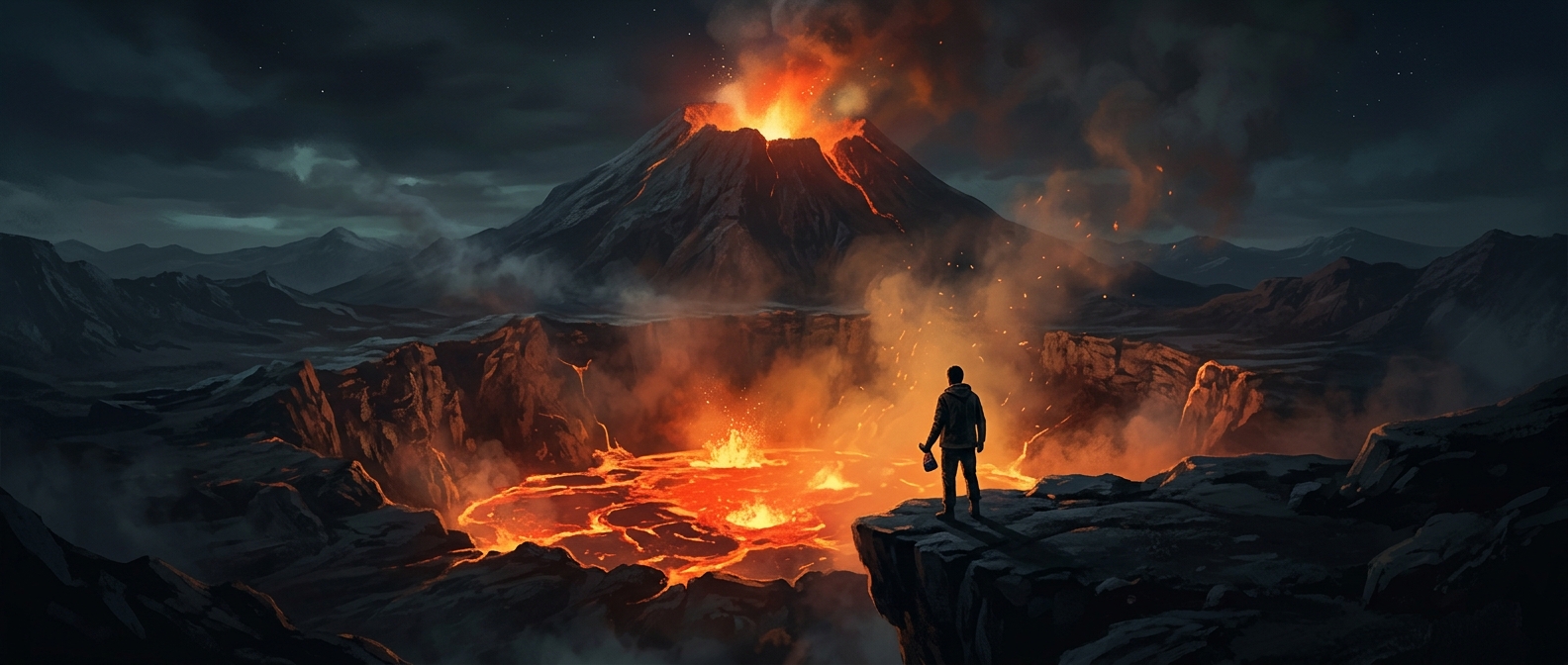
What a volcano’s “song” can reveal
A volcano’s sound is not a single noise with a simple translation. As magma rises, pressure drops and dissolved gases form bubbles. Moving gas and liquid can shake the surrounding rock, while cracks and passages may vibrate like resonant chambers. The resulting signals can be low rumbles, pulses, or nearly continuous tremor—often too faint or too low in pitch for people to hear, but detectable by seismic sensors and microphones.
Why the pattern matters
Scientists study how these vibrations change over time. A shift in their strength, rhythm, or frequency can reflect changes in the movement of gas and magma, or in the pathways carrying them. For example, a passage that becomes more constricted may alter how fluids move and how the surrounding rock vibrates. The signal is therefore a clue about activity inside the volcano, not a direct recording of an eruption forming.
That distinction matters because the same kind of vibration can have more than one cause, and a volcano’s internal pathways are hidden. Researchers interpret sound alongside other observations, such as small earthquakes, ground swelling, and changes in volcanic gas. When several kinds of evidence point in the same direction, the picture becomes more useful.
A warning sign, not a countdown
A changing signal can prompt closer monitoring, but it cannot by itself say whether an eruption will happen—or exactly when. The practical value is earlier notice that the system may be changing, giving scientists a reason to check for corroborating signs. A volcano’s rumble is less an alarm clock than a trace of moving fluids: informative precisely because its pattern can change, but never a schedule.