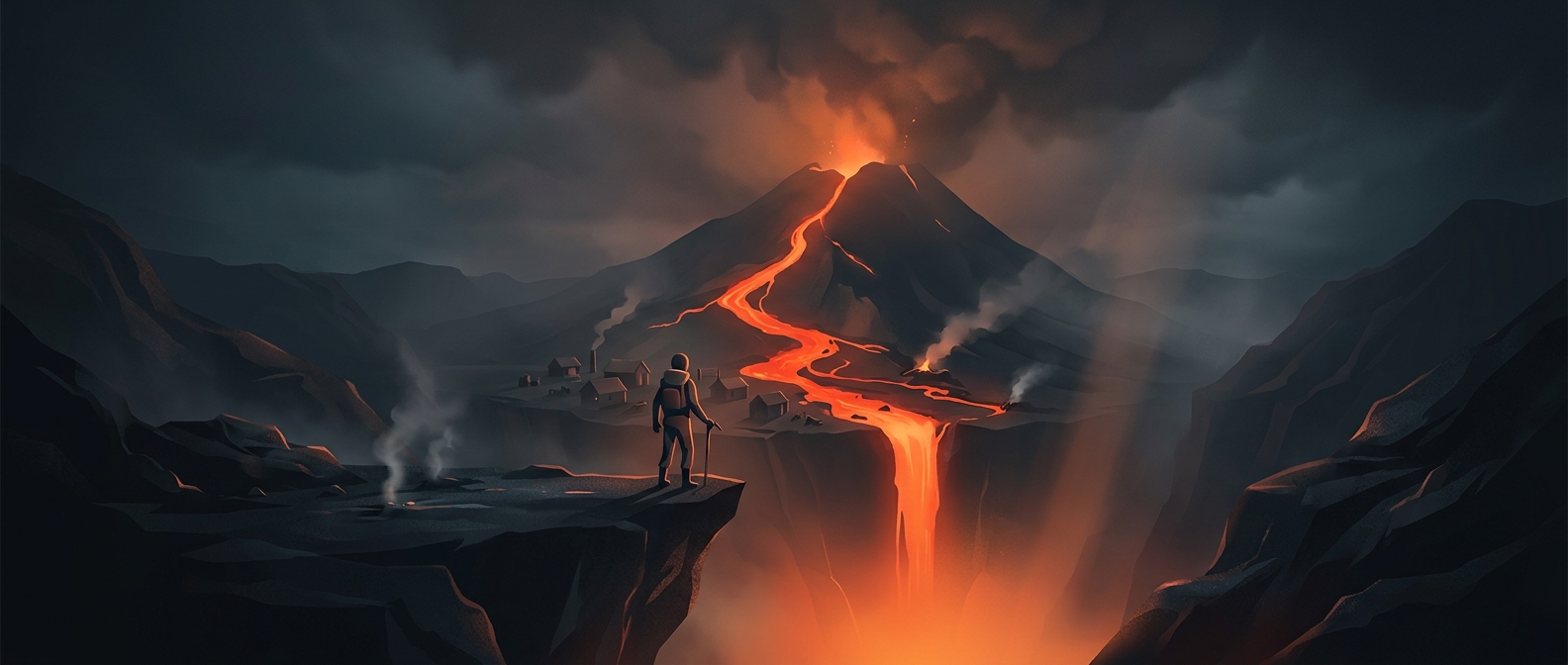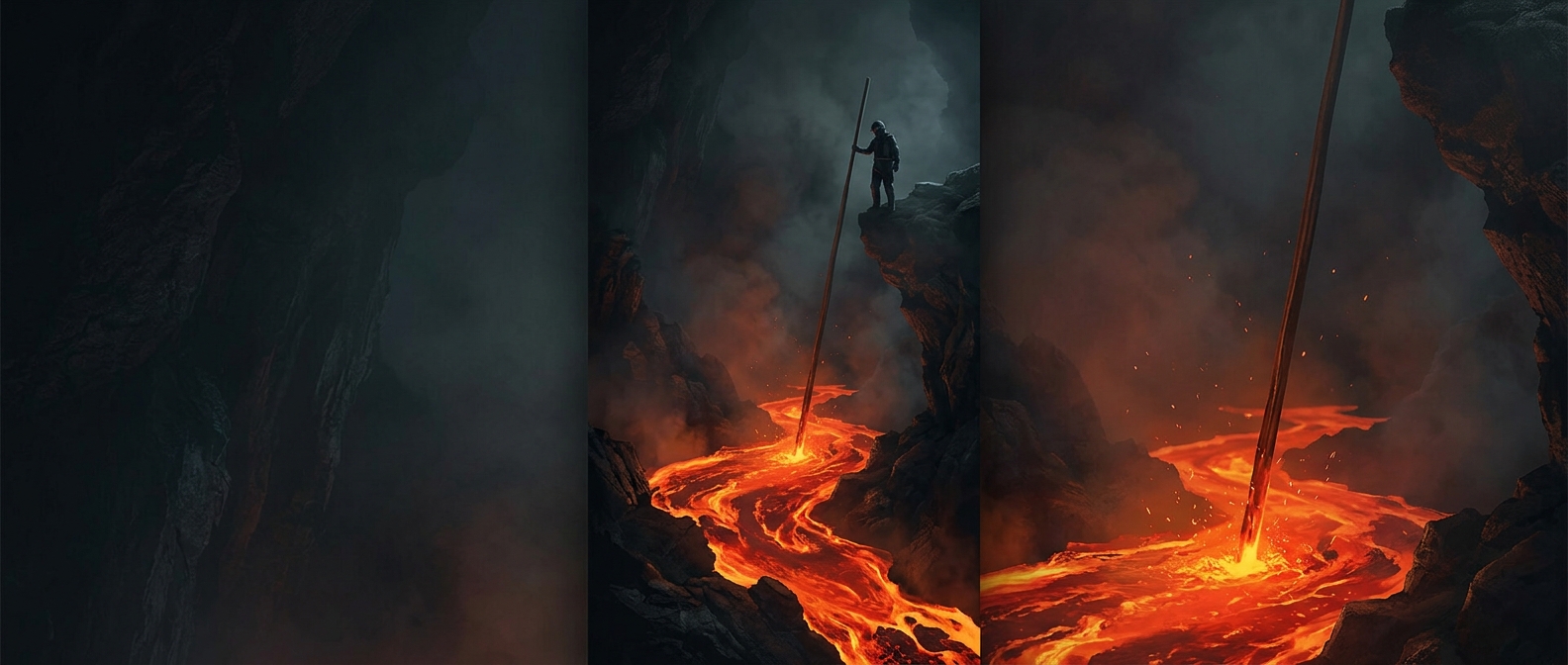
A crust can form before a lava flow stops
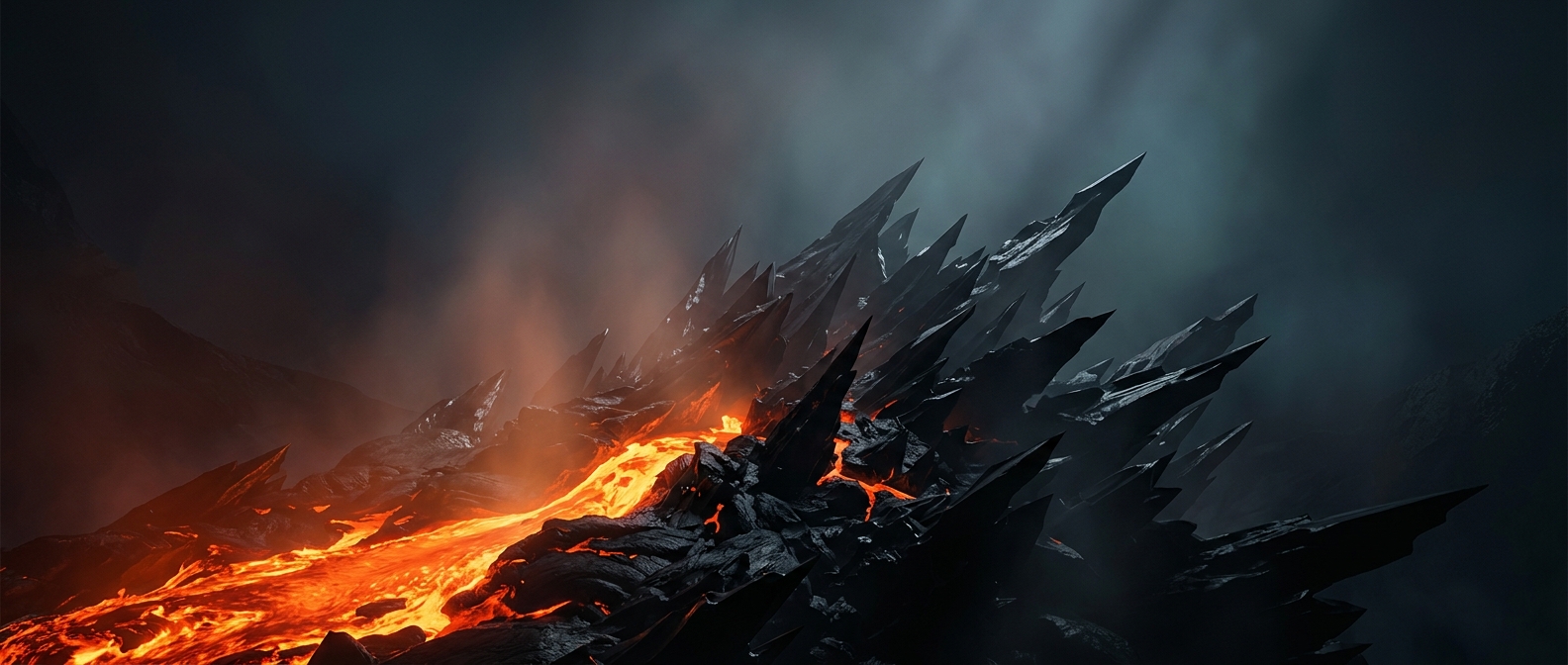
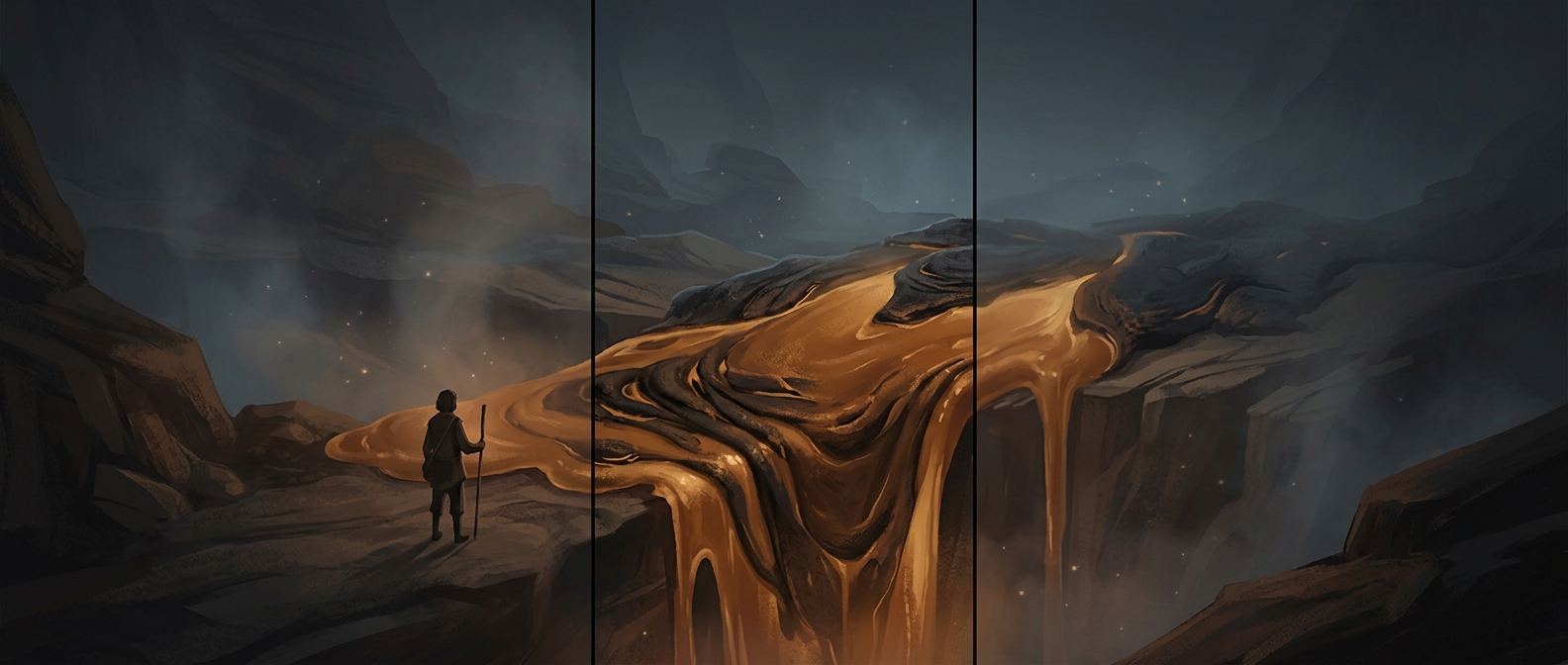
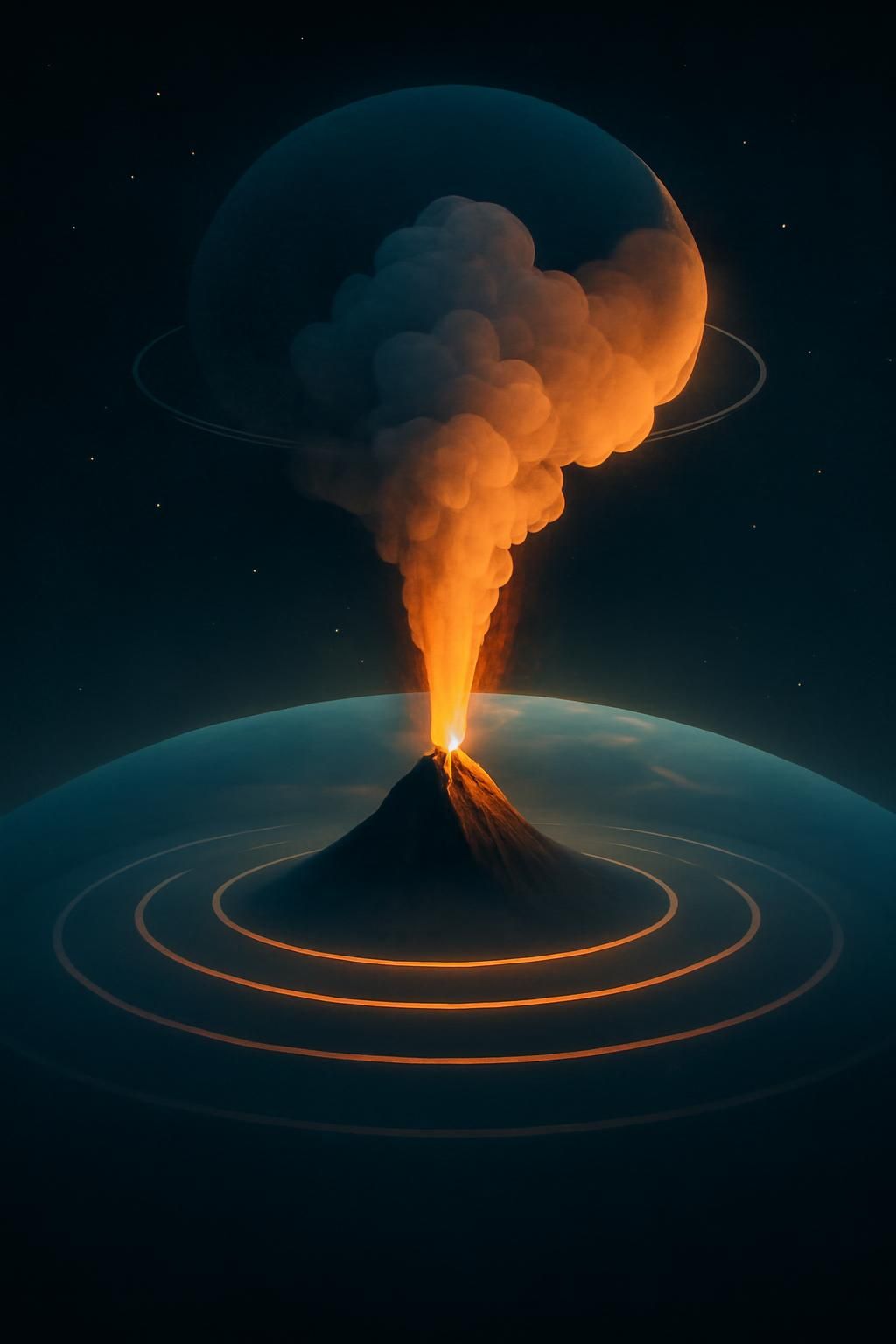
When lava meets cooler air or ground, its outermost layer loses heat first and hardens into a shell. The rock conducts heat away slowly, so the material beneath can remain molten and mobile. In a thick flow, that crust can even act as insulation, helping the interior stay hot as the flow advances or drains through channels below the surface.
The boundary is not always a neat, stationary lid. Fresh lava may push up, crack, or override older crust; moving molten rock can also carry broken slabs along like rafts. A surface that appears quiet may therefore conceal motion, and a crust’s ability to bear weight can vary sharply from one spot to the next.
Gas and water can turn hidden heat into sudden force
Volcanic gases dissolved in molten rock can come out of solution as pressure changes, forming bubbles. If gas collects beneath a crust or in a confined part of a flow, pressure can build until the rock fractures or is thrown aside. That does not mean every crusted lava surface is about to burst, but cracks and openings can reveal that the surface is connected to a much hotter system below.
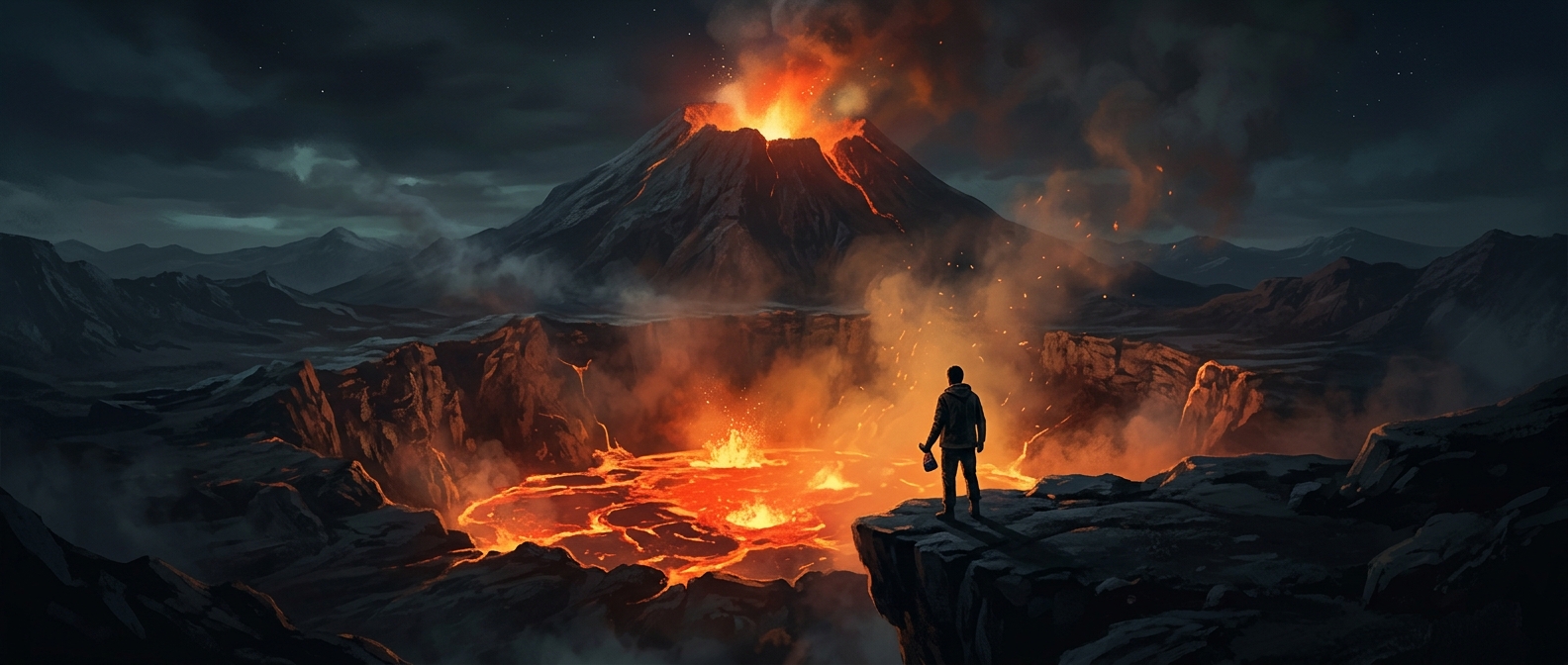
Water creates a different hazard. If enough water contacts very hot lava, it can boil rapidly; steam takes up far more space than liquid water. Rapid expansion can blast apart lava or surrounding rock and scatter hot fragments. The danger depends on how water and lava meet, but the key point is that a solid-looking surface does not make the heat—or the forces beneath it—safe to approach.