The fig’s flowers hide inside the fruit
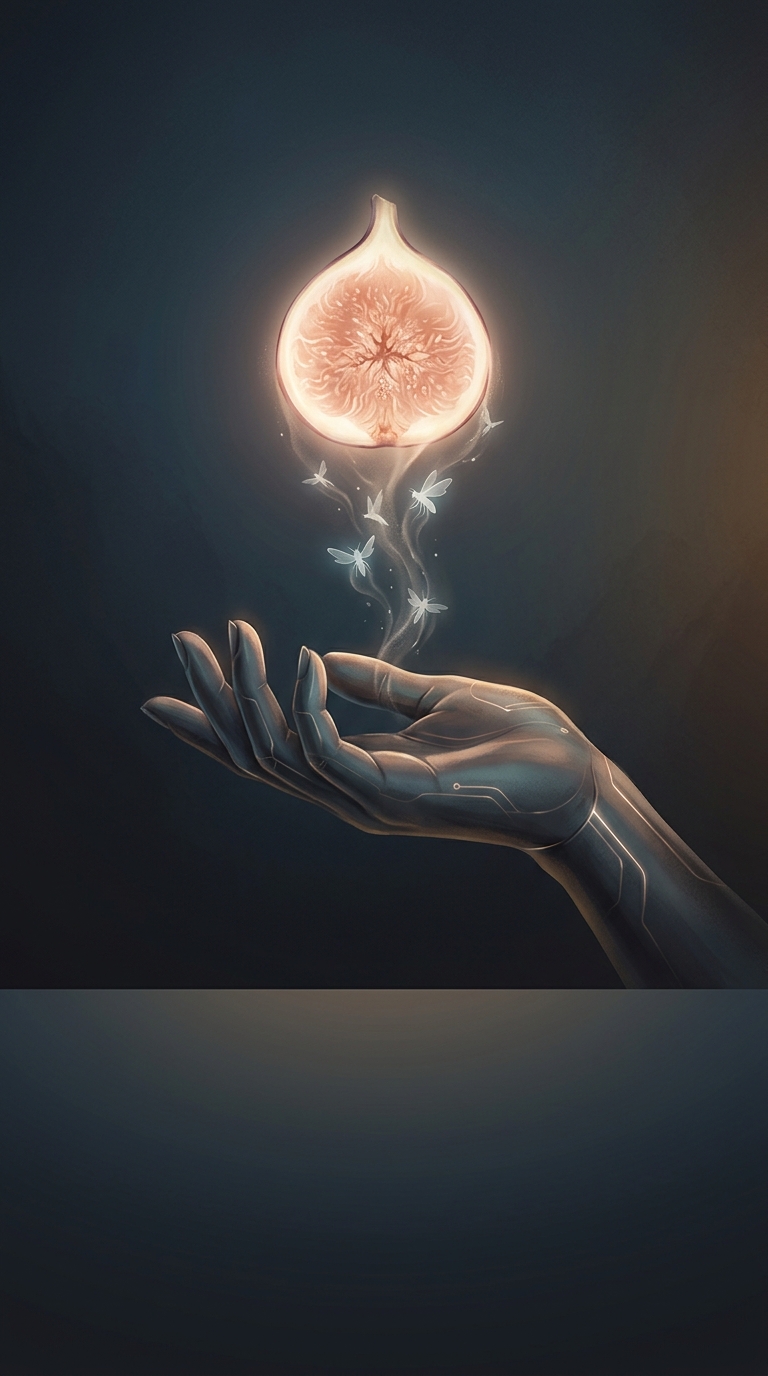
A fig is not a single flower wrapped around seeds. It is a cluster of tiny flowers turned inward inside a bulb-shaped structure. That arrangement protects the flowers—but also leaves them difficult to reach for ordinary pollinators. In fig varieties that depend on pollination, a tiny fig wasp provides the way in.
A pollination trip with no easy way back
A female wasp squeezes through a small opening at the tip of a young fig, often shedding her wings in the process. As she moves among the hidden flowers, she deposits pollen gathered from another fig. She may also lay eggs in some flowers, giving her offspring a place to develop.
The narrow entrance can make the journey one-way. In many fig–wasp partnerships, the female dies inside after pollinating and laying eggs. The wasp’s young continue the cycle: males mate with females inside the fig and help open an exit; the newly emerged females leave carrying pollen to another fig.
The fig and its wasp are partners in a tightly linked reproductive cycle: the plant gets pollinated, and the wasp gets a nursery for its young.
Not every fig needs a wasp
The relationship is specific to particular fig species and wasps, and it does not apply to every fig sold for eating. Some cultivated varieties can develop fruit without pollination, so they do not require a wasp to ripen. Where pollination is necessary, the wasp’s role is part of how the fig forms—not a sign that every edible fig contains a dead insect.
The surprising detail is that a fig can look like a simple, familiar fruit while functioning as a hidden flowering chamber, with its next crop depending on a pollinator small enough to slip through a pinhole.