How a peanut flower turns into a buried pod
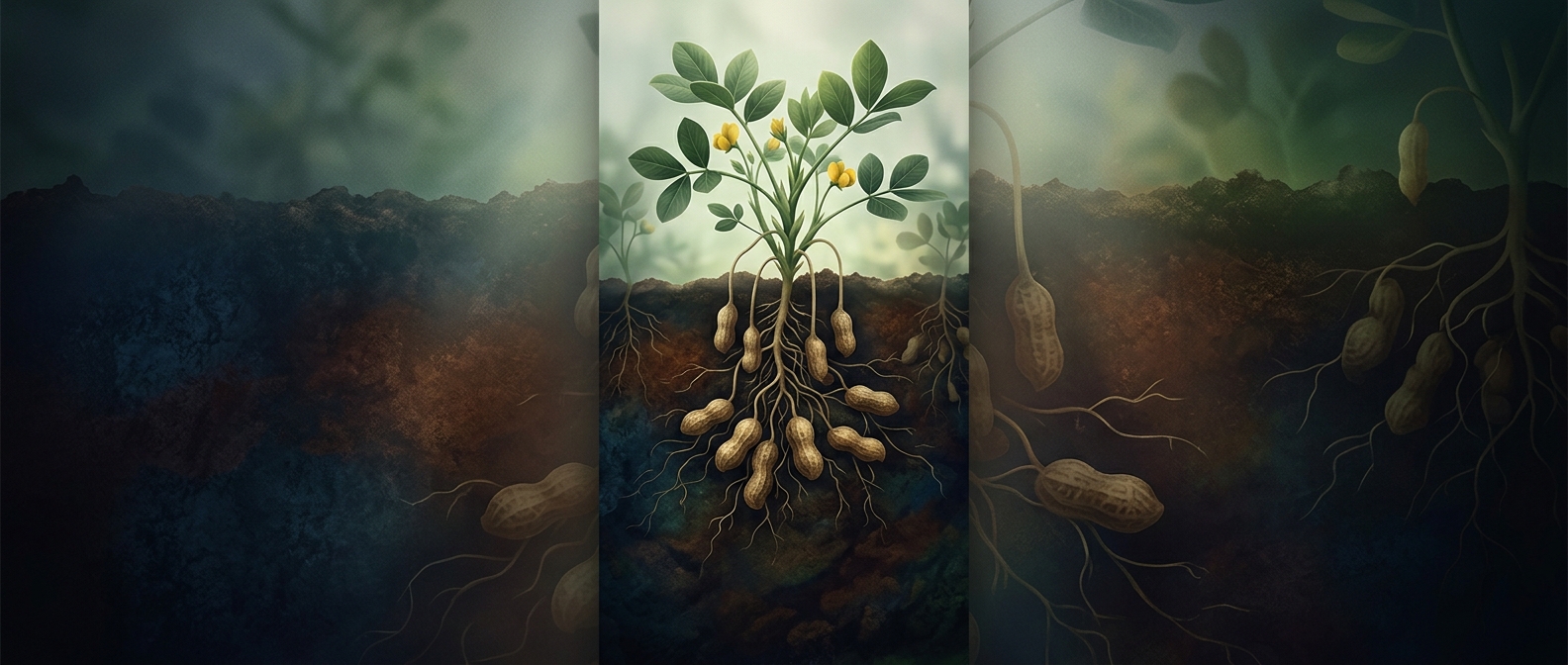
A peanut’s unusual harvest begins with a flower growing above the soil. After pollination and fertilization, the flower’s stalk lengthens and bends toward the ground. Its tip carries the developing ovary—the part that will contain the seeds—down into the soil. There, the pod matures underground.
This process is called geocarpy, meaning that a plant develops or ripens its fruit in the ground. It is not the same as a root simply swelling into food: the peanut pod begins as part of a flower and is carried downward by the flower’s stalk.
Why peanuts are legumes, not true nuts
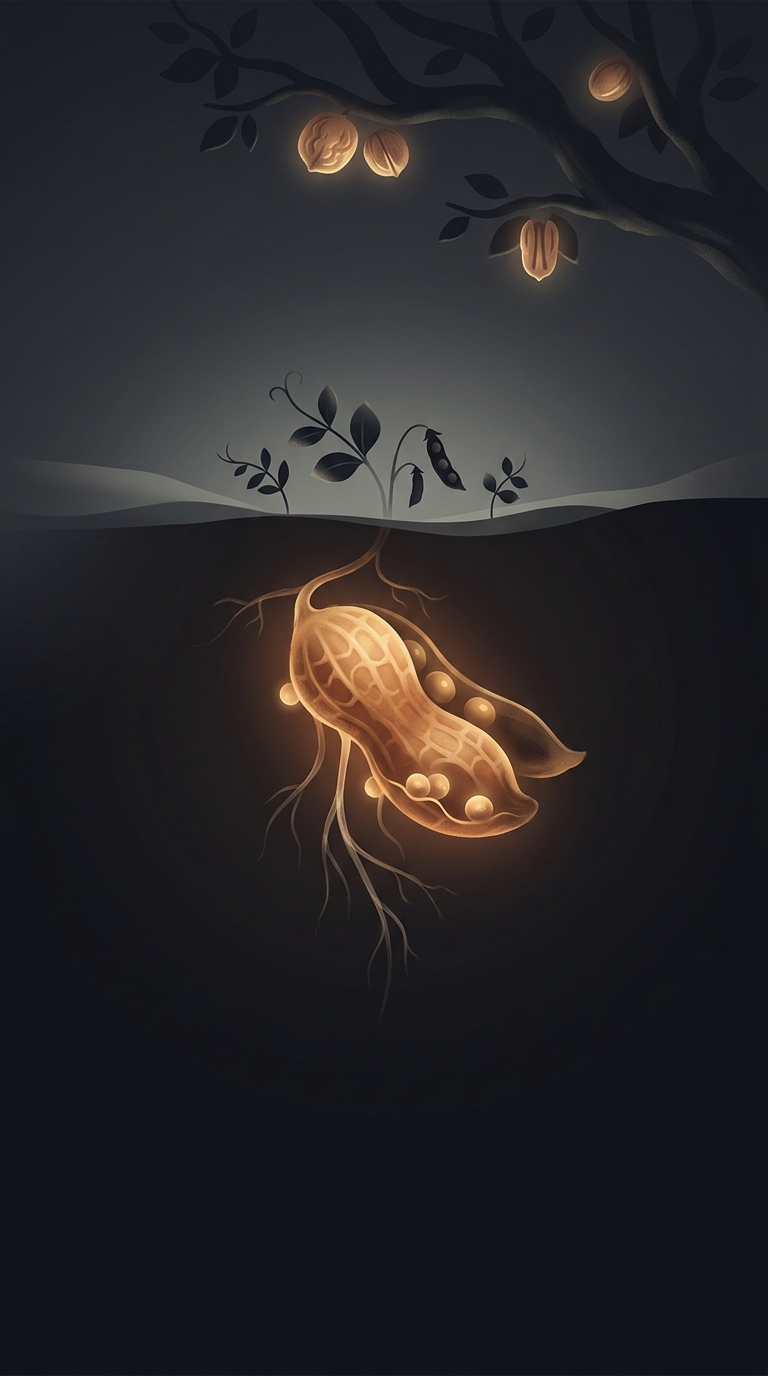
Botanically, a peanut is a legume because it develops inside a pod, the kind of fruit characteristic of plants such as beans and peas. A true nut, in botanical terms, is a different kind of fruit, usually one that does not split open to release its seed. Everyday cooking groups peanuts with nuts, but their pod-forming growth tells a different story.
The buried pod also explains why peanut plants are harvested differently from trees that bear nuts. When the plant is lifted from the ground, its pods are attached belowground rather than dangling from branches. The surprising part is the sequence: a flower opens in the air, then sends its future seeds beneath the soil to finish growing.