The bathhouse was more than a place to wash
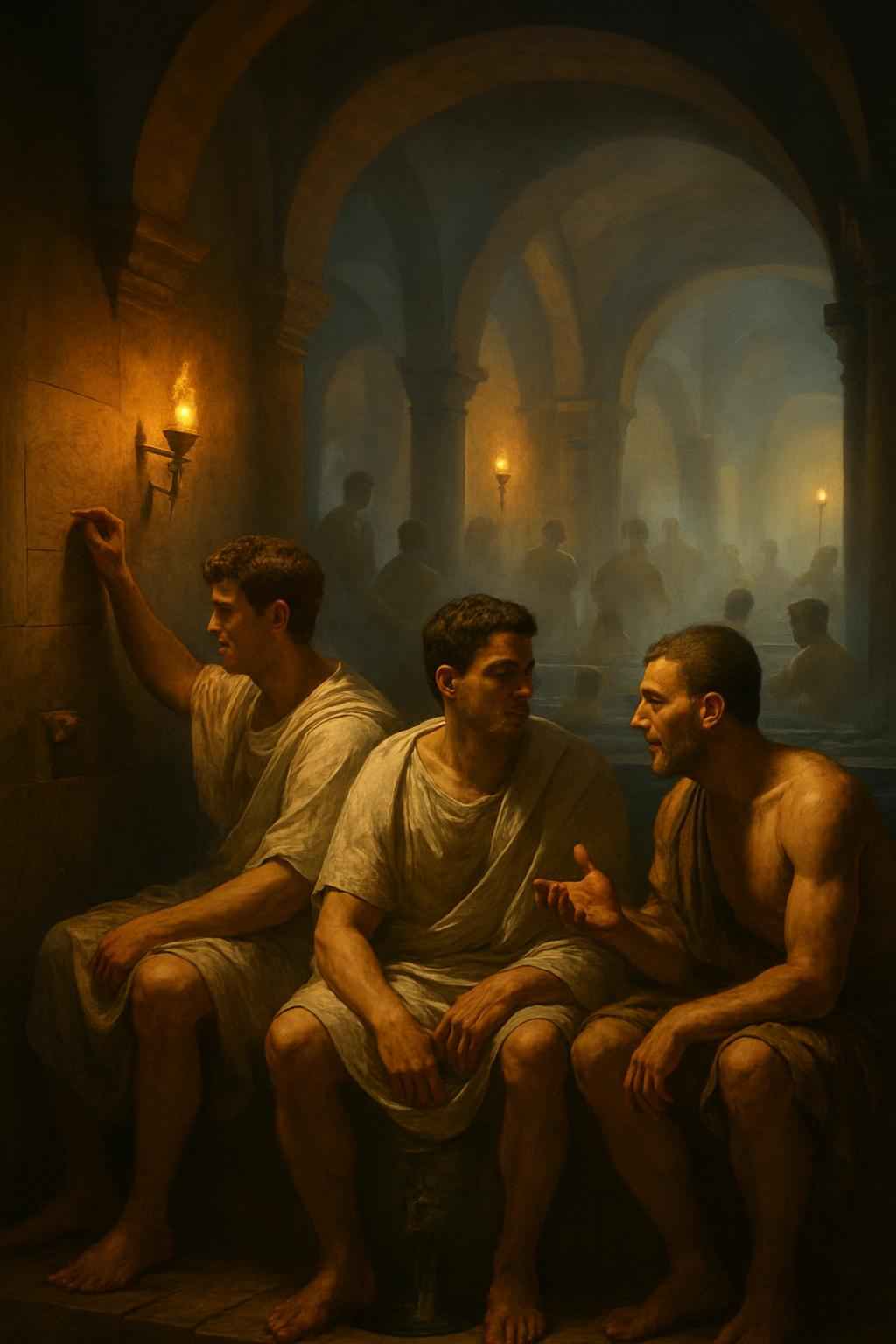
A Roman bath visit unfolded in stages: people exercised, bathed, and lingered in rooms designed for shared use. The routine created time for conversation as well as bathing. Visitors could encounter neighbors, clients, customers, and strangers without arranging a formal meeting first. In a crowded city, the baths turned an everyday need into a dependable point of contact.
That contact was not proof that every Roman mixed on equal terms. Status still shaped social life, and access varied. But a public bath brought people into the same busy setting, where news and favors could travel through ordinary conversation.
A message could stay after its author left
Communal latrines made the social setting even more literal: rows of seats placed users close together, with little privacy by modern standards. Meanwhile, graffiti scratched into surfaces such as tiles gave words a more lasting presence. A passing remark disappeared when its speaker walked away; an inscription could be read by the next person who came through.
The two forms worked together. People carried information by speaking, listening, and repeating it, while written marks left fragments of jokes, opinions, and personal messages in shared spaces. These were not organized networks with membership lists or a central channel. They depended on people returning to familiar places and passing along what they had heard.
The network ran on routine
Roman baths and latrines did not need to be invented as communications technology to serve that purpose. Their importance came from how often people used them and how closely daily life brought visitors together. A deal might begin as conversation; gossip could circulate beyond its original audience; a scratched message could outlast the moment that inspired it.
The result was a social network built into the city’s plumbing and public routine: its reach came not from a feed, but from repeated encounters in places people already had reason to visit.