Why a Destroyer Needed Gentle Handling at Sea
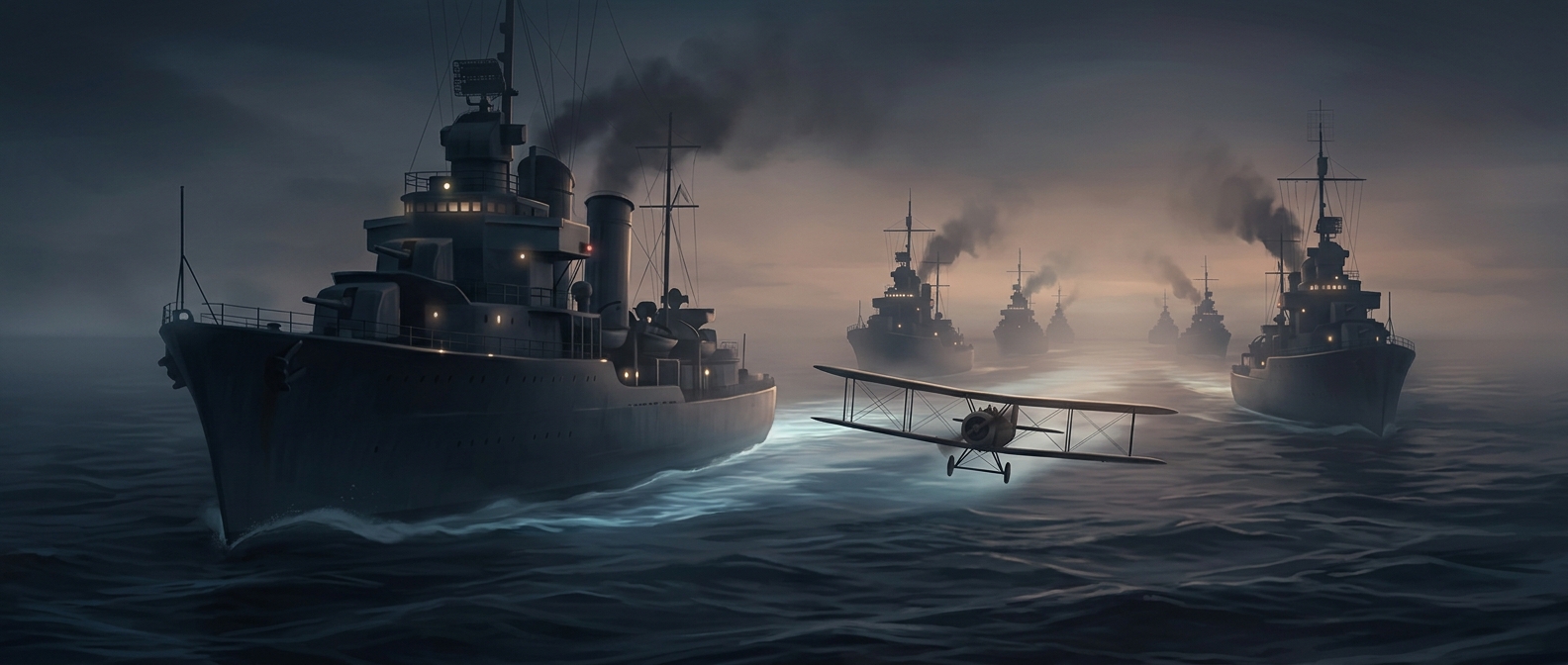
A destroyer’s speed came with a tradeoff: its long, slender hull could move quickly through the water, but it had less mass than a large ship to resist the ocean’s motion. In heavy seas, waves could lift the bow and let it slam back down, a jarring cycle called pounding. Water sweeping over the deck could add another hazard, while repeated impacts strained the hull and equipment.
Seamanship Meant Choosing the Right Pace
The answer was not simply to push harder. Crews could reduce speed or change course so the ship met the waves at a less punishing angle. Those adjustments might make progress slower, but they helped limit pounding, keep water from constantly breaking over the deck, and protect machinery and crew.
That careful handling was especially important on a long ocean crossing, where a ship could not count on quickly reaching shelter or repair facilities. A destroyer’s design made it nimble in the role it was built for; crossing rough open water demanded a different skill—knowing when not to use its speed.