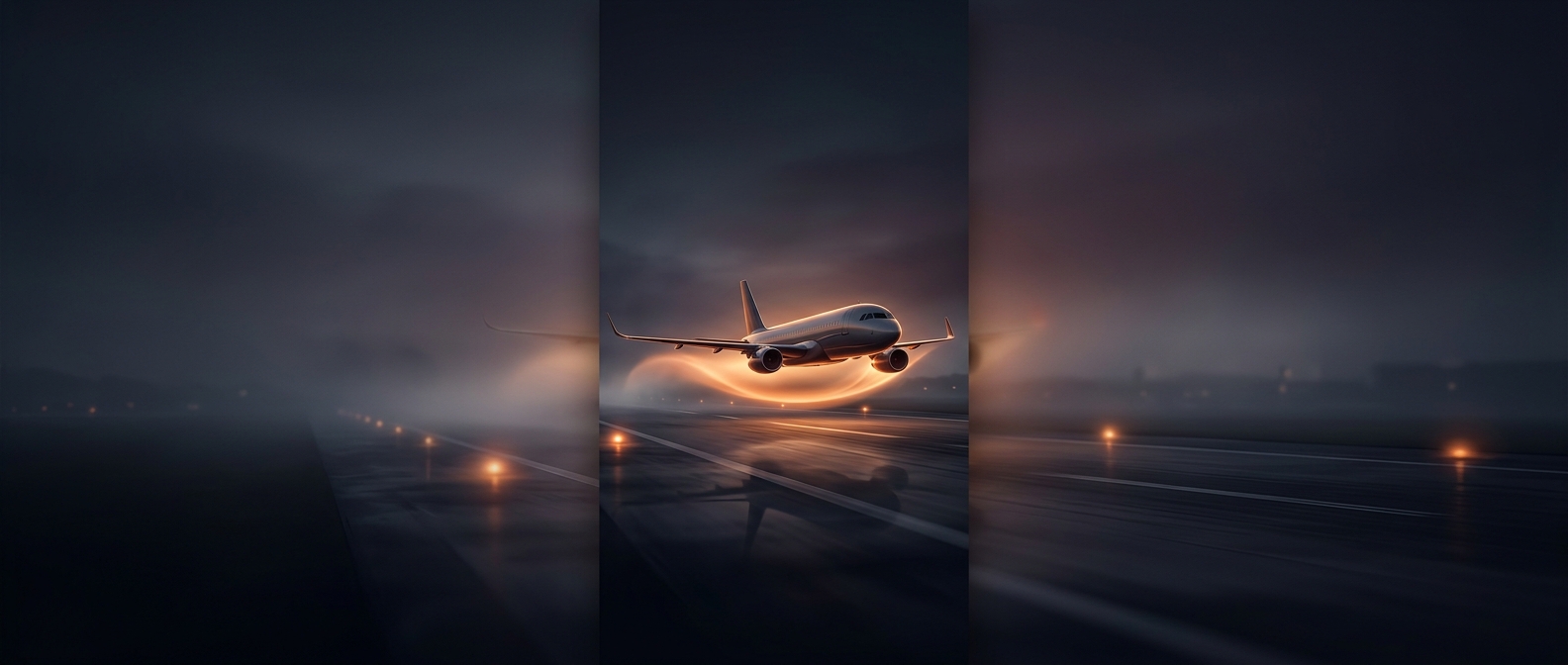
Why a Wing Behaves Differently Near the Runway
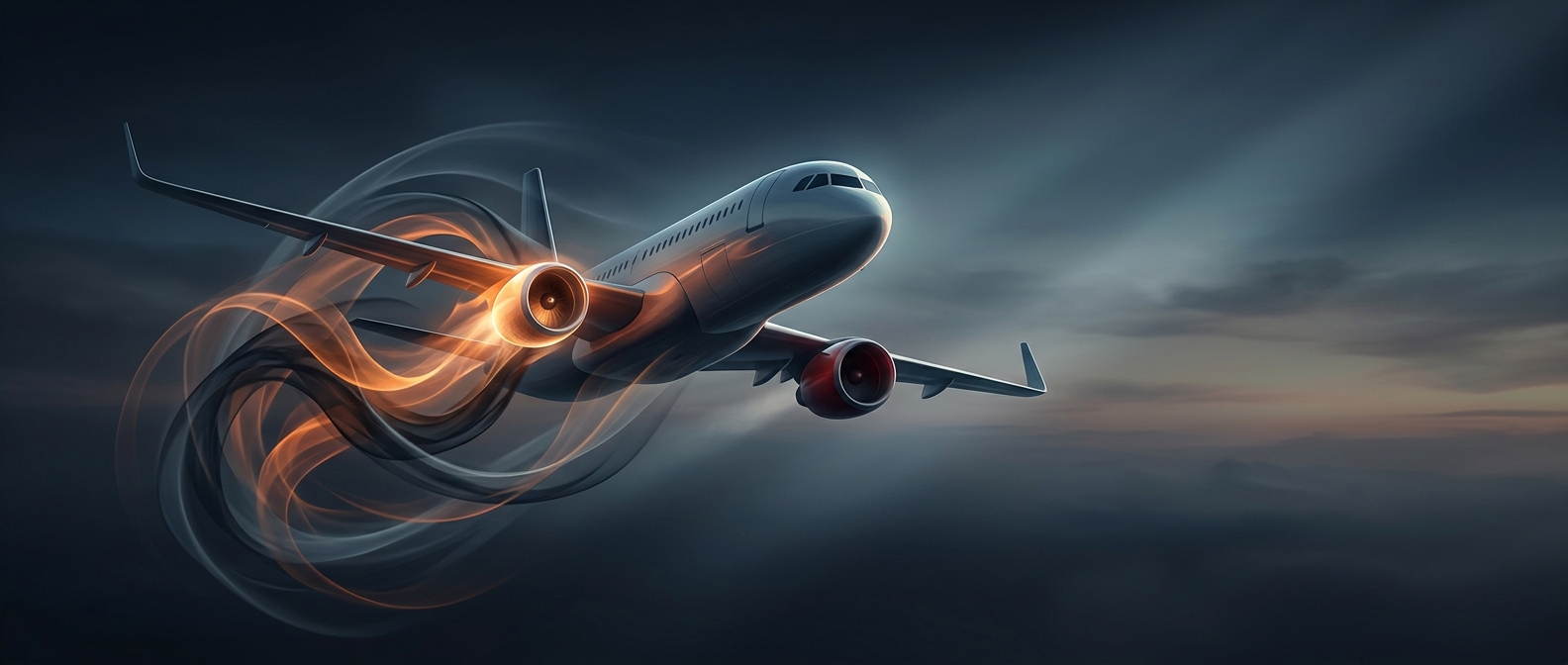
A wing makes lift by pushing air downward. That flow also curls around the wingtips, forming swirling trails called wingtip vortices. The vortices tilt the airflow behind the wing downward, an effect known as downwash. Because the wing must work against that airflow, downwash creates induced drag—the drag associated with making lift.
Near the ground, the surface interrupts and alters the airflow around the wing. The wingtip vortices weaken, so there is less downwash and less induced drag. At the same speed and wing position, the wing can produce more lift; alternatively, it can make the same lift with less drag.
Why a Plane Can Float Past Its Aim
That change is called ground effect. It is strongest when the wing is close to the surface—roughly within a wingspan, and especially closer than that. On landing, a plane entering this region may lose less energy to induced drag and continue gliding farther than the pilot expects. The result can be a “float” above the runway before the wheels touch down.
Ground effect does not switch lift off when the aircraft leaves the ground. Rather, as the plane climbs away, the surface has less influence on the airflow. Downwash and induced drag increase toward their usual levels, and the extra aerodynamic advantage fades. A pilot who pitches up sharply near the runway may therefore find that the aircraft feels reluctant to climb until it has enough speed and power to compensate.
A Temporary Advantage, Not Free Lift
The runway is not acting like a cushion that holds the airplane up. Ground effect changes the wing’s aerodynamic efficiency, and the size of the change depends on the aircraft’s height, speed, and configuration. It can help an aircraft accelerate or remain airborne close to the ground, but it does not replace the speed and energy needed for a safe climb. That is why a plane can seem to glide effortlessly just above the runway, then feel different as soon as it rises.