The Shape Is a Bundle of Tradeoffs
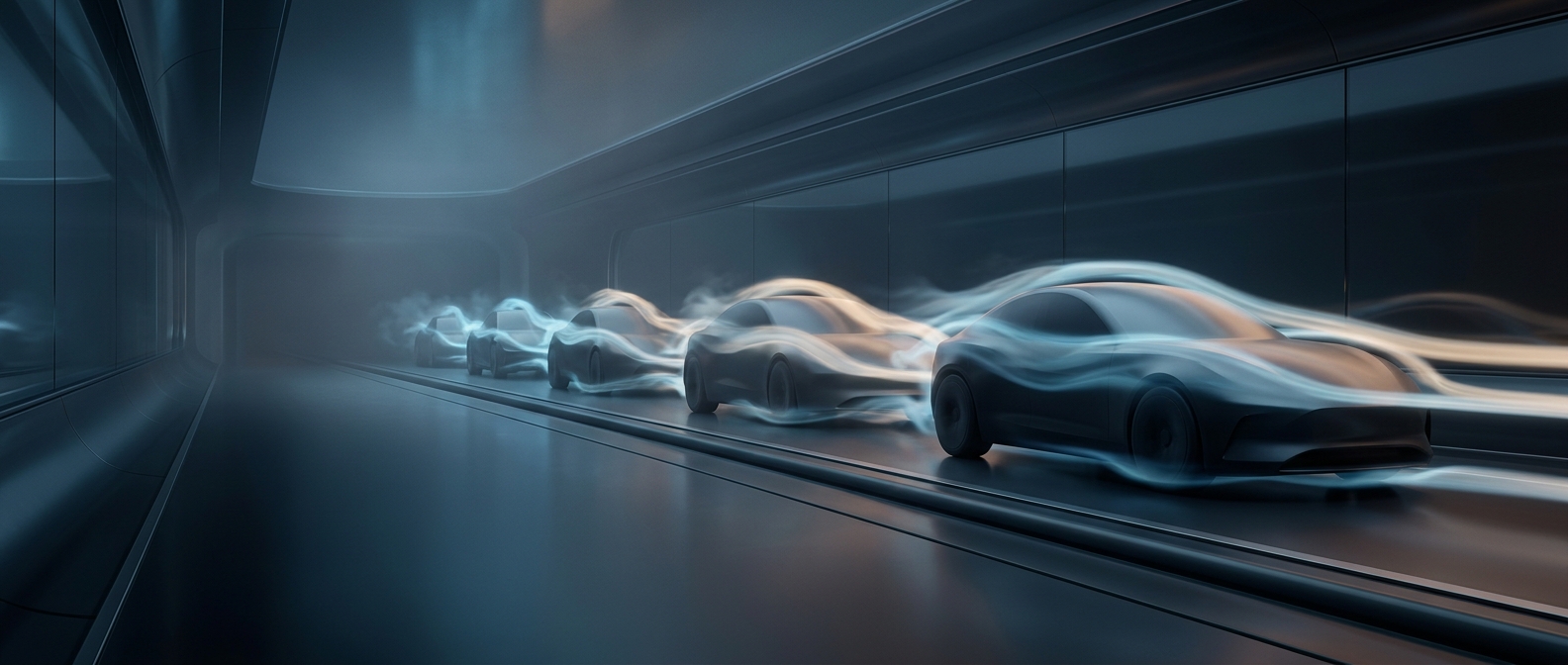
A car does not simply push air aside; it leaves a wake behind it. If the airflow separates abruptly from the body, the wake becomes turbulent and low-pressure, pulling backward on the vehicle. A smoothly tapering roof and rear body can keep air attached longer and shrink that wake. The result is less aerodynamic drag—the force resisting a car’s motion through air—and, at highway speeds, less energy spent overcoming it.
That goal narrows the design space. A tall, blunt front or a sharply cut rear may provide more room or a distinctive look, but can create more drag. Designers therefore tend to arrive at similar broad proportions: a rounded nose, a roof that slopes toward the back, and surfaces that guide air around the body. The details differ, but the basic aerodynamic problem is shared.
The Wind Tunnel Tests More Than Smoothness
In a wind tunnel, engineers can see where airflow peels away and measure the force acting on a model. They also have to check how the shape behaves in crosswinds and whether it generates unwanted lift, which can affect stability. A body that performs well in one direction or at one speed may not be the best choice across ordinary driving conditions.
Meanwhile, the passenger cabin, visibility, crash protection, and space for mechanical parts limit how low or tapered the car can be. The outer skin must fit around a structure designed to manage collision forces, not just guide air. Each revision is a compromise among these requirements, and rival teams working under similar constraints often converge on related solutions.
That is why resemblance does not mean every car is identical: lighting, surfaces, and proportions still distinguish models. But the broad silhouette is increasingly shaped by a shared engineering test—how to move people and equipment while wasting less energy on the air around them.