A borrowed tool became Doom’s chainsaw
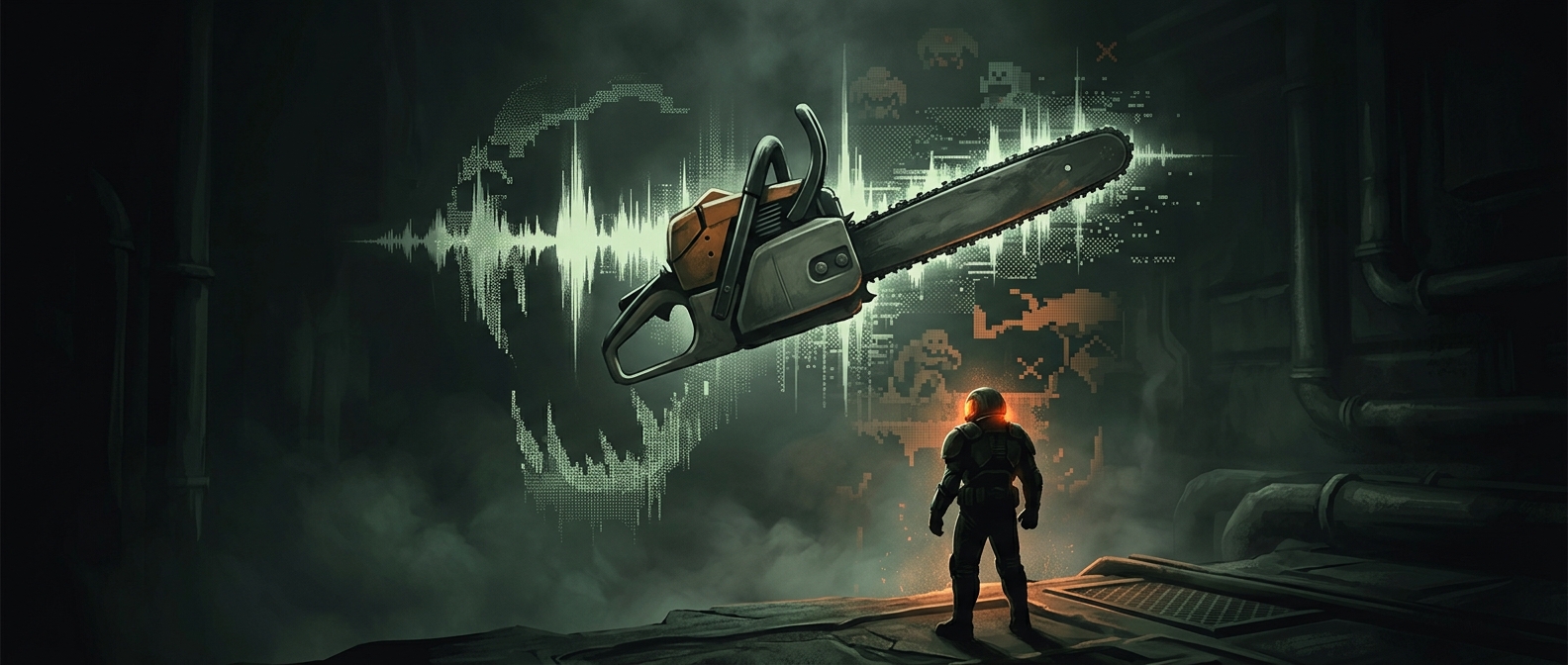
The chainsaw sound in Doom began with an ordinary machine, not a synthesizer: composer and sound designer Bobby Prince borrowed his girlfriend’s chainsaw and recorded it for the game. That gave the weapon a real engine’s uneven growl—a sound players could recognize immediately, even through the limited speakers and audio hardware of the period.
A recording still has to work as a game effect. In play, the chainsaw is not just a machine making noise; it is a weapon the player operates at close range. Its sound needs to make that action unmistakable and give it force. Using a real chainsaw as the source supplied a convincing starting point without requiring the game to imitate the machine from scratch.
Why the sound sticks
Doom asks players to react quickly to threats, so clear audio helps make the action legible: a distinctive sound can tell you what is happening before you have time to study the screen. The chainsaw’s harsh, mechanical character also suits a weapon that turns combat into something immediate and physical.
The memorable effect therefore links two very different settings: a real chainsaw being recorded, and a pixelated weapon roaring through a game. A borrowed tool gave Doom a sound with the texture of the thing it represented.