A Parade Turns a Path Into a Temporary Boundary
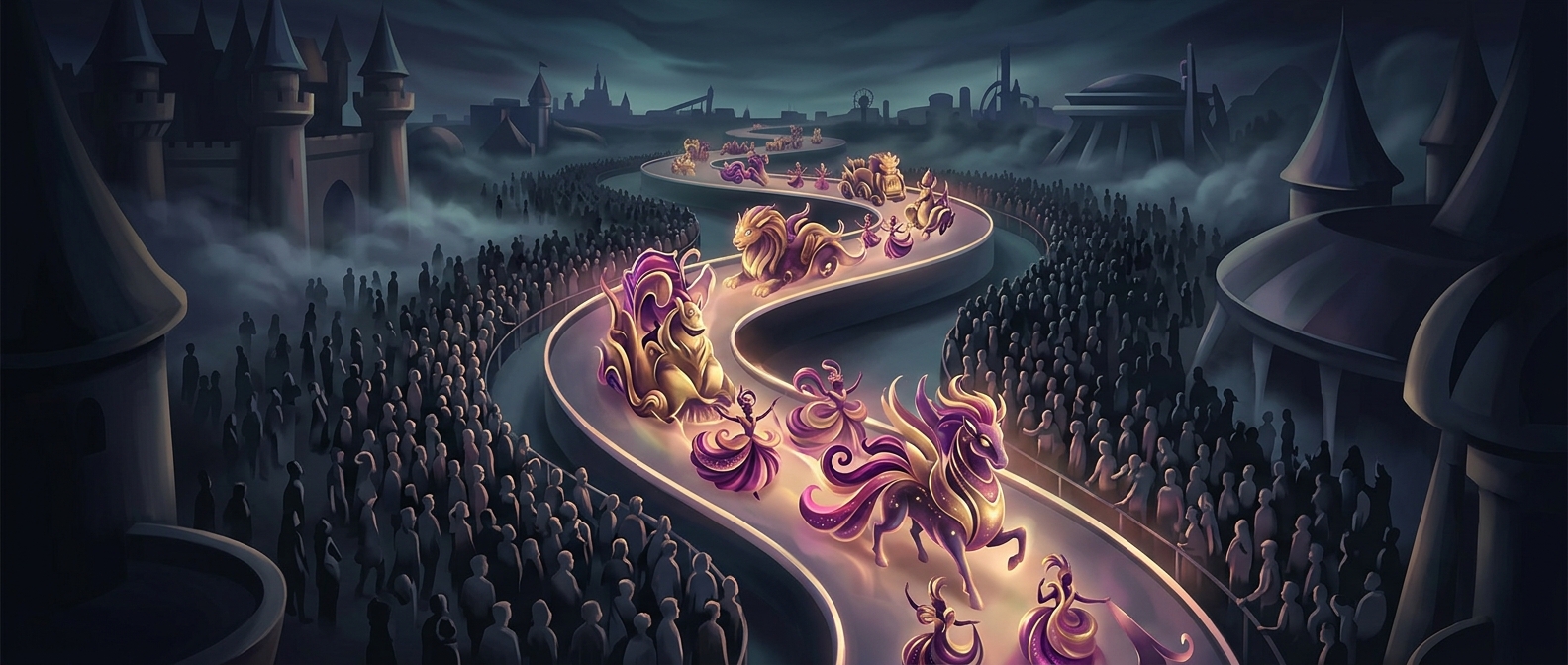
A parade does more than occupy a street. As floats and performers move along a set route, people gather on both sides, and the route can become a temporary barrier between parts of the park. Crossings may be restricted or slowed while the procession passes, so a path that usually carries people through the park briefly changes how they move.
That shift is useful to park operators: crowd-control staff can guide guests around the procession and away from congested viewing areas. But the detours also change what guests pass on the way. A rerouted walk may bring them by a shop, snack counter, or other place to pause—and a short wait can leave time to browse or buy something on impulse.
The Tradeoff Is in the Timing
The effect depends on where a parade runs, how long guests gather, and which paths remain open. A route can draw a crowd into one area while making another easier to reach; it can also make nearby walkways crowded. The parade’s timing matters because it may coincide with a natural lull in rides or meals, or interrupt a guest’s plan to cross the park.
So the same moving spectacle serves two practical purposes: it gives visitors something to watch and reshapes foot traffic for a while. The telltale detail is often not the float itself, but the altered route guests take after the parade draws a line through the park.