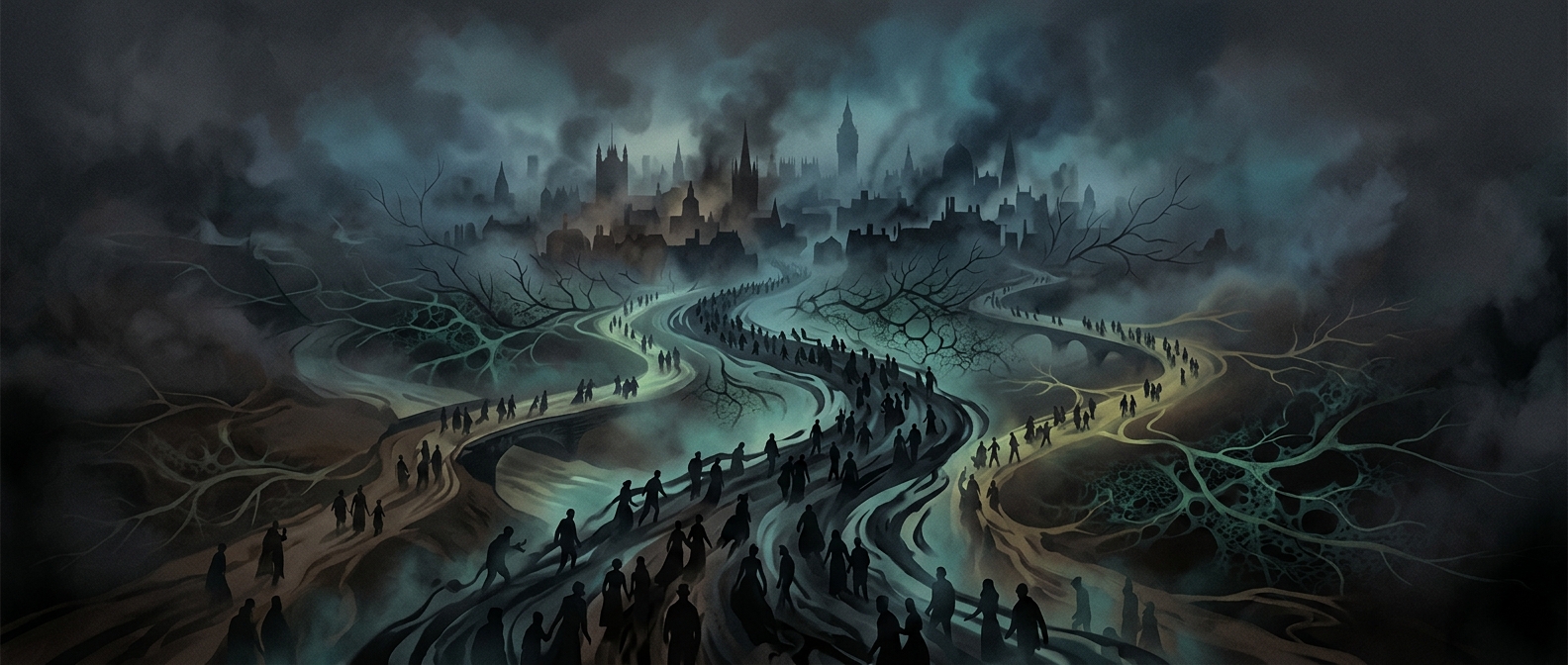
The danger traveled in waste, not in the air
Cholera spreads when people swallow water or food contaminated with Vibrio cholerae, the bacterium that causes the disease. In places without reliable sewage systems, waste from an infected person could reach a well, river, or shared water supply. Someone drinking from it might then become severely ill and add more infectious waste to the same environment.
That chain was difficult to see. Bad smells often accompanied crowded, unsanitary conditions, so the air seemed like the obvious threat. But odor was a clue to poor sanitation, not the route by which cholera entered the body.
How flight carried the outbreak onward
A person who left an affected town could be infected without yet knowing it. Cholera symptoms can begin after an interval, and some infected people have mild or no symptoms. If that traveler arrived somewhere with unsafe water and inadequate waste disposal, the infection could enter a new community’s water supply. The traveler did not need to spread disease through the air or by simply being nearby; the crucial link was contaminated waste reaching something others would consume.
Flight could also strain the places people fled to. Sudden arrivals meant more people sharing wells, food, and crowded lodging, while local systems for handling waste might not keep pace. In that setting, fear-driven movement could turn a local outbreak into a wider one—especially when people escaped the visible sickness but carried an invisible infection into another town.