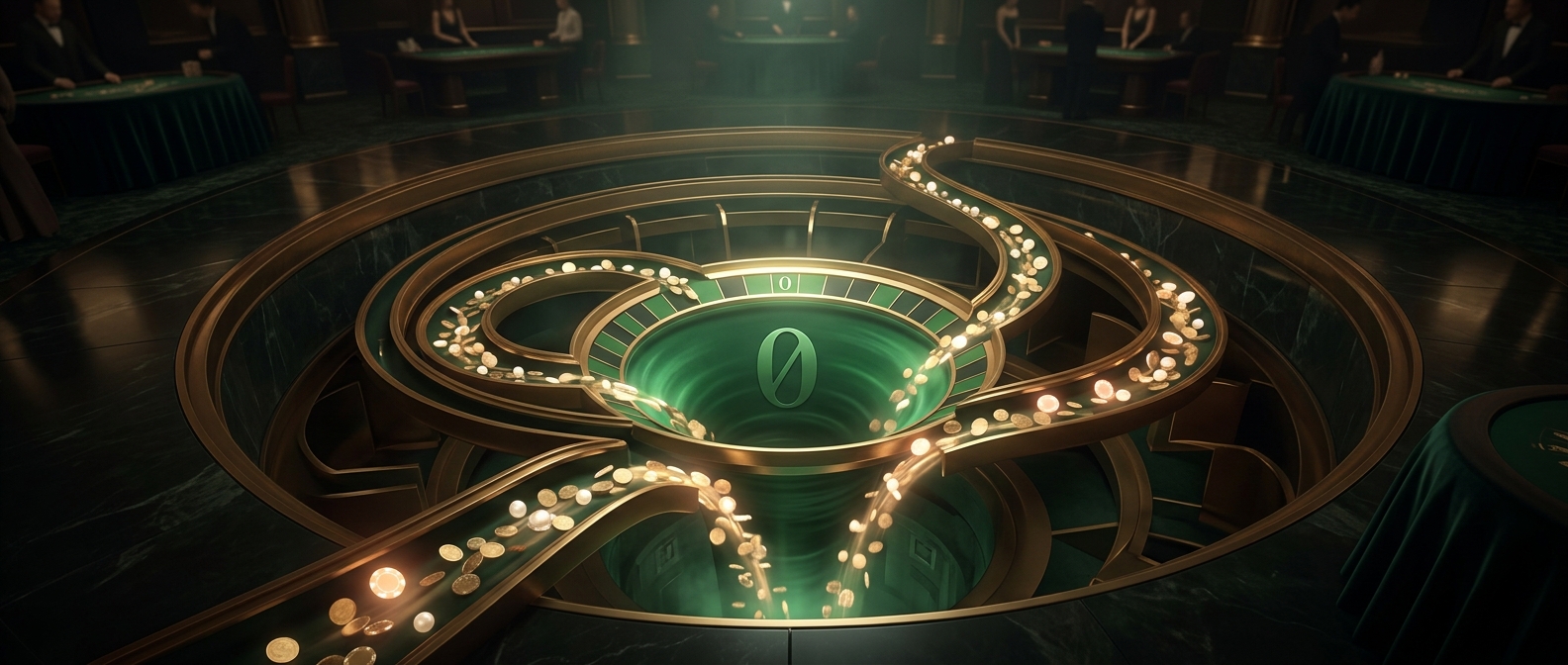
The payout stays even; the chances do not
On a standard roulette wheel, an even-money bet such as red or black pays one unit for every unit wagered if it wins. The wheel has 18 red pockets and 18 black pockets, but it also has at least one green pocket: zero. That pocket is neither red nor black, so a green result makes both color bets lose.
The crucial detail is that the payout does not rise to compensate for the extra losing outcome. The casino keeps the difference between the apparent 50–50 choice and the actual odds.
One pocket changes the long-run balance
On a single-zero wheel, a red bet wins on 18 of 37 pockets and loses on the other 19. A player wagering one dollar each spin would, on average, lose about 2.7 cents per dollar wagered over many spins. That average is the house edge: the casino’s expected share of the total amount bet, not a guarantee about any individual session.
Many American-style wheels add a second green pocket, marked 00. With 38 pockets, the same bet loses on 20 outcomes and wins on 18, raising the house edge to about 5.3 percent. The extra green pocket therefore matters even though it appears only once more on the wheel.
Why the green pocket matters
Zero is not simply another color for betting purposes; it is the outcome that interrupts the red-or-black choice while preserving the usual even-money payout. A player can win repeatedly, but each spin remains independent, and the wheel’s built-in imbalance persists. Over time, that small disadvantage applies to every dollar wagered—making the number of green pockets a practical difference between roulette wheels.