A land route between two coasts
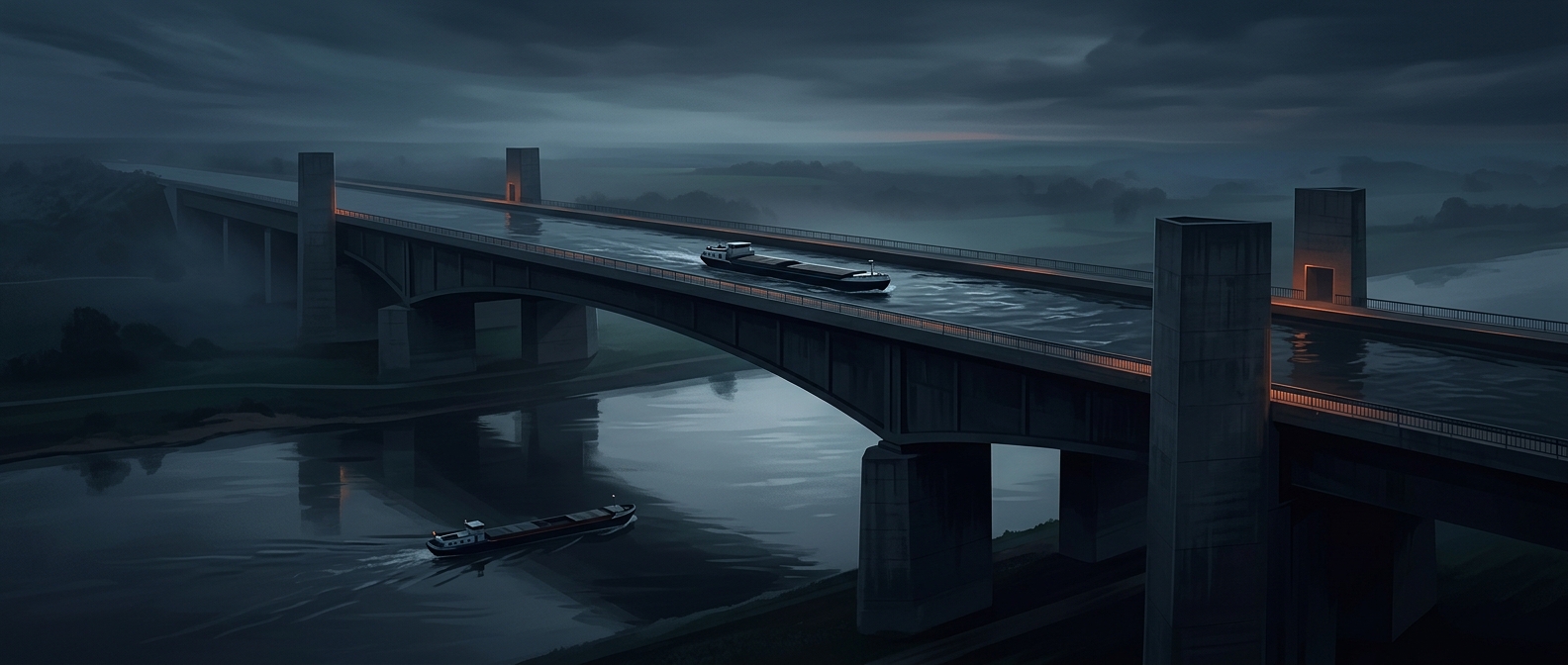
The Canal du Midi offered France a way to move cargo between the Mediterranean and the Atlantic without sending ships around the Iberian Peninsula. The canal itself runs from Toulouse to the Mediterranean; the Atlantic connection came through the Garonne River and, later, the Canal de Garonne. Together, these waterways created an inland route across southern France.
That route exchanged the hazards and exposure of an ocean passage for a slower journey through rivers and canals. It was especially useful for bulk goods that could travel by barge, where avoiding a long sea voyage mattered more than speed.
The canal’s great challenge was water
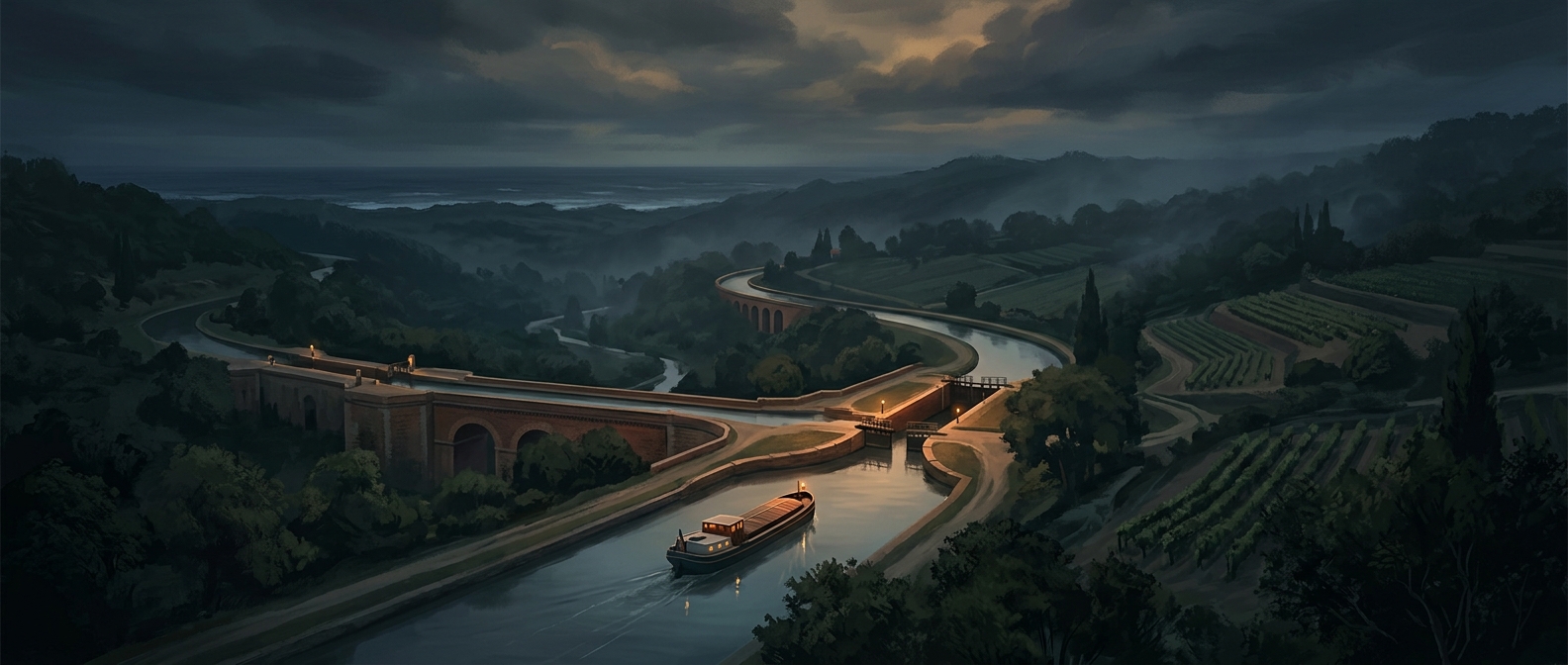
The route crosses elevated ground, so boats could not simply follow a downhill course from one coast to the other. Locks—watertight chambers that raise or lower boats between stretches of canal—made the changes in elevation manageable. A boat entered a lock, gates closed behind it, and water was added or released until the boat matched the level ahead.
But every lock depended on a supply of water. Pierre-Paul Riquet’s solution was to collect water in the Montagne Noire and channel it to the canal, including through a large reservoir. This supply fed the route’s highest reaches and helped keep the staircase of locks operating.
A different kind of risk
Building the canal shifted the challenge from open water to infrastructure: France had to construct and maintain reservoirs, channels, locks, and towpaths across the countryside. The payoff was a continuous inland corridor linking waterways on opposite sides of the country. Instead of gambling on a storm-prone passage around Spain, cargo could make the crossing one lock chamber at a time.