How a blindfolded solve is divided into two jobs
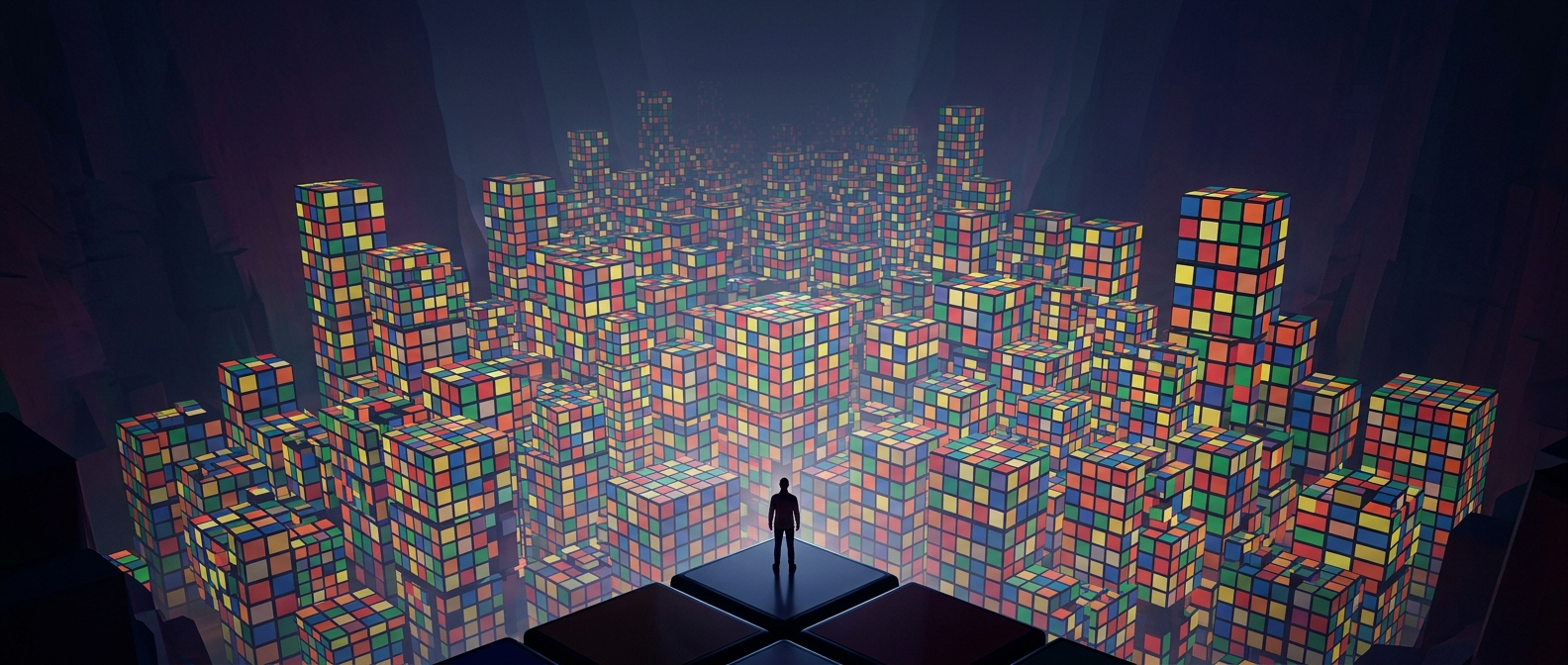
A blindfolded Rubik’s Cube solve is not a matter of feeling where each color belongs. The solver first studies the scrambled cube, then puts on a blindfold and carries out a memorized plan. The challenge is to turn a visible puzzle into information that can be acted on without seeing it.
During memorization, competitors typically learn where pieces need to go and encode those destinations as short sequences of letters or other cues. A piece’s destination matters more than the exact twist of an individual turn: the plan groups pieces into cycles, or loops of destinations, that can be handled together.
Why learned move sequences matter
The solver then recalls the encoded plan and uses practiced algorithms—fixed sequences of turns designed to move particular pieces while limiting disruption elsewhere. These sequences are not improvised by touch. They let the solver translate each remembered cycle into a predictable set of physical moves.
Touch still has a practical role. It helps the solver hold and turn the cube, keep track of its orientation, and notice whether a turn was completed. But fingertips cannot identify the cube’s colors or reveal the scramble. The crucial information comes from memory; the hands execute the plan.
The real test is coordination
A mistake in the memorized destinations can send an algorithm to the wrong place, while a slip during execution can leave the cube in a state the plan no longer matches. That is why the skill combines accurate visual encoding, reliable recall, and controlled turning—not simply a strong memory for the whole scramble.
The striking part is the division of labor: the solver learns the cube while looking, then solves it with a sequence of remembered instructions. The blindfold hides the result, but the solution is already being carried in the solver’s head.