How crossword editors turn up the difficulty
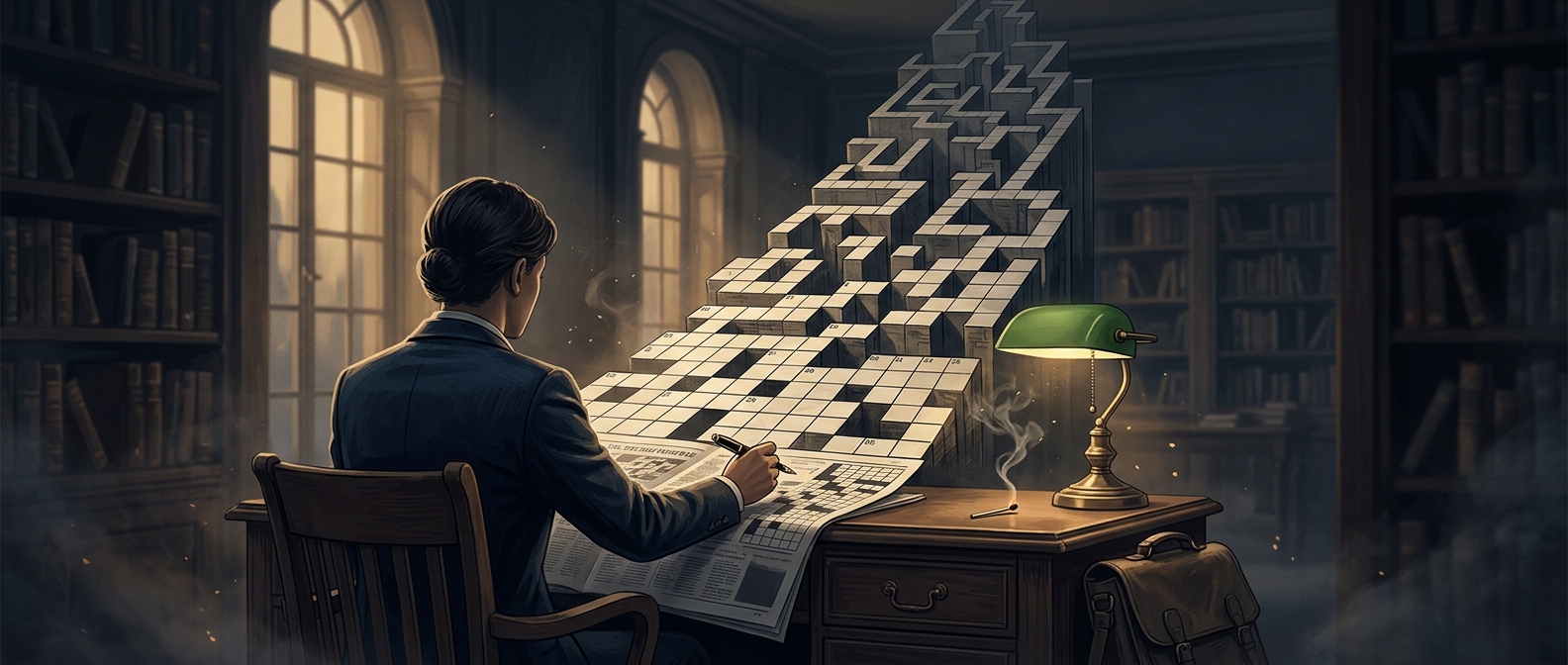
A weekday crossword can use the same basic ingredients—short answers, a theme and a fixed grid—but feel very different depending on how the clues point to those answers. Editors raise the challenge gradually by making the connection less direct. Early in the week, a clue is more likely to ask for a familiar synonym or a straightforward fact. Later, it may rely on wordplay, a less obvious meaning of a common word, or a reference the solver must recognize from context.
That shift is deliberate: the puzzle is meant to reward a different kind of solving as the week progresses. When an answer does not come immediately, a solver may need to use crossing entries—the letters supplied by answers running the other direction—to narrow the possibilities. A clue that seems opaque can become clear once a few of those letters are in place.
The theme has to do more work, too
Many American newspaper crosswords include a theme: a pattern linking several longer answers. A simple theme may announce its logic plainly. A tougher one can hide the pattern in a pun, an unusual transformation of words, or a clue that has to be interpreted in an unexpected way. The solver is not just filling in entries; they are also working out the puzzle’s underlying rule.
Editors and constructors have to make that difficulty fair. Every answer still needs to fit the grid, and crossings give solvers a way to check uncertain guesses. The challenge comes from delaying recognition, not from making the puzzle impossible to complete.
A weekly learning curve
The gradual increase lets regular solvers build confidence and then test their pattern-spotting skills. By the end of the week, familiar words may be doing unfamiliar jobs, and the theme may take longer to reveal itself. Sunday puzzles add another wrinkle: their larger grids can make the solving session feel like a bigger undertaking, while their clues and themes offer a substantial challenge. The result is a weeklong change in how much interpretation each blank demands.