The skin is the selkie’s way home
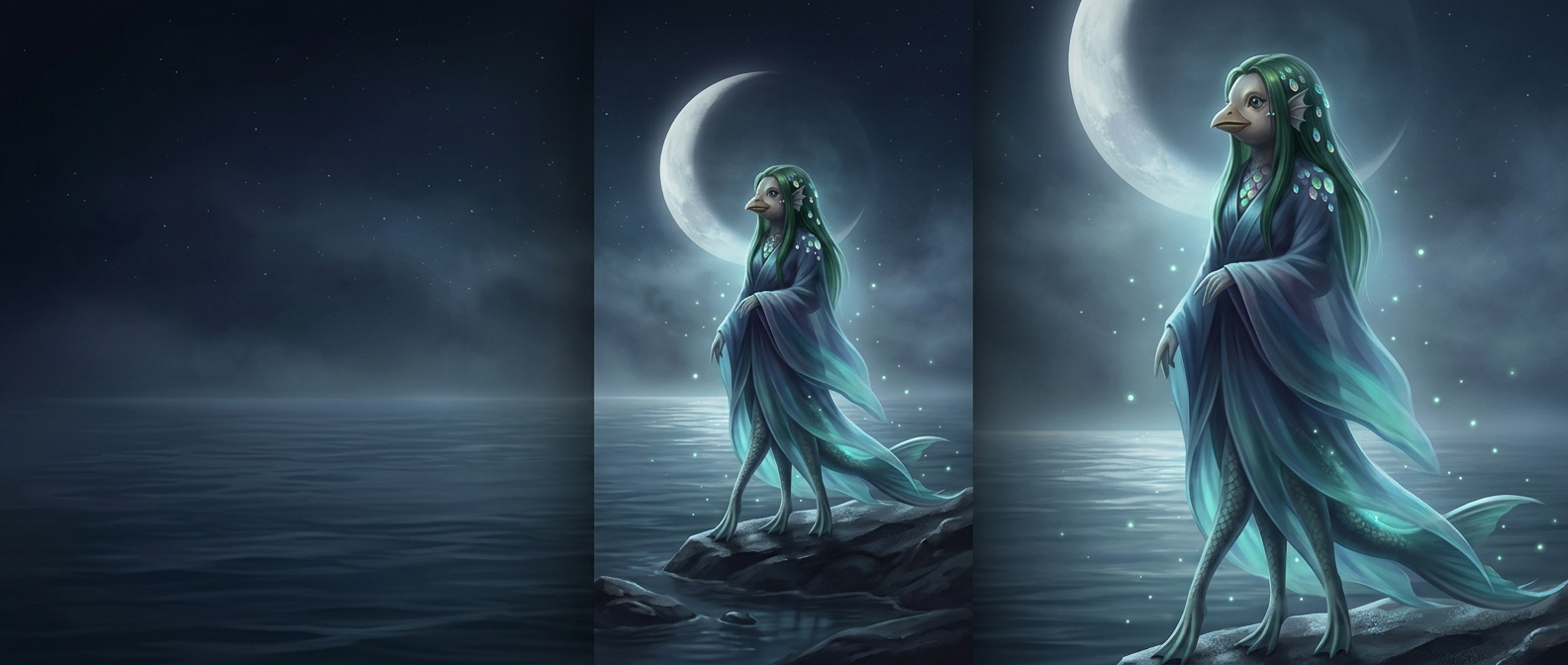
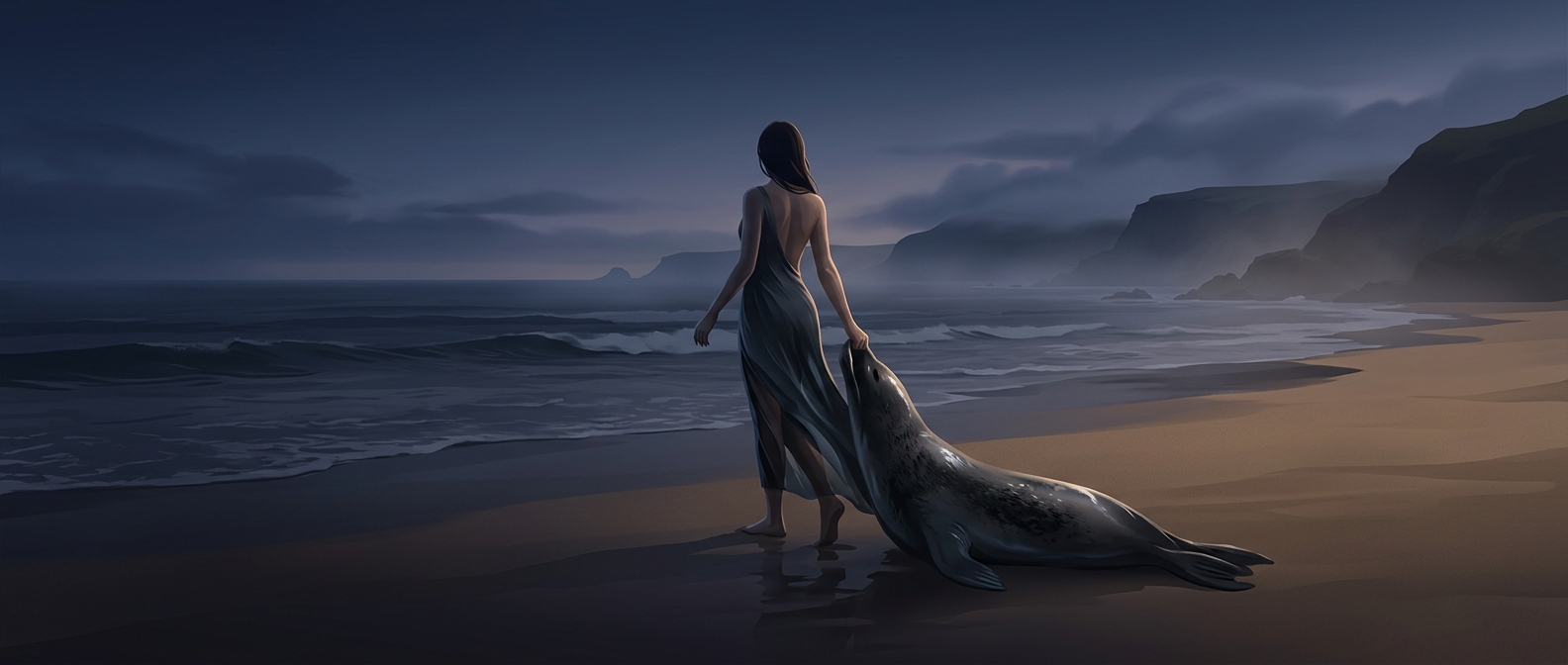
In Scottish and Irish folklore, a selkie is a seal that can take human form by removing its seal skin. The pelt is not merely clothing: it is what makes the change possible. Without it, a selkie may look human but cannot simply slip back into the sea.
That detail gives the stolen-skin story its force. A person who hides a selkie’s pelt can keep its owner on land, sometimes within a household and marriage. The apparent romance therefore has a coercive hinge: the selkie’s presence is secured by taking away the means to leave.
A boundary between two lives
In many tellings, the selkie eventually finds the hidden skin and returns to the water, even if years have passed or the departure leaves human family behind. Versions differ, but the pelt repeatedly stands for the selkie’s freedom to choose between worlds—not just a disguise that can be exchanged at will.
The beach is where that tension becomes visible: a place where sea and land meet, and where a seal’s ordinary body can become a human one. The story turns that transformation into a question of possession. If someone else controls the skin, they control whether the selkie can go home.