How Game Sense Could Carry Into a Dream
In a lucid dream, the sleeper realizes that the experience is a dream while it is still happening. That recognition can open the door to influencing what happens next, though control is not guaranteed. For a gamer, the useful skill may be less about quick reflexes than about noticing how a world behaves.
Learning to Look for the Rules
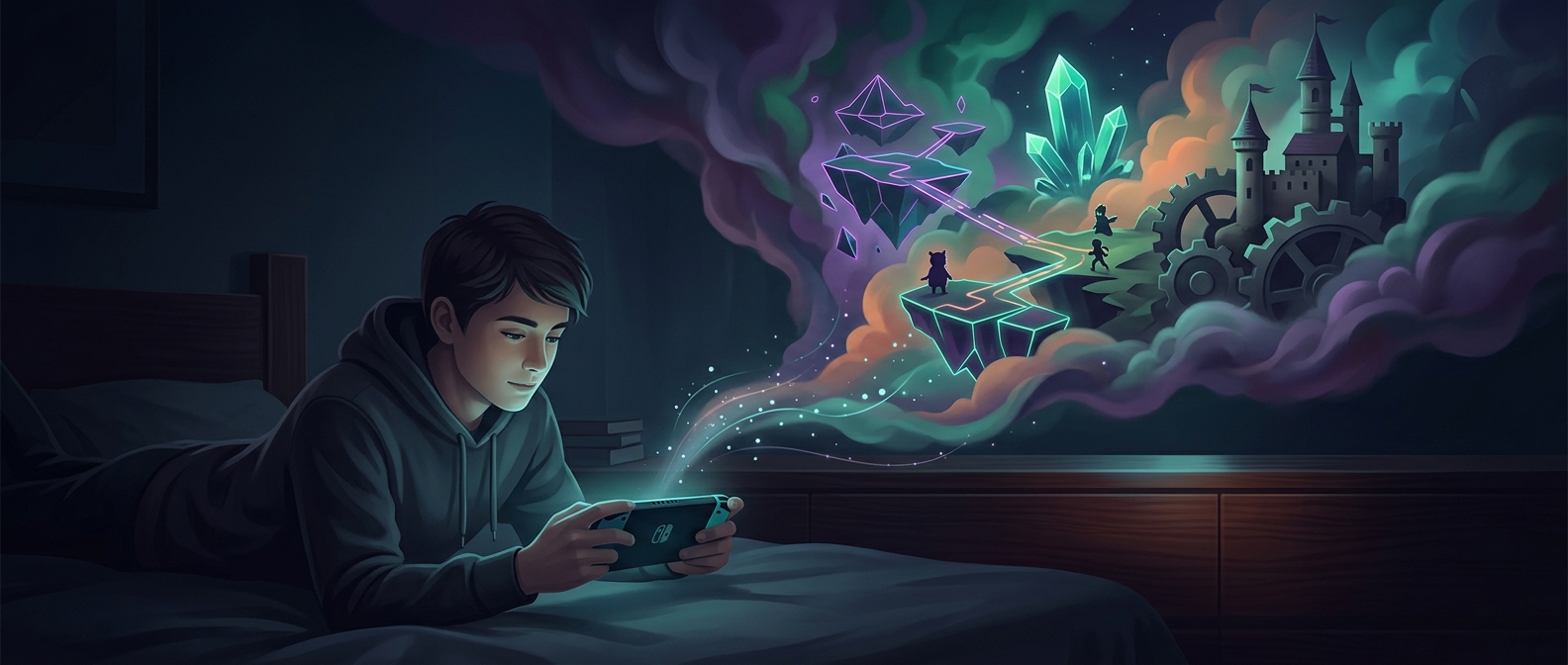
Games often present convincing environments governed by rules that are only partly visible. A player learns to test those rules: Can this character jump that far? Does the door lead where it should? Will an object respond as expected? That habit of monitoring a world for inconsistencies could carry over to dreams, where familiar places and people can coexist with sudden changes in setting, impossible movement, or events that ignore ordinary cause and effect.
The mental step is a kind of reality check: pausing to ask whether the current experience makes sense. In a dream, that question may turn an odd detail from something to accept into a clue that the dream is not waking life. Gaming does not make dream logic automatically obvious, but repeated practice noticing and testing a world’s rules may make the question easier to ask.
Recognition Is Not the Same as Control
Once someone recognizes a dream, they may try to steer it—much as a player makes choices inside a game—but dreams do not respond like software. Attention, expectations, and the shifting story of the dream can all affect what happens, and a dreamer may have only partial influence.
The intriguing possibility is that an ordinary gaming habit—checking what a world lets you do—could become a cue for questioning a dream. A strange wall or impossible jump might not just be part of the scenery; it might be the moment the dreamer realizes they are dreaming.