Why the cost survives the ceasefire
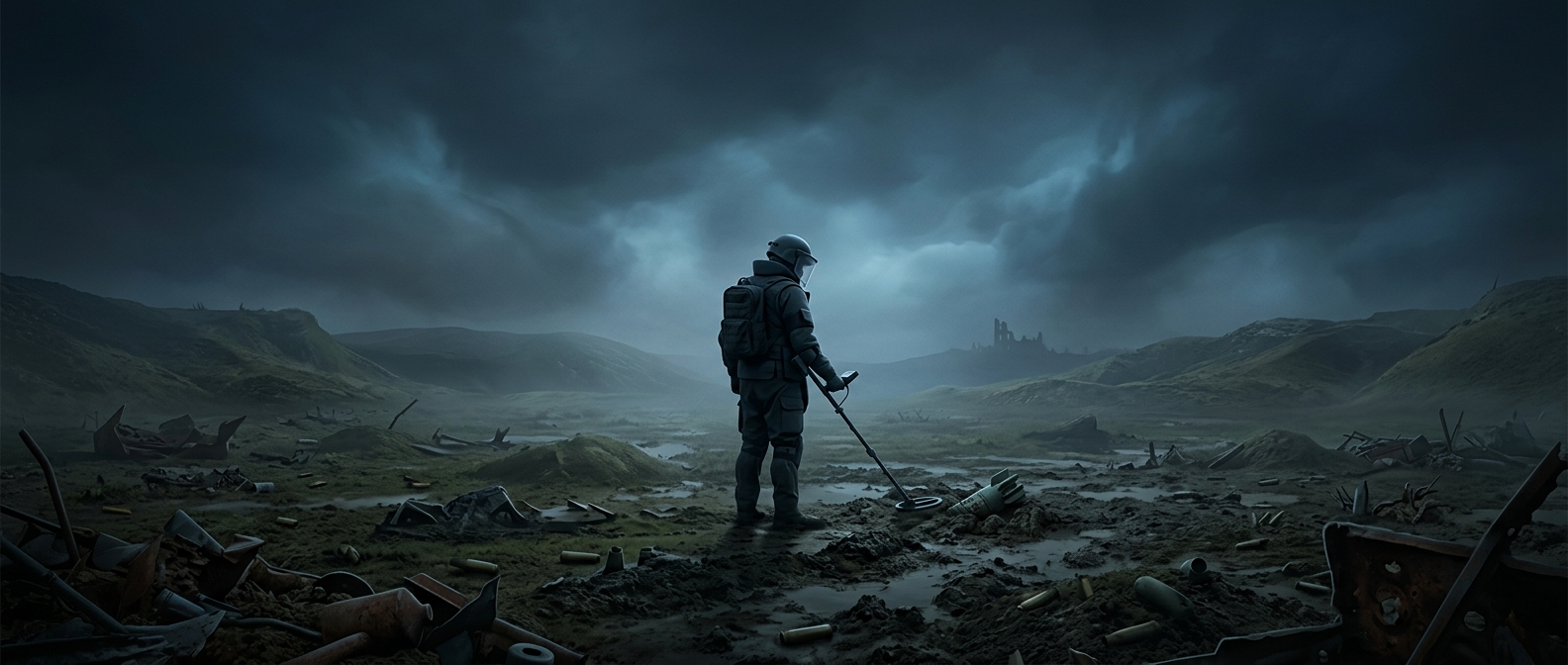
Explosive remnants turn a one-time act of war into a long-term public expense. A mine may be deliberately buried; an unexploded bomb is a weapon that failed to detonate. Either can remain dangerous for years, while weather, farming, construction, or shifting soil may make its location harder to predict.
Clearing a suspected area is not simply a matter of picking up visible objects. Teams first gather records and local reports, then survey the ground and investigate indications of explosives. Specialists identify and remove or destroy hazards under controlled conditions. The work is slow because a missed device can kill someone, while treating every patch of land as contaminated can make clearance needlessly costly.
The bill includes land left unused
The direct expense covers trained personnel, protective equipment, detection tools, transport, and safe disposal. But the larger economic burden can be what people cannot do while danger remains: plant crops, build homes, repair roads, or use a field for grazing. Those losses fall on residents and businesses as well as governments and aid organizations paying for clearance.
This creates a difficult allocation problem. Surveying carefully can focus scarce teams on places where people are most exposed or land is most urgently needed; clearing a low-priority area first may consume resources without quickly restoring livelihoods. Yet priorities can change as displaced families return or new development is planned.
The cost therefore does not end when the fighting stops. Each cleared area can reopen a practical route to work, food production, or construction—but only after the ground has been checked well enough for people to trust it.