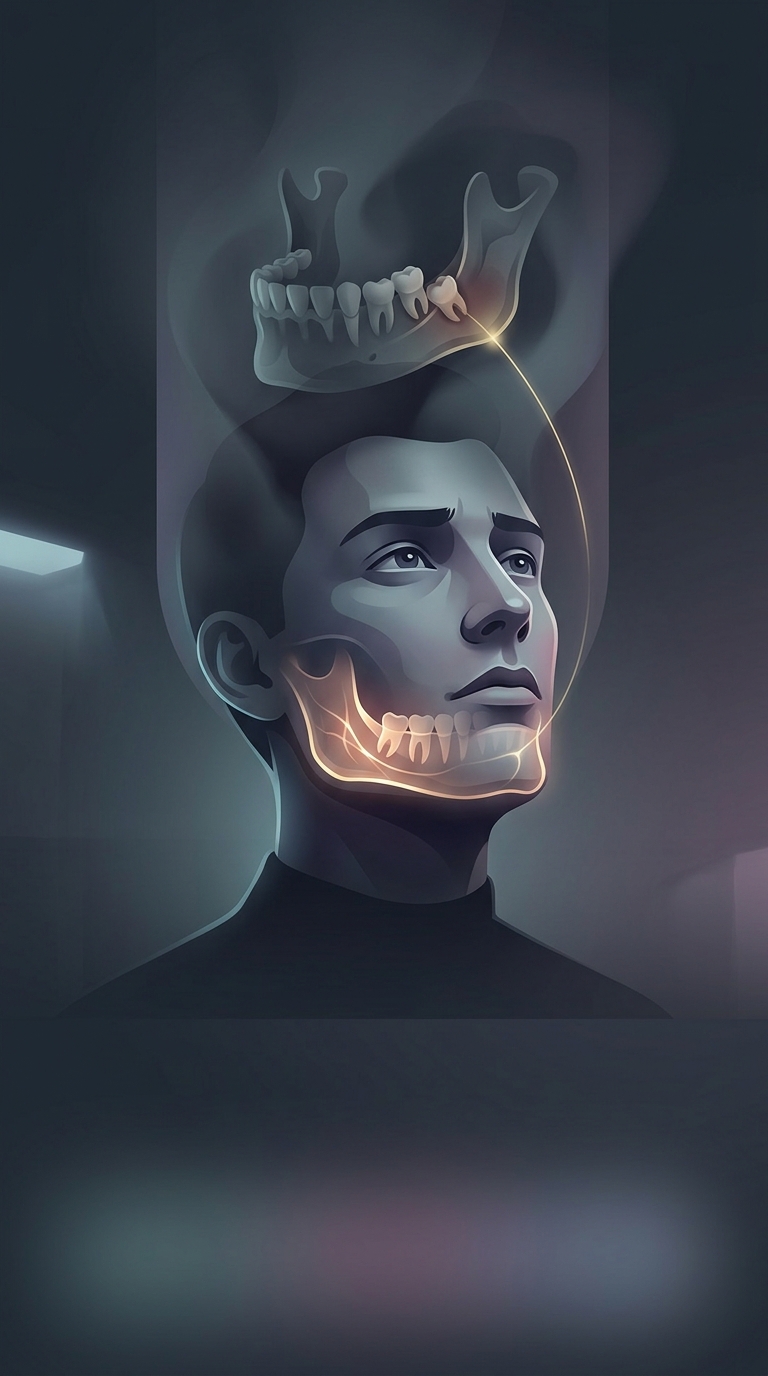
How breathing posture can affect a growing face
A child’s face and jaws develop over years, while the tongue, lips, and jaw spend much of each day in a resting position. When breathing through the nose is difficult, the mouth may remain open to make airflow easier. The tongue can then rest away from the roof of the mouth, and the lips may not meet naturally.
That changes the pattern of gentle, repeated pressure on the upper jaw. With the tongue resting against the palate—the bony roof of the mouth—it normally helps balance pressure from the cheeks. If that support is reduced, the upper dental arch may develop more narrowly. An open-mouth posture can also affect how the jaw is held, while growth continues to shape the face.
A contributing influence, not a single cause
These changes are not automatic, and mouth-breathing alone does not determine a child’s facial shape. Genetics, the airway, dental development, and other habits all matter. Persistent mouth-breathing can also be a sign of an underlying obstruction, such as chronically blocked nasal passages or enlarged tonsils or adenoids; the posture may be the body’s response to that difficulty, not simply a habit.
That distinction matters because changing the breathing pattern without addressing why the nose is hard to use may not solve the problem. A clinician can assess ongoing mouth-breathing and its possible causes, while a dentist or orthodontist can evaluate changes in the bite and jaw. The earlier the cause is understood, the more opportunity there may be to guide developing structures rather than only correct their effects later.