Why the squiggles drift when your eyes move
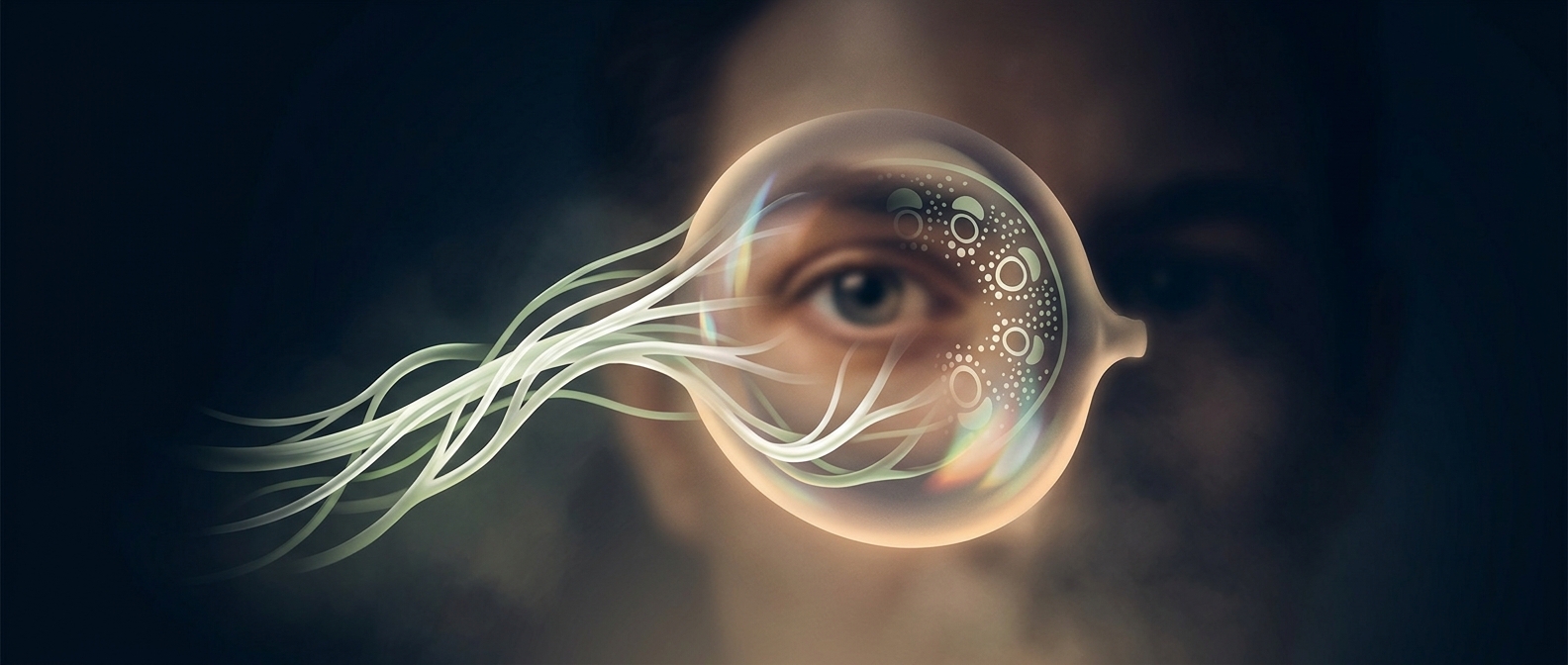
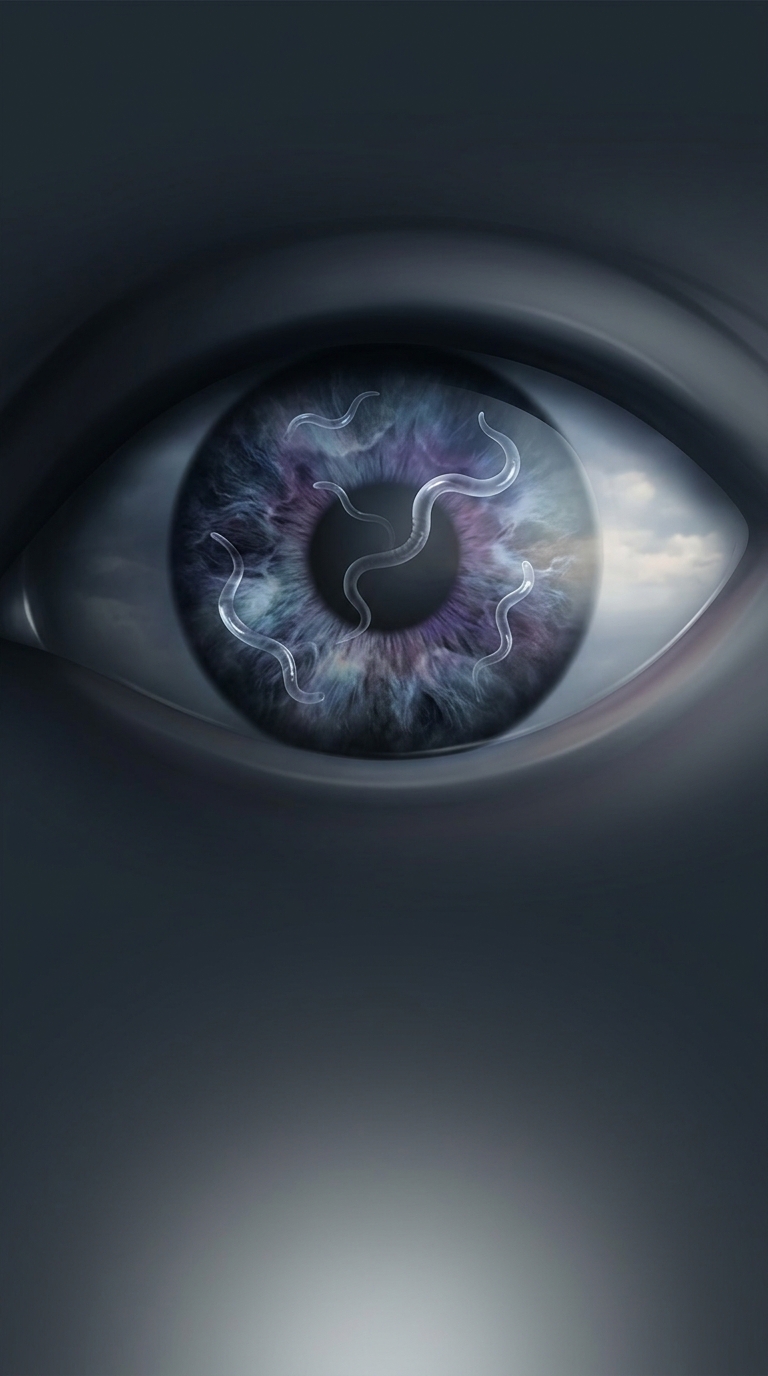
The shapes are usually eye floaters: tiny clumps or strands inside the eye’s vitreous, the clear, jelly-like material filling the space between the lens and the retina. Light passes through the vitreous on its way to the retina, the light-sensitive layer at the back of the eye. A floater blocks a little of that light, casting a faint shadow that you perceive as a speck, thread, or translucent curve.
Because the strands are suspended in gel rather than attached to the surface of the eye, they shift as the eye moves. They may seem to dart away when you try to look directly at them, then drift back into view. The motion is not happening in the sky; it is happening inside the eye.
Why a bright sky makes them obvious
Floaters are easiest to notice against a bright, nearly featureless background. A blue sky or a white wall gives the retina a broad field of light, making the small shadows stand out. In a busy scene, edges, colors, and movement compete for attention, so the same shadows are easier to miss.
The vitreous changes gradually with age: its gel can become less uniform, and strands can gather into clumps that cast more noticeable shadows. Many floaters are harmless, but a sudden shower of new ones—especially alongside flashes of light or a dark curtain-like area in your vision—can signal a problem at the retina and warrants prompt medical attention. The useful distinction is not simply whether a floater exists, but whether your vision has changed suddenly.