How Pompeii’s missing people left a shape behind
When volcanic material buried Pompeii in AD 79, it covered people and objects in layers that later hardened. Over time, soft tissue decayed. In many places, the surrounding deposit kept the outline in place, leaving a hollow where a person had been. Archaeologists could find that empty space even after the remains themselves were gone.
Turning a hollow into a cast
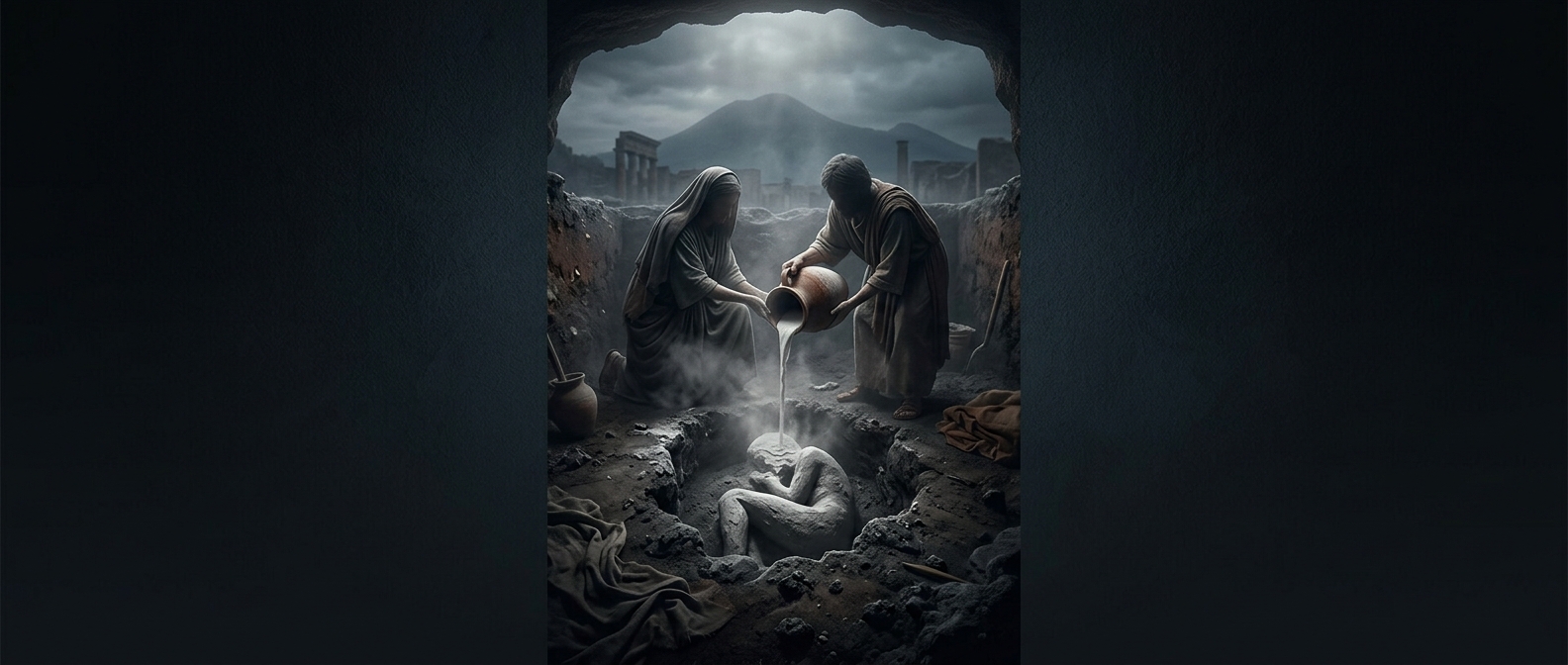
During excavations in the 19th century, archaeologist Giuseppe Fiorelli developed a way to preserve these outlines. Workers carefully exposed a cavity, poured plaster into it, and waited for it to set before removing the surrounding material. The result was a cast of the space—not a preserved body.
The method also worked for other perishable things, including wooden objects, whose shapes could survive as voids after the material decayed. Each cast depended on the cavity remaining intact and accessible, so it records only what the buried deposit preserved.
What the poses can—and can’t—show
A cast makes a fleeting human outline visible: the bend of a limb, the way a person was curled, or folds in clothing. But it is not a complete record of the person, and a pose alone cannot tell us exactly what that person was thinking or feeling. The striking detail is how absence became evidence: a space left by decay could still preserve the shape of a final moment.