A slap has to read before it happens
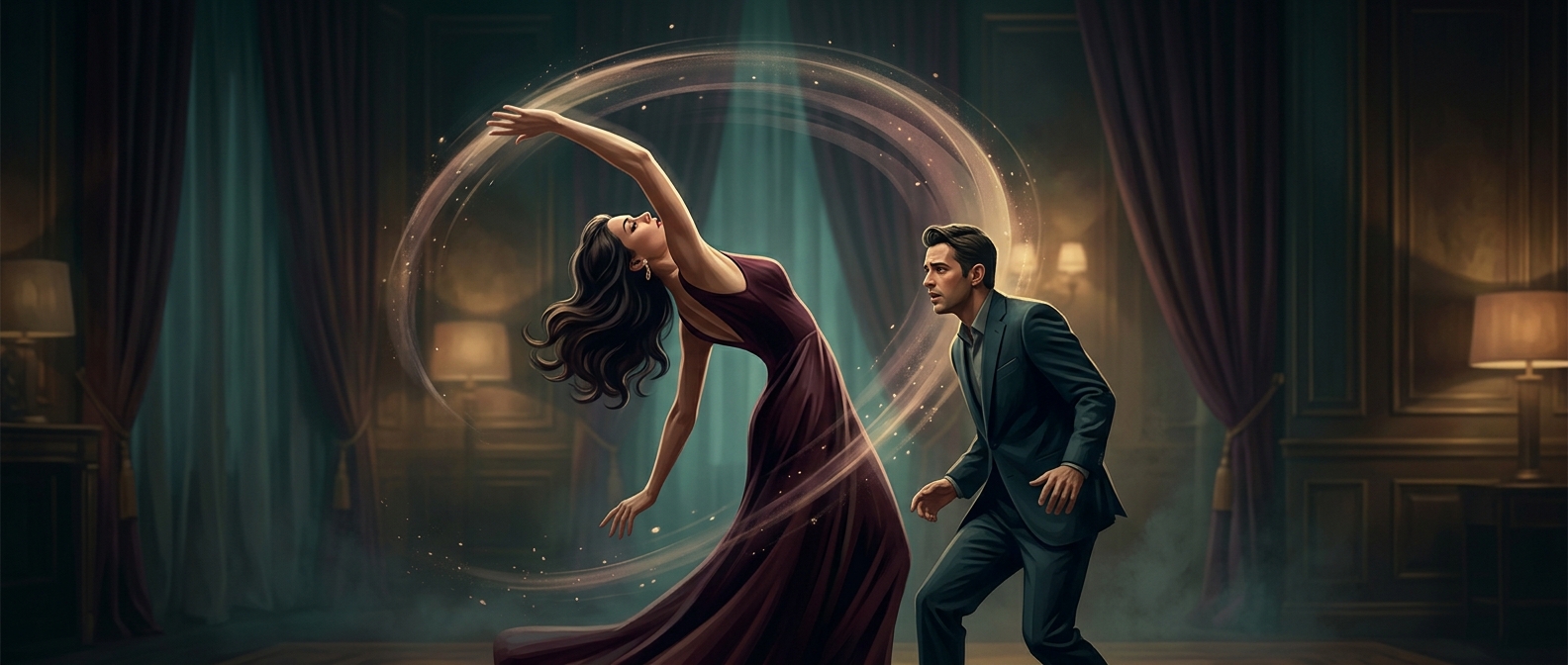
On screen, a slap is not simply a fast hand meeting a face. Viewers need to understand who is about to strike, see the motion, and register the impact. A sudden, realistic swing can be over before the camera—or the audience—has made sense of it. The long draw-back turns a split-second action into a legible sequence: threat, swing, reaction.
That pause is especially useful in a medium or wide shot, where a hand may be small in the frame. It also gives the performer playing the target time to prepare a convincing flinch. The apparent impact is commonly created through timing, camera angle, and performance rather than an actual blow; the hand can pass in front of the face while the recipient’s movement and the cut sell the contact.
The delay builds the moment
The windup does more than make the action easy to follow. It lets the audience anticipate what is coming. As the arm rises, attention shifts to the target, and the pause can make the impending hit feel more threatening or, in a comic scene, more absurd. The eventual smack—often supported by sound—then lands as a payoff to that anticipation.
Three seconds would feel strangely long in an ordinary conversation. In a staged scene, that extra time is part of the choreography: it keeps the action visible, gives the reaction room to register, and lets the audience feel the blow before it arrives.