A shared machine, a private view
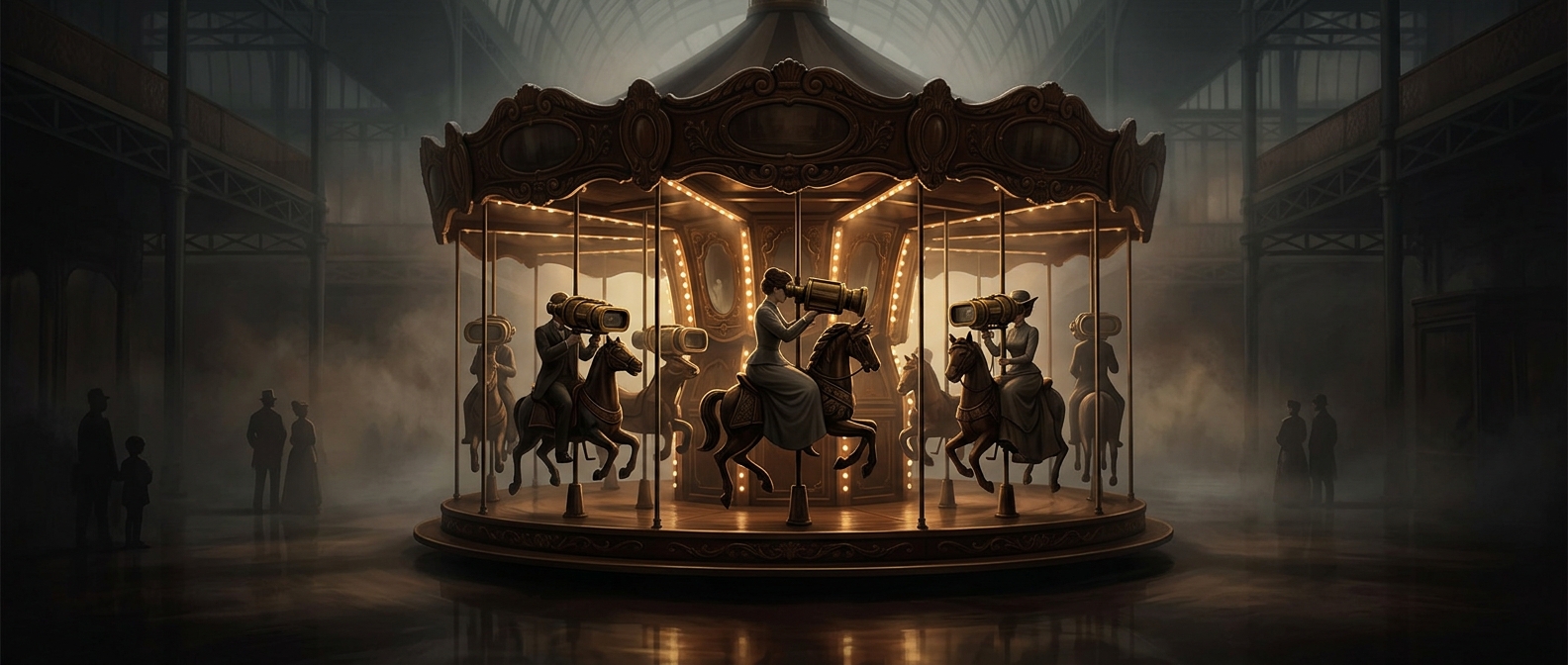
A wooden cylinder could serve two purposes at once: it gathered an audience around a single device, yet gave each person a separate viewing position. At each station, lenses directed a viewer’s eyes toward a stereoscopic slide—a pair of pictures made from slightly different viewpoints. The brain combines those views into an impression of depth, much as it does with the two images received from a person’s eyes.
That made the display more than a row of ordinary photographs. A landscape or scene could seem to have space in front of and behind its subjects, even though the images were flat.
How the pictures reached the viewers
The slides were illuminated so their details could be seen through the lenses. As the slides rotated, the image available at the viewing stations changed, letting the group move through a sequence of scenes without anyone needing to handle or replace the pictures.
The arrangement imposed a clear tradeoff: everyone shared the same collection and its pace, but each viewer looked through their own lenses. It was a communal attraction built around individual acts of looking—not a single picture projected for the whole room.
An audience around the image
The cylinder shaped the experience as much as the slides did. Viewers faced inward toward the apparatus, rather than toward a distant screen, and the mechanism brought each new scene to them. In that compact setup, a group could encounter changing, depth-rich images together while each person saw them from a personal viewing station.