A fruit bunch can mimic a patch of forest
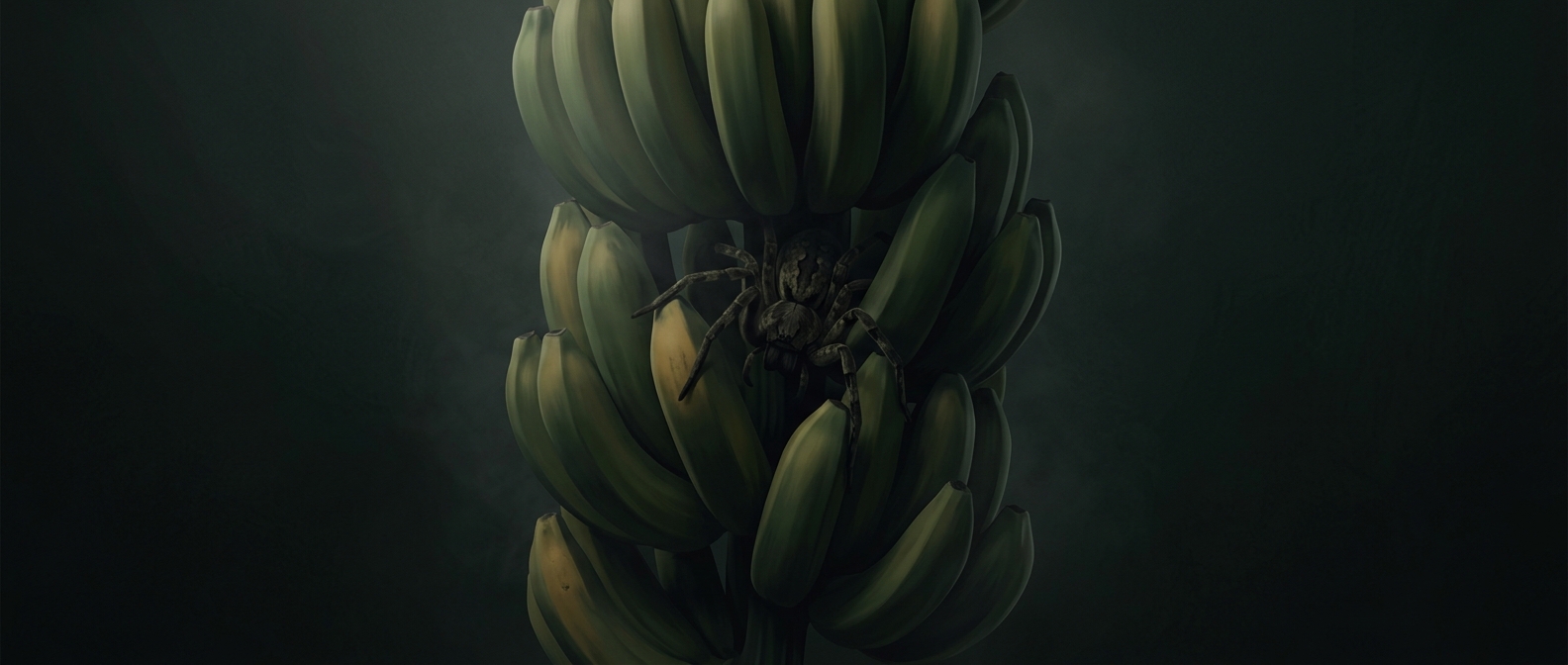
A bunch of bananas is not food that Brazilian wandering spiders seek out. Its overlapping fruit and leaf material can simply offer the kind of cover a ground-dwelling spider uses: a dark, protected space where it can stay concealed during the day and emerge to hunt. The spider’s name reflects its roaming style, not a habit of living in fruit.
That distinction matters because a spider tucked into a bunch may be difficult to spot from the outside. Harvesting and packing can move the hiding place—and its occupant—far from the forest floor where it was found. The spider is a stowaway, not a species that depends on banana plants or fruit shipments.
The hiding place is incidental; the risk is real
Wandering spiders do not use a web to catch prey, so they rely on cover and movement instead. A tightly packed bunch can provide shelter, but it also makes inspection harder: folds and gaps hide what a quick glance may miss. This is one reason reports of spiders in fruit draw attention, even though such encounters are not the ordinary purpose of the spider’s behavior.
If one is found, it should not be handled. Brazilian wandering spiders can deliver medically serious bites; keeping distance and contacting local pest or wildlife professionals is safer than trying to identify or remove it by hand. The striking part is how ordinary the hiding spot looks: fruit can carry a small piece of forest habitat into an unexpected place.