From Red Fruit to Coffee Bean
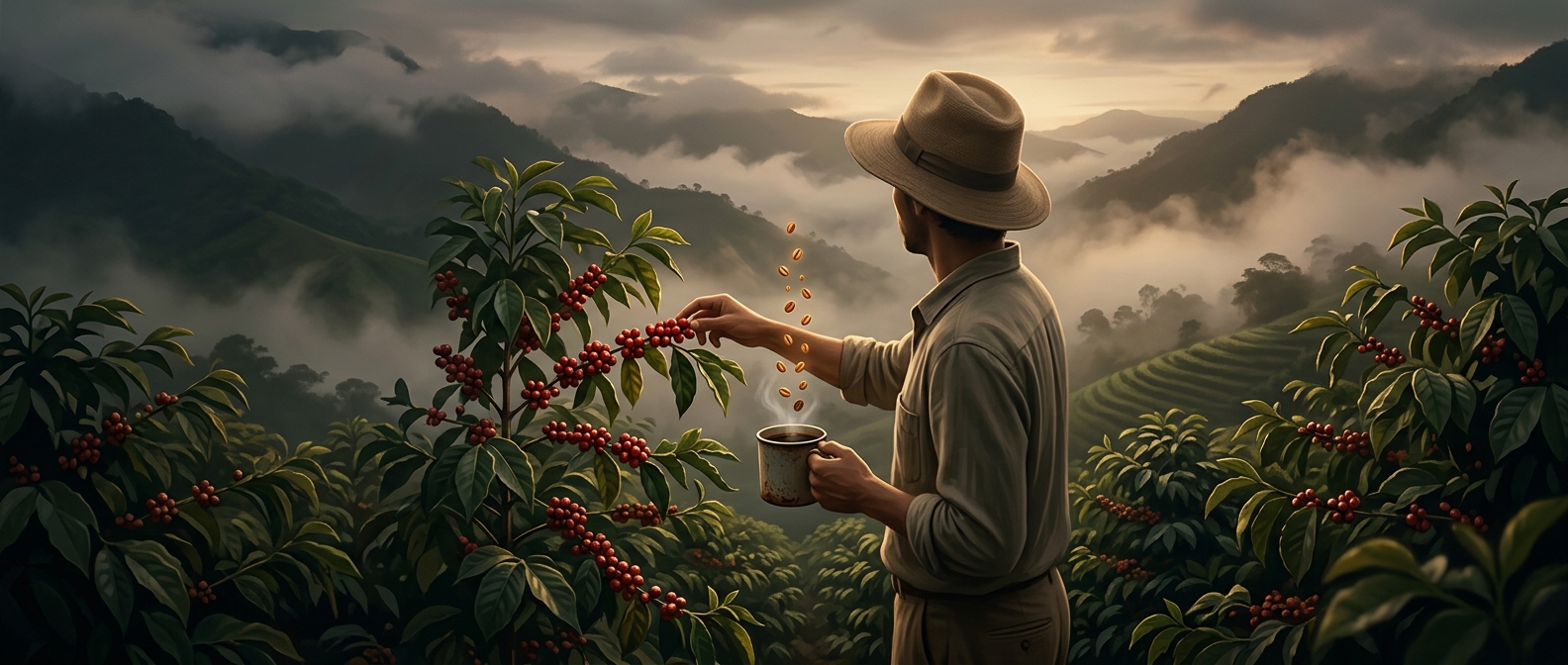
What visitors pick is not yet a bean. Coffee grows inside a small, glossy fruit called a cherry; beneath its skin and pulp are usually two seeds, which become the familiar coffee beans after processing. The red color signals ripeness, while green cherries still need time on the branch.
Why Picking Takes Care
Coffee cherries on the same branch do not all ripen together. Harvesters therefore look for ripe fruit and leave greener ones behind, rather than stripping the plant in one pass. On Salento’s steep hillsides, that careful work happens by hand: pickers move among the rows, often carrying a basket as they gather fruit from shrubs growing on uneven ground.
That selectivity affects what happens next. Ripe cherries can be processed into coffee, while underripe fruit may produce less desirable flavors. After picking, farms remove the fruit’s outer layers and dry or ferment the seeds, depending on their method. The exact steps vary, but the harvest is the beginning of a chain of work—not the moment coffee is ready to brew.
A Cup Has a Hillside Behind It
A farm visit makes an otherwise invisible distinction tangible: coffee beans begin as fruit, and choosing which fruit to pick takes attention and time. The next time you see a bag labeled with a Colombian growing region, you can picture not just a landscape, but the repeated decisions made among its coffee plants.