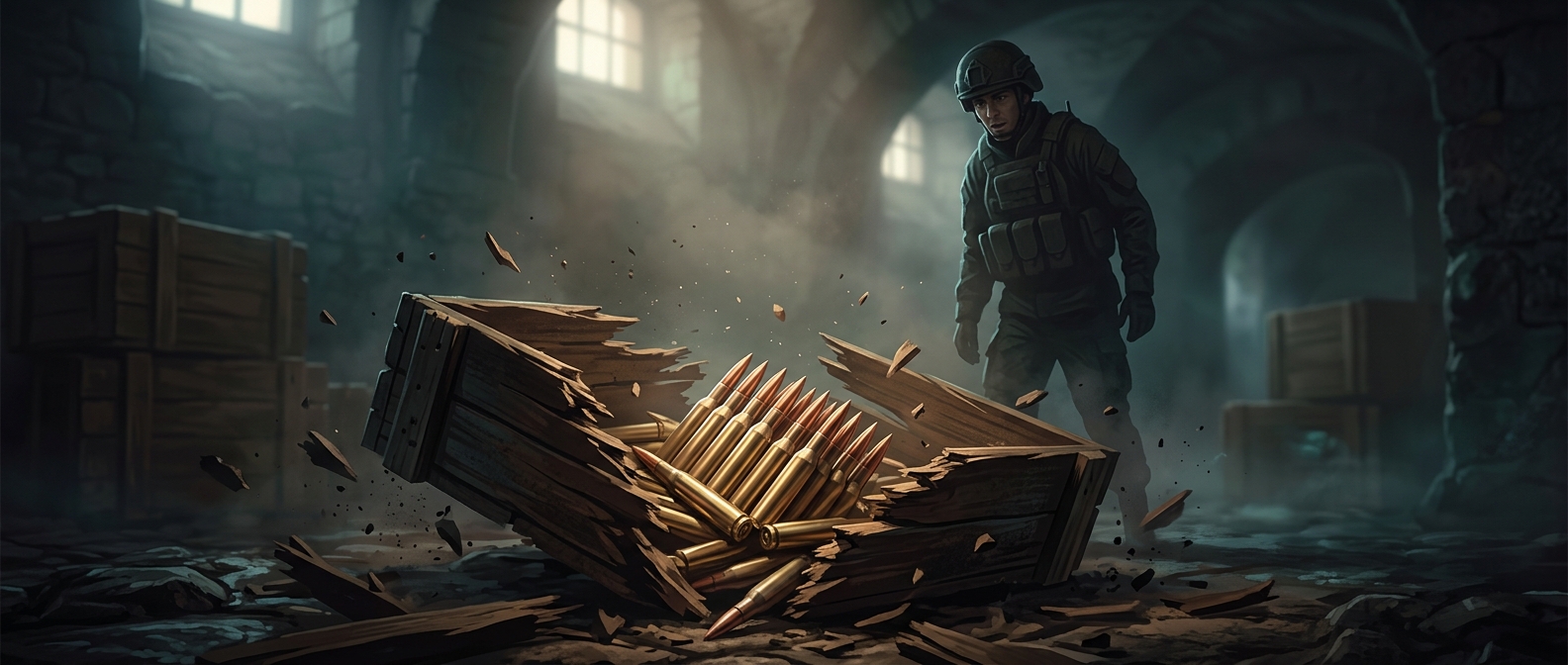
A crate is a visual instruction
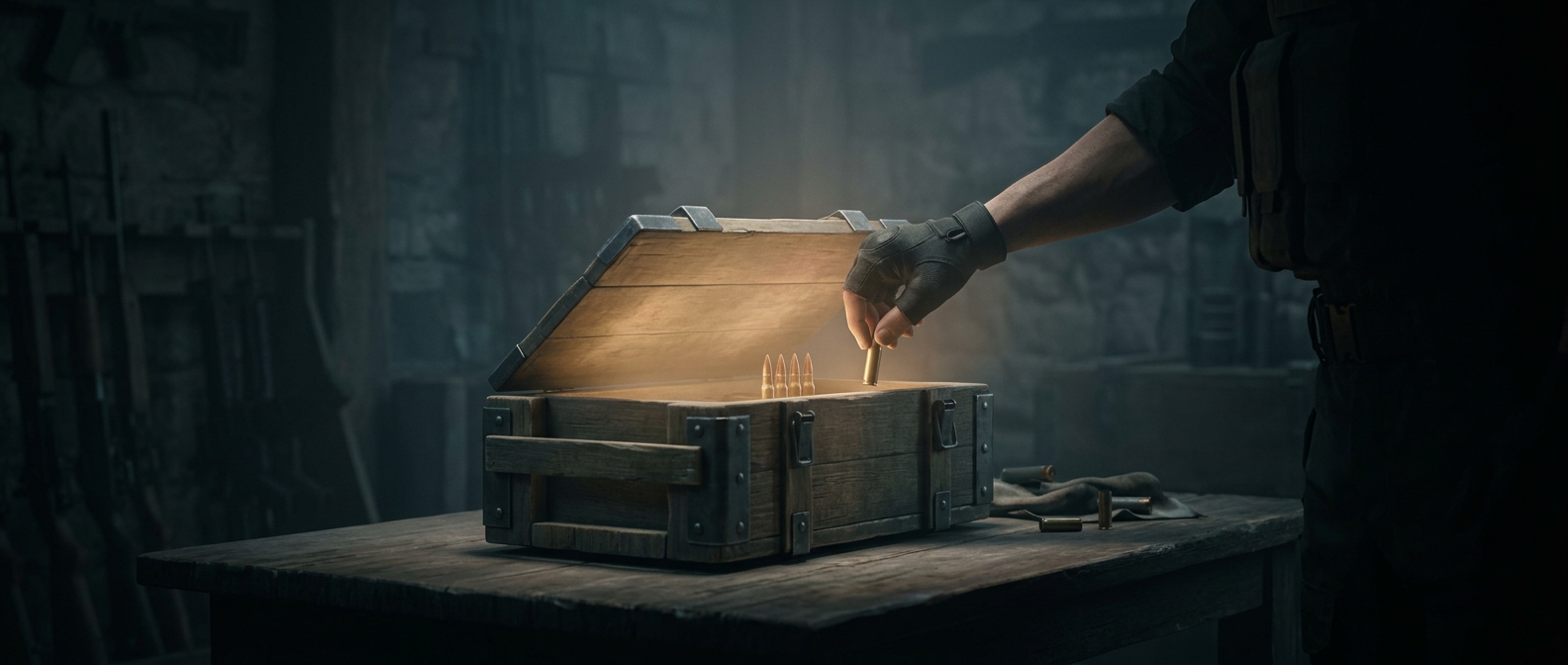
In a fast-moving game, players often need to spot supplies without stopping to inspect every object. A box is easy to recognize as something that might contain loot, and a distinctive pickup inside it is easier to notice than ammunition tucked into realistic but visually cluttered surroundings. Breaking the box adds a small, satisfying action before the reward.
That makes the crate less a plausible piece of military logistics than a piece of visual shorthand: it tells the player, “This object is worth checking.”
Supplies become part of level design
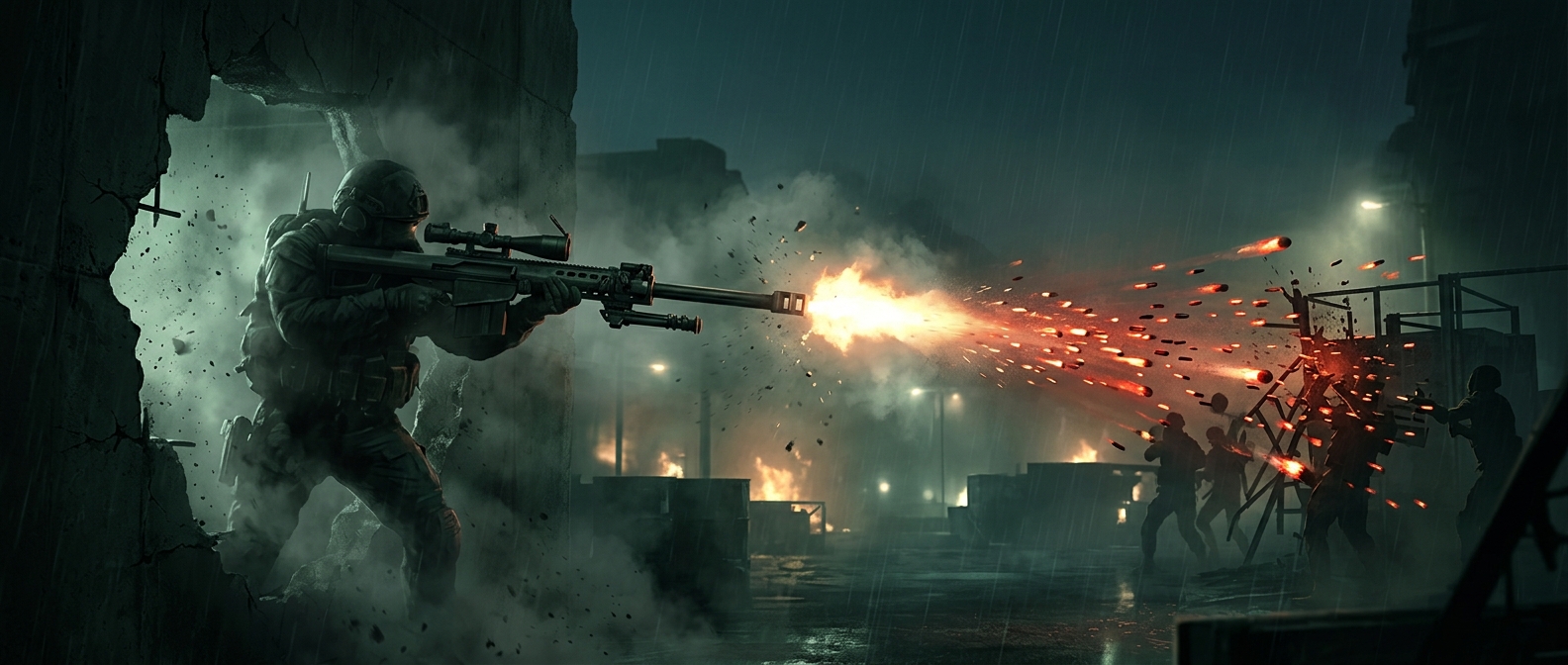
Ammo placement also lets designers shape how a fight unfolds. A cache near a difficult encounter can keep the player equipped; a sparse stretch can make shots feel costly. Putting supplies in breakable containers gives designers a clear way to place those resources along a route, while giving players a moment to choose whether to spend time collecting them.
The same prop can serve several purposes at once: decoration, a target to shoot, and a sign that a resource may be nearby. It is a compact solution for a game that must communicate quickly.
Fiction yields to readability
A believable explanation might require the ammunition to be stored in secure, specialized containers—and those containers could be harder to distinguish from the rest of the environment. A flimsy box is less convincing, but immediately legible and easy to interact with. The result is a familiar game-world compromise: the crate tells a coherent gameplay story even when its in-world story is thin.