The weapon is designed for the shot, not the hiding place
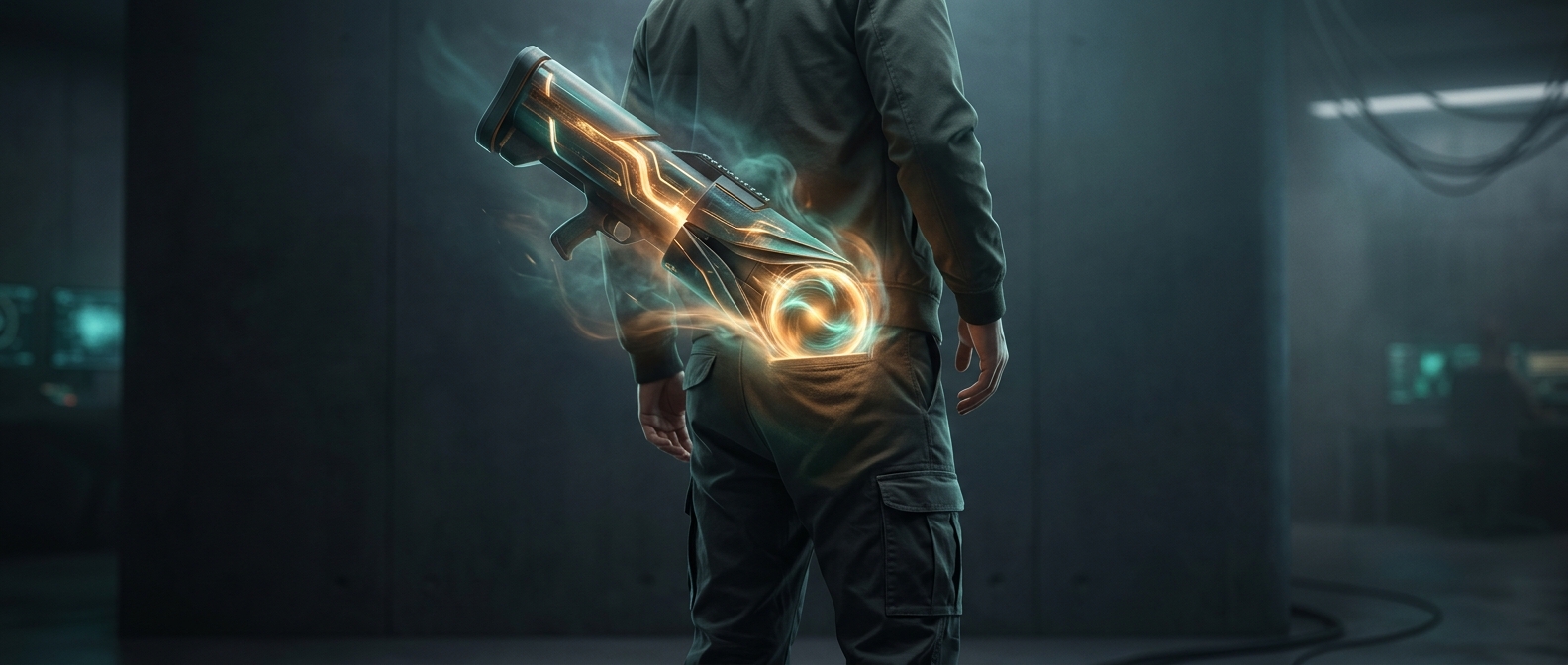
A movie rocket launcher often has to read instantly: the audience should recognize it as heavy, powerful, and dangerous, even in a wide shot. That pushes its design toward a broad, unmistakable silhouette—far larger than anything a character could plausibly conceal under a jacket.
The scene’s practical problem is different. The actor needs to begin unarmed, then produce the weapon at a precise moment. A launcher that truly fit behind the character would likely look too small on camera; one that looked impressive would spoil the reveal before it happened.
Editing makes the impossible draw feel smooth
Filmmakers solve the mismatch with staging. A character may turn away, step behind an obstacle, or move through a patch of darkness. A cut can hide the handoff from an off-camera crew member or the switch to a prop already placed nearby. In a fast action scene, the audience is watching the threat and the reaction, not measuring the space behind the actor’s shoulders.
The trick works because movies teach viewers to treat a reveal as a dramatic beat rather than a demonstration of storage. The launcher appears when the scene needs it, and its oversized shape makes the next moment—aiming, firing, or forcing everyone else to take cover—read clearly. The concealed space is less a location than an editing gap.