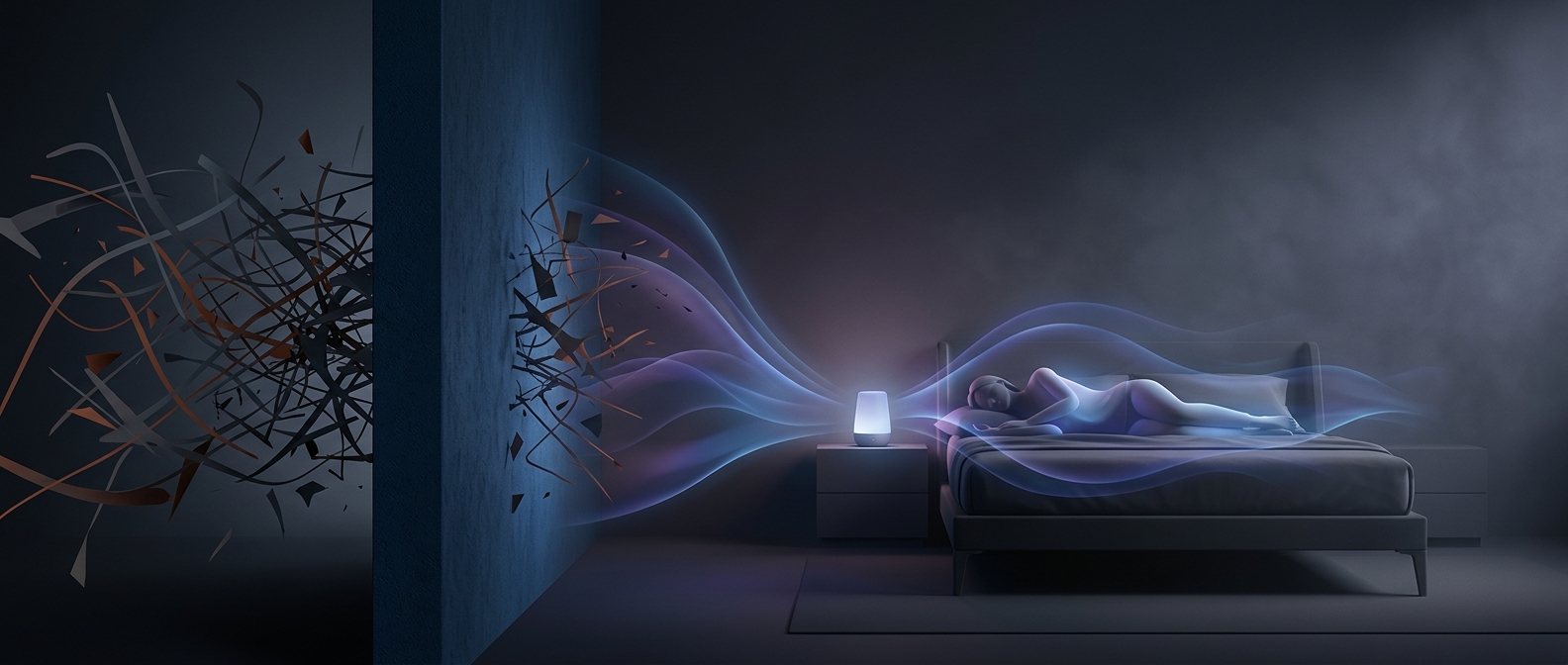
Why a Sudden Sound Can Seem Quieter
A door slam is still reaching your ears, but it may feel less startling when a steady sound is already present. The brain notices changes in sound especially well: a bang stands out because it arrives abruptly against a quieter background. Add a consistent hiss, and the contrast shrinks. The bang has not lost its energy; it has become less conspicuous.
Masking Happens in the Ear and the Brain
Sound waves make the eardrum vibrate, and the inner ear turns those vibrations into signals the brain can interpret. When a background sound and a sudden sound overlap, they can stimulate some of the same hearing pathways. The steady sound can make the quieter details of another sound harder to detect, a perceptual effect called auditory masking.
The effect depends on what the sounds are like. A loud, sharp slam can still cut through a soft hiss. Masking is most useful when the background sound is steady and the interruption is relatively quiet or similar in pitch; it is not a shield against sound, and it does not make the original noise safer for the ears.
Why Steady Sound Can Help at Night
In a quiet room, small noises—a creaking floorboard, distant traffic, or a neighbor closing a door—can become prominent precisely because there is little else to hear. A continuous sound from a fan or noise machine gives the auditory system a more consistent backdrop, so brief changes may draw less attention and disrupt sleep less often.
The tradeoff is that the added sound is audible too. The practical aim is not to overpower every interruption, but to use a comfortable, modest background level that reduces contrast without becoming a disturbance of its own.