How Minerals Become “White Dust”
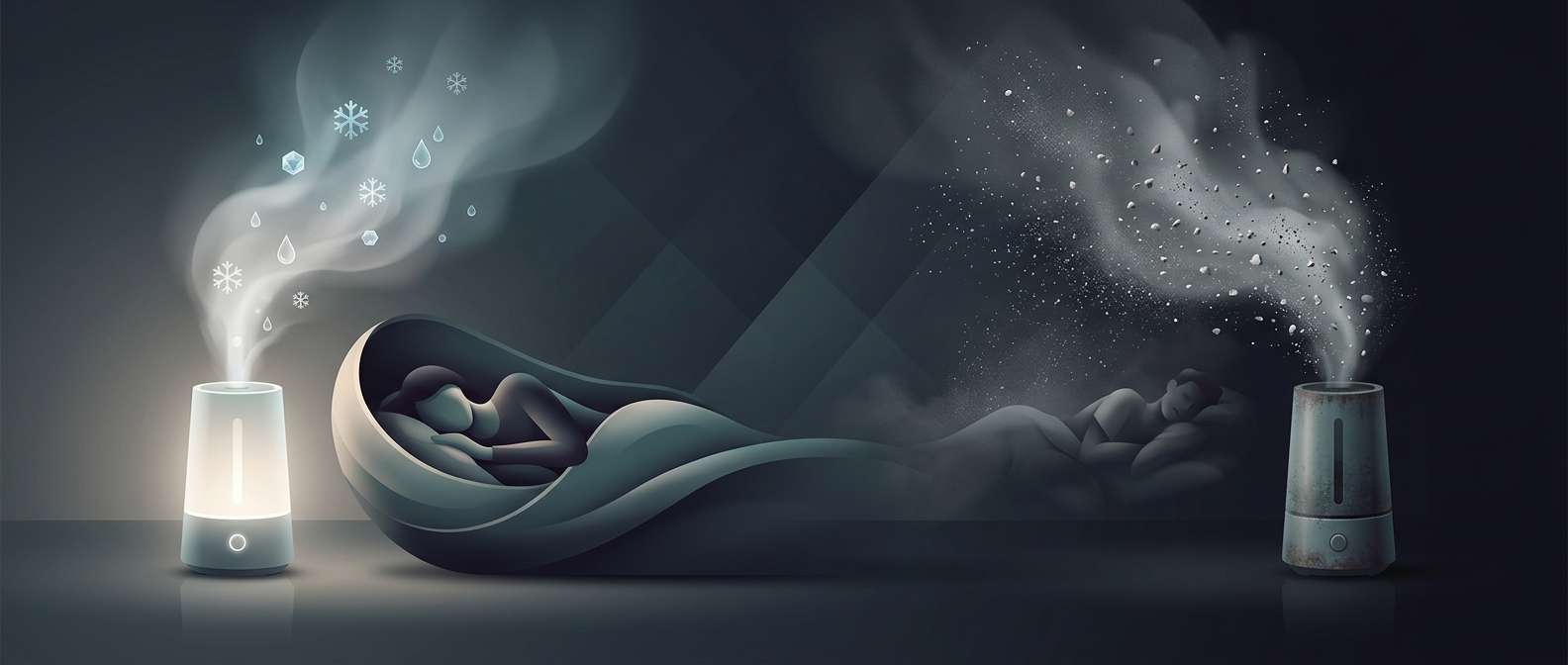
In an ultrasonic humidifier, a rapidly vibrating surface breaks water into tiny droplets that carry dissolved material with them. When those droplets evaporate, the water becomes vapor, but minerals such as calcium and magnesium remain as fine particles. They can drift through the room and settle on furniture, floors, or nearby electronics as a pale powder.
This is different from boiling water into steam: minerals do not readily travel with the vapor. Evaporative humidifiers also tend to trap many minerals in their wick or filter rather than disperse them, though the exact result depends on the device.
Why Distilled Water Helps
Distilled water has had most of its dissolved minerals removed. With less mineral content in the tank, an ultrasonic humidifier has less material available to scatter into the air, so it produces less white dust. Some users choose distilled water mainly to keep surfaces cleaner and reduce mineral buildup inside the unit.
White dust is a sign that mineral particles have been dispersed; it is not, by itself, proof of a particular health hazard. But particles small enough to remain airborne can be breathed in, so it makes sense to follow the humidifier maker’s water guidance—especially for ultrasonic models. Ordinary tap water varies by location, and a standard pitcher filter may not remove the minerals responsible.
The practical clue is often visible before it is airborne: if a humidifier leaves a chalky ring or coating, its water is carrying minerals. Switching to distilled water can reduce that residue, while regular cleaning prevents deposits from accumulating inside the machine.