How a steady sound masks an interruption
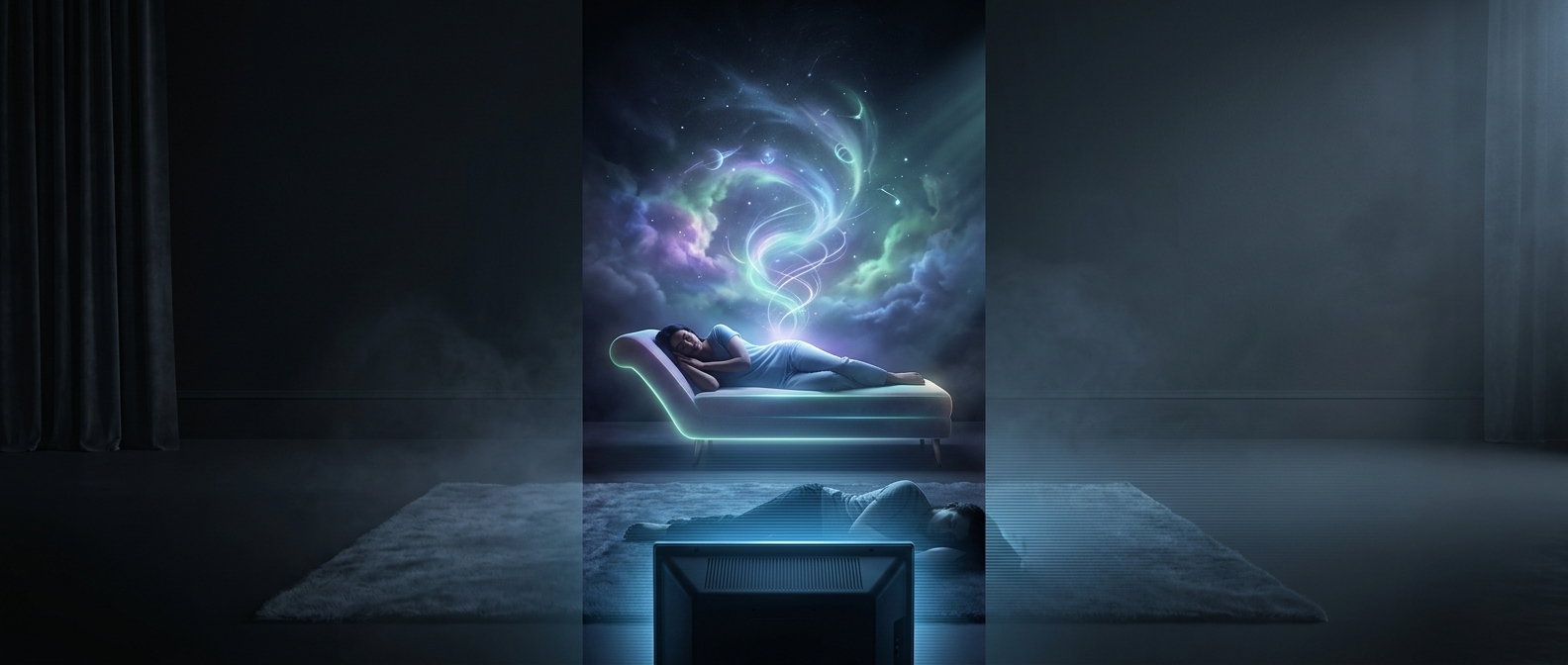
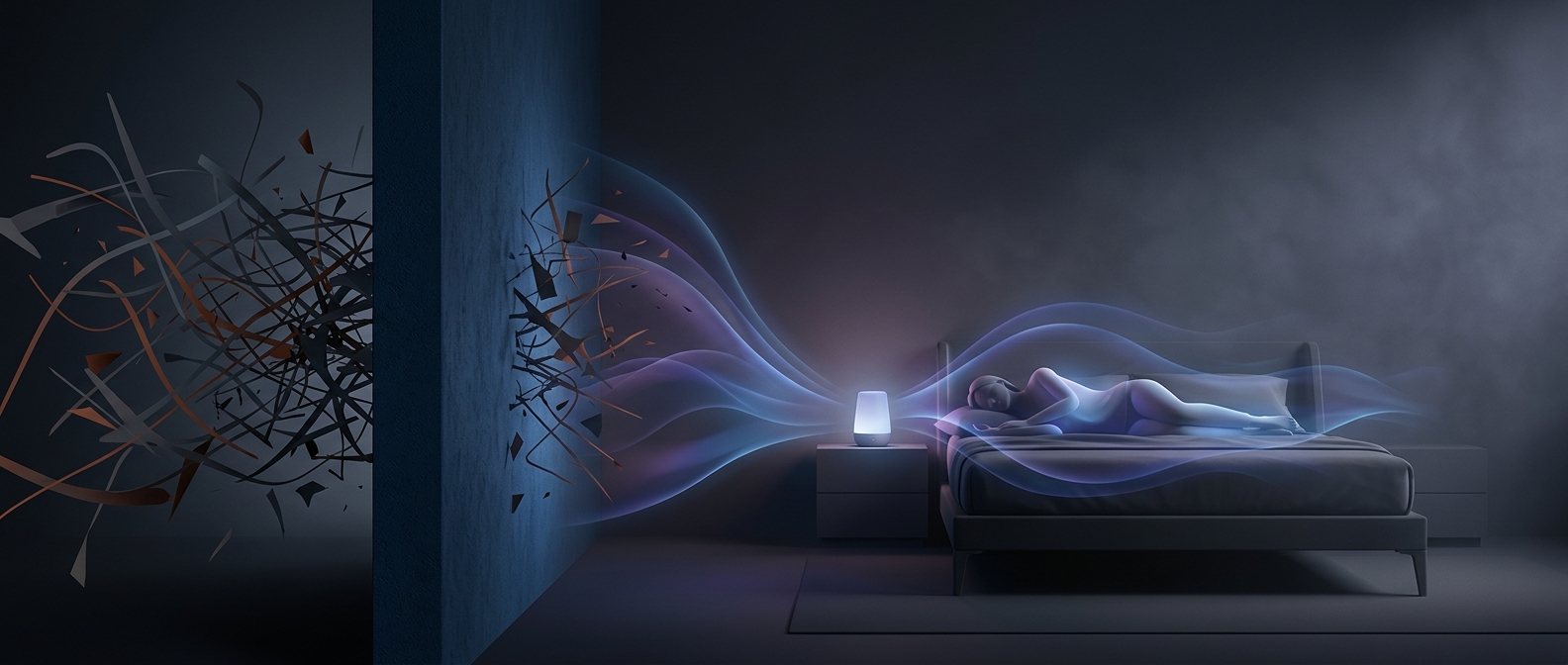
A neighbor’s footsteps or a door slam stands out partly because it breaks a quieter background. A continuous sound changes that contrast. The brain still receives the unwanted noise, but the added sound can make it less conspicuous—especially when the two sounds overlap in pitch and volume. This is called sound masking; it does not block sound or make a wall more effective.
White noise is a mix of sound frequencies, commonly heard as a steady hiss. Because it continues without pauses, it can soften the contrast between a quiet room and sudden noises from next door. The aim is not to drown out every sound, which would require turning the machine up, but to make brief disturbances less attention-grabbing.
Why continuity matters
A changing sound can itself draw attention. A stable background is easier for many listeners to tune out, while a sudden clatter remains noticeable because it differs from what came before. That is why a machine designed for masking needs to run steadily: each pause would restore the quiet that makes the next intrusion stand out.
The effect depends on the room and the sound. A low rumble may not be masked well by a high-pitched hiss, and a loud noise can remain disruptive. Placement and volume matter, too; the background should be noticeable enough to soften interruptions without becoming a new nuisance.
A tradeoff, not a repair
Masking offers a practical workaround when noise travels through adjoining walls, but it leaves the source untouched. The neighbor can still be heard, and the room has not become quieter in any physical sense. What changes is the listener’s soundscape: instead of waiting in near-silence for the next abrupt noise, the ear has a more even background against which that noise may feel less startling.